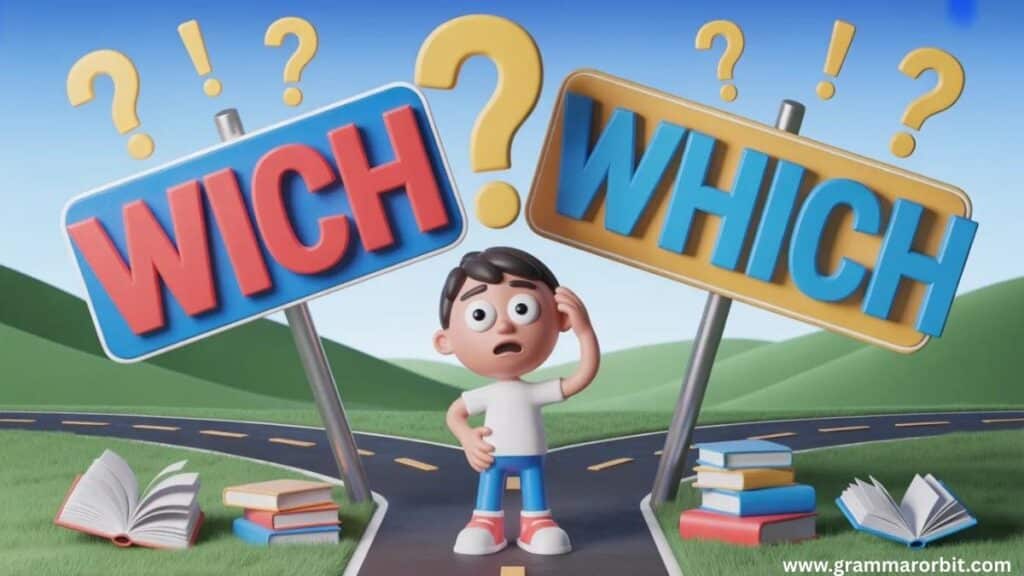
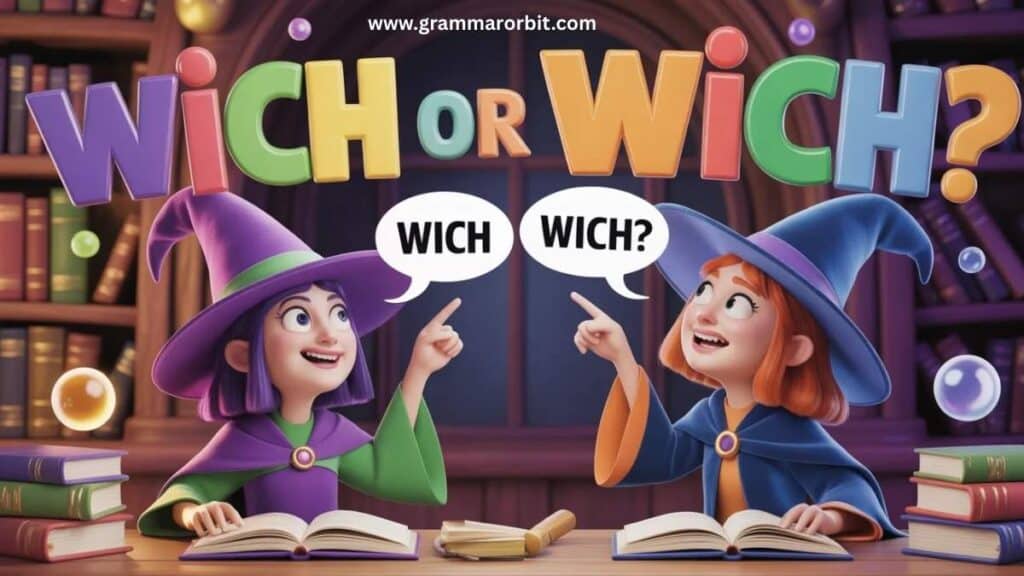
Ever paused mid-sentence, squinted at your keyboard, and muttered, “Wait… wich or which examples?” You’re not alone. This tiny four letter word has caused more confusion than a cat in a room full of laser pointers. One wrong letter can make your writing look sloppy, confuse readers, or even get you funny looks from grammar enthusiasts. But fear not! By the end of this guide, you’ll finally master the difference between wich or which examples, spot common mistakes, and impress everyone with your flawless spelling. Say goodbye to embarrassing typos and hello to writing that’s sharp, confident, and mistake free.
Wich or Which Quick Answer
When it comes down to it, the answer is simple:
- Correct spelling: which
- Incorrect spelling: wich (unless it is part of a proper noun like a place name)
Most mistakes happen because “wich” sounds exactly like “which” when spoken. People often rely on what they hear rather than how it is spelled.
Examples:
- Correct: Which book do you want to read?
- Incorrect: Wich book do you want to read?
The only times “wich” is correct is in historical or place names such as Norwich, Greenwich, or Sandwich. In those cases, the spelling has nothing to do with grammar and is purely traditional.
The History and Origin of Which
The word which has a rich history that explains why spelling errors occur. Its roots go back to Old English, where it was spelled hwilc. The original meaning was “what kind.” Over the centuries, spelling evolved and was standardized in modern English.
| Era | Spelling | Notes |
|---|---|---|
| Old English (9th–11th century) | hwilc | Pronounced roughly as “hwillk” |
| Middle English (12th–15th century) | whic, wiche | Multiple spellings existed because printing was inconsistent |
| Modern English (16th century onward) | which | Standardized in dictionaries and grammar books |
Many people spell it as “wich” because the pronunciation matches, and typing quickly or relying on sound can cause mistakes. Dictionaries, style guides, and grammar books all confirm that which is the correct spelling for the pronoun.
British English vs American English
Does British English vs American English affect the spelling of which? The answer is no. Both versions of English use which for pronouns and questions.
However, historical place names in Britain often include “wich,” which sometimes confuses learners:
- Norwich
- Greenwich
- Sandwich
In these cases, “wich” is correct, but it is always part of the proper noun and has nothing to do with grammar rules. In everyday writing, whether British or American English, the correct spelling of which remains unchanged.
Common Mistakes and Why They Happen
Even advanced English speakers can mistakenly write “wich” instead of “which.” Here are the main reasons:
- Phonetic assumption: People hear “wich” and think that’s correct.
- Typing errors: Quick typing, autocorrect, or smartphones can introduce “wich.”
- Lack of awareness: English learners may not have memorized the correct spelling.
Examples of common mistakes:
- Wich one is better? ❌
- I don’t know wich answer to pick. ❌
- Which one is better? ✅
- I don’t know which answer to pick. ✅
Grammar tip for English learners: Always check pronoun usage in English. “Which” works as a relative or interrogative pronoun, and the context dictates the correct use.
Zeroes or Zeros Complete Guide
How to Remember the Correct Spelling
Here are proven ways to make sure you always spell which correctly:
- Mnemonic trick: Which has H like in help. Wich does not.
- Associate with place names: Norwich or Greenwich are exceptions, everything else uses which.
- Substitute with “what one”: If the sentence makes sense, which is correct.
- Visual memory: Seeing which correctly in sentences repeatedly helps retention.
Example trick:
- Which book should I read? → What one book should I read? ✅
- Wich book should I read? → What one book should I read? ❌
Which in Everyday Contexts
Knowing how to use which in sentences ensures your writing is clear and professional.
Interrogative Usage
“Which” is used to ask questions about choices:
- Which movie do you want to watch tonight?
- Which route is faster?
Relative Pronoun Usage
“Which” introduces a clause describing a noun:
- The car, which was red, sped past us.
- She bought the dress which was on sale.
Which vs What
Many confuse which with what:
- Use which when options are limited or specific.
- Use what when the choices are open-ended.
| Example | Correct Use | Explanation |
|---|---|---|
| Choosing books | Which book do you want? | Specific selection |
| Asking general info | What book do you like? | Open-ended |
Receipt vs Recipe Understanding the Historical Difference
Wich or Which in Place Names
Sometimes “wich” is correct, but only in place names:
- Norwich: City in England, pronounced “Norr-itch.”
- Greenwich: Home of Greenwich Mean Time, pronounced “Gren-itch.”
- Sandwich: Town in Kent, England; the food was named after it.
Remember, in these cases, “wich” is not a pronoun. It is historical and always capitalized. Using “wich” in other contexts is always wrong.
Google Trends and Usage Data
Data from Google Trends shows that the correct spelling dominates searches:
| Term | Average Monthly Searches | Notes |
|---|---|---|
| “Which” | 60,000 | Correct spelling dominates searches globally |
| “Wich” | 5,000 | Mostly typos or searches about place names |
Even in online content, Wich appears frequently as a typo or in reference to towns. English learners are the most common source of the error.
Common Mistakes with Which
Besides spelling, learners often misuse “which” in sentences.
Examples:
- Incorrect: Which of the options is correct, I don’t know. ❌
- Correct: I don’t know which of the options is correct. ✅
Grammar tip: Avoid unnecessary commas between “which” and its clause unless it is non-restrictive:
- Restrictive: The book which I read last night was amazing.
- Non-restrictive: The book, which I read last night, was amazing.
Read your sentence out loud. If it sounds clunky, it probably is.
How to Spell Which Practical Guide
For learners asking how to spell which, follow these steps:
- Listen to the word carefully: /wɪtʃ/
- Visualize the letters: w-h-i-c-h
- Check context: Is it a question, relative pronoun, or proper noun?
- Double-check if unsure: Use a dictionary or grammar tool.
Skipping steps or relying solely on pronunciation causes common English mistakes.
Meantime or Mean Time Complete Guide to Grammar
wich or which examples Quick Reference Table
Here is a table you can use anytime to check spelling:
| Word | Correct? | Usage | Example |
|---|---|---|---|
| Which | Yes | Interrogative pronoun or relative pronoun | Which route is faster? |
| Wich | Only in proper nouns | Place names or historical terms | Norwich is a beautiful city. |
Reference Cambridge Dictionary Definitions
Here’s a trusted source for clear word meanings:
FAQs
What is the difference between wich and which?
Which is the correct spelling for the pronoun used in questions or to introduce relative clauses. Wich is almost always incorrect and only appears in proper nouns like place names (Norwich, Greenwich).
Example:
- Correct: Which book do you want to read?
- Incorrect: Wich book do you want to read?
- Place name: I visited Norwich last summer.
How to use wich?
Wich is rarely used in standard English. The only correct use is in historical or geographical proper nouns. Do not use it as a pronoun in sentences.
Examples:
- I traveled to Greenwich to see the Prime Meridian.
- Sandwich is a small town in England.
Using “wich” outside these cases is always a spelling mistake.
How do you use wich in a sentence?
Since wich is not a pronoun, it should only appear in proper nouns. Here are correct examples in sentences:
- Norwich is famous for its medieval architecture.
- Greenwich Mean Time was established in London.
Do not use “wich” to ask a question or describe a noun; use which instead.
Which or that grammar example
Which and that are relative pronouns, but they are used differently:
- That introduces a restrictive clause (essential information).
Example: The book that I borrowed from the library is amazing. - Which introduces a non-restrictive clause (extra information).
Example: The book, which I borrowed from the library, is amazing.
Tip: Use a comma before which when the clause is non-essential.
When can I use wich?
You can only use wich in proper nouns or historical names. Otherwise, always use which in your writing.
Examples of correct usage:
- I visited Norwich last weekend.
- Greenwich is where the Prime Meridian is located.
Do not use “wich” in questions, descriptions, or clauses it is incorrect.
Conclusion
After all this, the answer is crystal clear: which is your go to spelling, and wich is only allowed if you’re talking about Norwich, Greenwich, or Sandwich. Mistaking wich or which examples in your sentences is like putting salt in your coffee technically possible, but nobody wants it. Remember, every time you write which, you’re showing that you know your English spelling rules. Using wich outside a proper noun is a common mistake, and knowing the difference between wich or which examples can save you from embarrassment. So next time you ask yourself, “Wich or which?” the answer is simple: which, every time.

JHON AJS is an experienced blogger and the creative voice behind the website grammarorbit.com, namely Grammar Orbit. With a keen eye for language and a passion for wordplay, he creates engaging grammar insights, word meanings, and clever content that make learning English enjoyable and interesting for readers.