

Have you ever caught yourself typing unphased instead of unfazed and wondered if the English language is secretly out to get you? You’re not alone. One tiny letter can turn a confident, calm statement into a glaring common word mistake that makes you look less composed than you feel. From social media posts to work emails, the confusion between unphased or unfazed pops up everywhere, tripping up writers, students, and even seasoned professionals. In this article, we’ll dive into the unfazed meaning, reveal why unphased is usually wrong, and give you simple tricks to stay calm under pressure without ever letting your words faze you.
What Does Unfazed Mean?
The word unfazed describes someone who is calm and composed, even in the face of difficulties. It conveys emotional steadiness, confidence, and the ability to stay unaffected by stressful situations.
Characteristics of someone who is unfazed:
- They remain calm under pressure.
- They are not disturbed or shaken by criticism or setbacks.
- They show resilience and emotional composure.
Examples of correct usage:
- “Despite the sudden changes in the schedule, she stayed unfazed and continued her work.”
- “He was unfazed by the negative comments online and focused on finishing his project.”
- “The team remained unfazed even after losing the first round of the tournament.”
In each case, the focus is on how the person reacts emotionally, not the stage of a process or a project.
What Does Unphased Mean?
Here’s where most confusion happens. The word unphased is almost always incorrect when people use it to mean calm or undisturbed. It pops up because of homophones in English—words that sound the same but have different meanings.
- Faze means to disturb or disconcert someone.
- Phase refers to a stage, step, or period in a process.
People mistakenly substitute phase for faze, which creates the incorrect word unphased.
Incorrect examples:
- “She was unphased by the criticism.”
- “He stayed unphased during the meeting.”
These sentences are wrong because they attempt to use “phase” in place of “faze,” which changes the meaning.
In very rare cases, unphased could be technically correct if literally talking about stages in a process:
- “The project remained unphased during the initial development stage.”
Even then, it is better to clarify to avoid confusion.
Theater or Theatre Which Spelling Is Correct?
Origins and Why This Confusion Happens
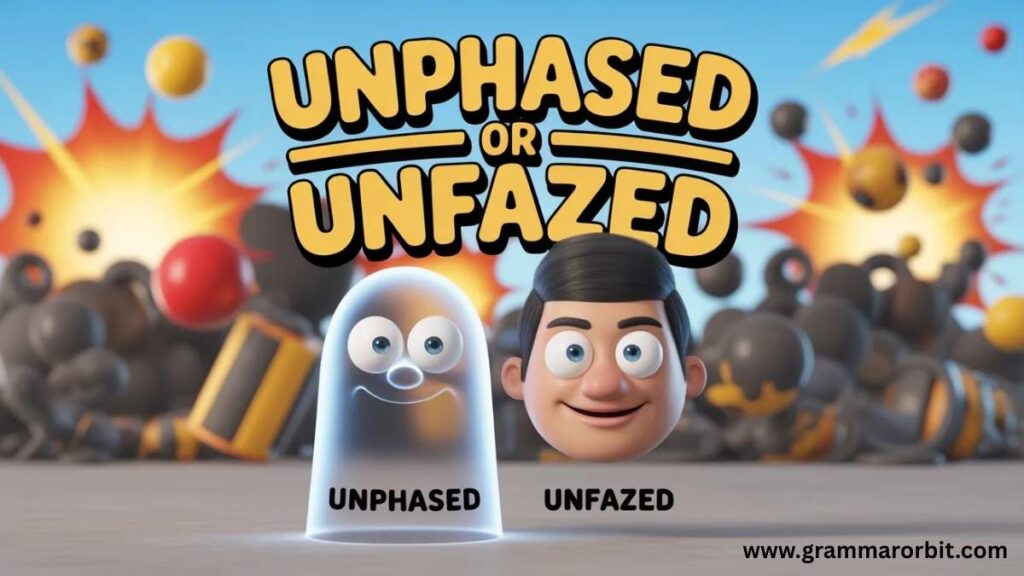
The confusion between unfazed and unphased comes from the words’ history and evolution in the English language.
- Faze appeared in English in the 1600s, meaning to disturb or unsettle someone.
- Phase comes from the Greek word phasis, meaning appearance or stage.
Over time, these words became homophones in pronunciation, causing people to write unphased when they mean unfazed.
The problem has intensified with digital communication. On social media and in AI-generated writing, spellcheck errors or automatic text generation often propagate the mistake. Even tools that check spelling sometimes fail to flag unphased, making human proofreading essential.
Correct Usage of Unfazed
The confusion between unfazed and unphased comes from a mix of history, pronunciation, and evolving English usage. Understanding the roots helps explain why so many people get it wrong.
The Origins of “Faze” and “Phase”
- Faze
- “Faze” first appeared in English around the 17th century.
- It comes from older English words meaning to disturb, startle, or disconcert someone.
- Over time, it became the root for expressions like “unfazed,” meaning someone is not disturbed or thrown off.
- Example: “He was unfazed by the loud noise” – here, “faze” implies disturbance, so unfazed means the opposite.
- Phase
- “Phase” comes from the Greek word phasis, meaning appearance or stage.
- In English, it has been used since the 16th century to describe a stage in a process, project, or natural cycle.
- Example: “The project is phased over three months” – this is correct because it’s about stages, not emotional reaction.
Why the Confusion Happens
The mix-up happens for several reasons:
- Homophones in English
- “Faze” and “phase” sound nearly identical when spoken.
- People often spell them based on how it sounds, which leads to “unphased” when they actually mean “unfazed.”
- Digital communication and social media
- Shortcuts in texting, tweeting, or typing quickly can reinforce spelling mistakes.
- Seeing “unphased” repeatedly online can make it seem acceptable, even though it’s technically wrong.
- AI and automated writing
- AI writing tools often mix up faze vs phase because both are dictionary-approved words in different contexts.
- This spreads the mistake further, especially in blogs, emails, or AI-generated social media posts.
- Lack of awareness of emotional vs process words
- Many writers don’t realize that unfazed is about emotional composure, while phased is about stages or processes.
- Without thinking about the meaning behind the words, the wrong spelling slips in naturally.
Real-World Examples
- Social media post: “She was unphased by the drama at work.” (Incorrect; should be unfazed)
- Email: “The plan was unphased during the first phase.” (Technically correct but can be confusing if not clarified)
Quick Tip to Remember
Think of it like this:
- Faze → Frightened or Flustered → unfazed = not flustered.
- Phase → Process or Stage → unphased might only fit when talking literally about steps in a plan.
By understanding the origins of the words, why English evolved this way, and how pronunciation misleads writers, you can avoid this common mistake and confidently use unfazed in the right context.
Laid or Layed Which One Is Correct?
Why Unphased Is Usually Wrong

Let’s dig deeper into why unphased vs unfazed is such a common problem.
Common Confusions
- Faze = to disturb or unsettle – the correct root for unfazed.
- Phase = stage or step – only correct in literal references to processes, not emotions.
Real-Life Examples of Mistakes
- Social media post: “I was unphased by the criticism.” ❌
- Blog article: “The CEO remained unphased throughout the crisis.” ❌
- Email: “She’s unphased by the workflow changes.” ❌
These examples are widespread and are a classic common English mistake that undermines writing credibility.
Rare Exceptions
There are rare cases where unphased could technically work:
- “The plan remained unphased through the first phase of testing.”
Even in this case, it’s safer to rephrase to avoid ambiguity:
- “The plan was unaffected by the first phase of testing.”
Tips to Remember the Difference
Memory tricks make avoiding unphased in writing much easier.
Mnemonic Tricks
- Faze → F for Frightened → Unfazed means not frightened, calm under pressure.
- Phase → P for Process → Only use unphased if literally talking about a process or stage.
Visual Aid / Table
| Word | Meaning | Correct Usage Example | Common Mistake Example |
|---|---|---|---|
| Unfazed | Calm, composed, not disturbed | “She stayed unfazed by criticism.” | “She stayed unphased by criticism.” |
| Unphased | Rarely correct, process-related | “The project was unphased in phase 1.” | “He was unphased by the meeting.” |
Quick Checklist for Writers
- Ask: Does it describe emotional composure or a process stage?
- Emotional → use unfazed.
- Process stage → unphased may fit, but clarify.
- Proofread carefully, as spellcheck errors can miss this mistake.
What Does IICYIFY Mean in Text? Full Usage Explained (2026)
Importance of Getting It Right
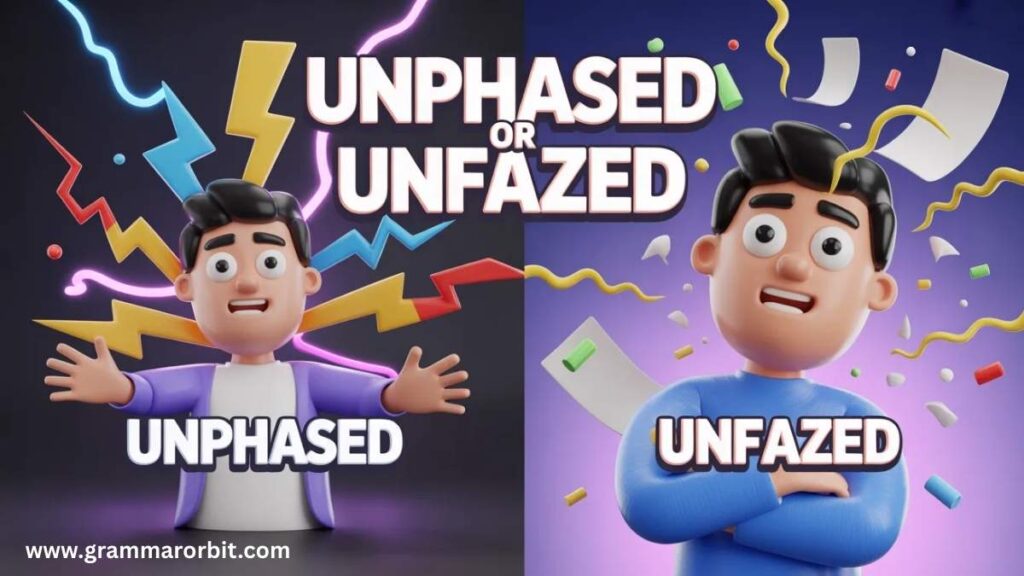
Credibility and Professionalism
Even small errors like unphased vs unfazed can make you look careless in emails, reports, or public writing. Accuracy in word choice demonstrates attention to detail, emotional intelligence, and professionalism.
Digital Communication
On social media and in texting, errors spread fast. Misused words like unphased appear frequently. Knowing the difference shows that you value language precision and clear communication.
Writing in the Age of AI
AI tools sometimes introduce common English mistakes, including confusing faze and phase. Human oversight is essential to ensure the final writing communicates exactly what you mean.
Reference Cambridge Dictionary Definitions
Here’s a trusted source for clear word meanings:
FAQs
Is it spelled unfazed or unphased?
The correct spelling is unfazed when you mean someone is calm, composed, or unaffected by stress. Unphased is usually incorrect and only makes sense in very rare, literal cases about a stage or phase in a process. If you’re talking about staying cool under pressure, always use unfazed.
Is it better to be unphased or unfazed?
It’s better to be unfazed. Being unfazed shows emotional composure, confidence, and the ability to handle challenges without getting rattled. Unphased is mostly a spelling mistake and won’t earn you credibility in writing.
What does unfazed mean?
Unfazed means calm, unaffected, or not disturbed by stress, criticism, or challenges. For example: “She stayed unfazed despite the sudden changes in the plan.” It’s all about emotional steadiness and resilience.
Is it unphased or not phased?
If you’re referring to someone staying calm, the correct word is unfazed, not “unphased” or “not phased.” “Not phased” could technically work in very specific, literal situations about stages, but it’s clunky and rarely used.
What is a better word for unphased?
Better alternatives to unphased include:
- Unfazed
- Calm
- Composed
- Untroubled
- Not fazed
These words convey emotional composure without the spelling mistake.
Is fazed or phased correct?
- Fazed = correct when describing being disturbed, worried, or thrown off. Example: “He was fazed by the criticism.”
- Phased = correct when talking about stages or steps in a process. Example: “The project is phased in three stages.”
Mixing these up is a classic English language error, so pay attention to context.
Conclusion
So, let’s wrap this up before your brain gets fazed by too many rules. Remember: unfazed means calm, composed, and totally in control, while unphased is the sneaky little spelling mistake lurking in emails, social posts, and AI-generated text. With a few mnemonics, examples, and a little proofreading, you can dodge this common trap and write like a confident word ninja. Next time someone drops unphased in a sentence, you’ll smile, stay unfazed, and maybe even correct them politely. Your writing will stay sharp, your credibility intact, and your readers happily impressed.

JHON AJS is an experienced blogger and the creative voice behind the website grammarorbit.com, namely Grammar Orbit. With a keen eye for language and a passion for wordplay, he creates engaging grammar insights, word meanings, and clever content that make learning English enjoyable and interesting for readers.