
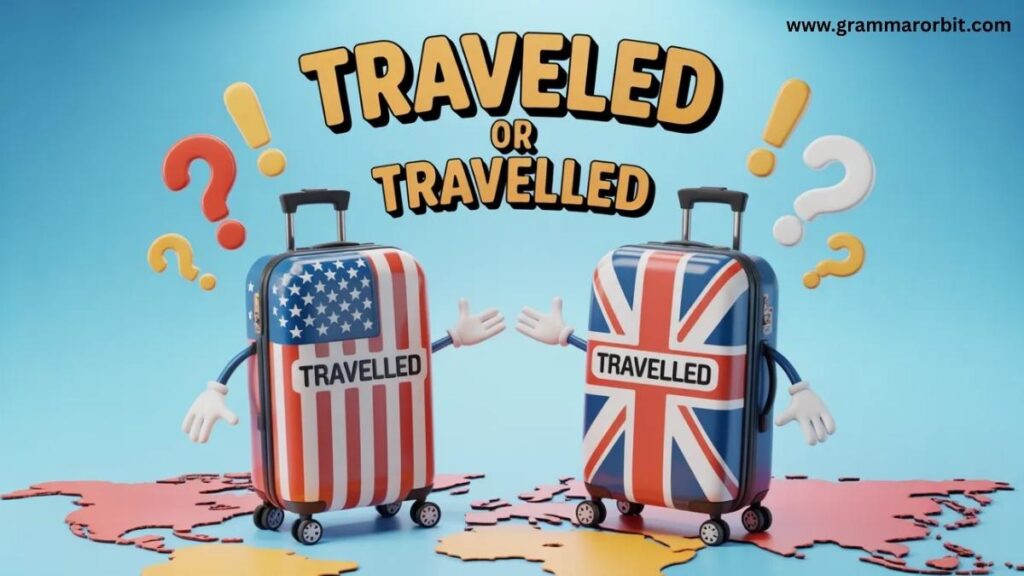
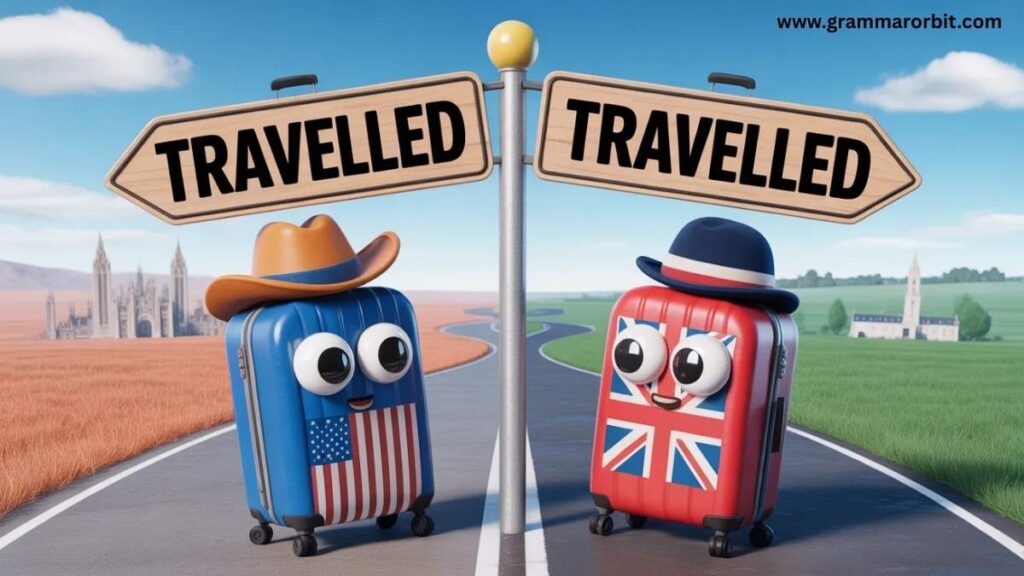
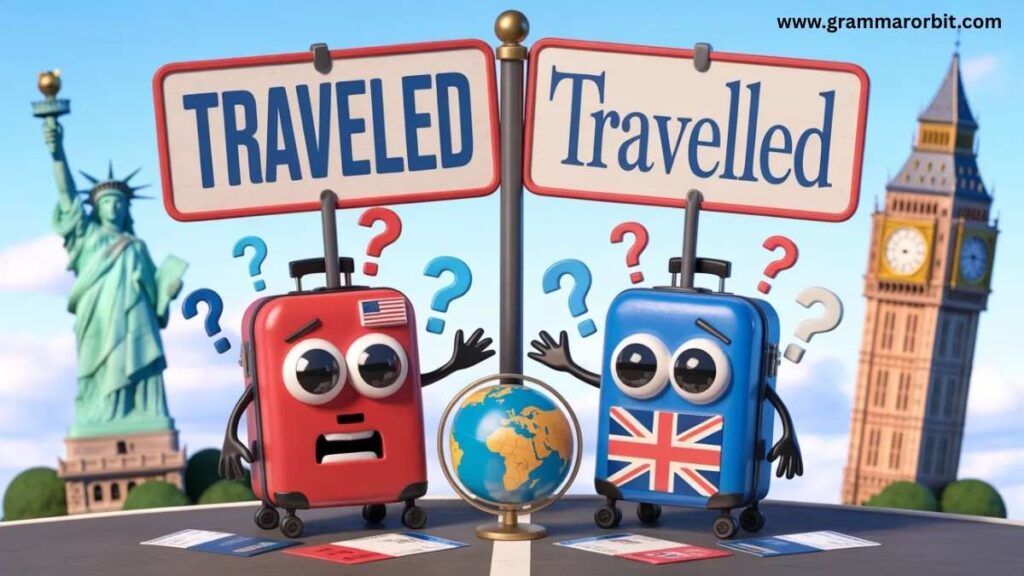
Welcome to the tiny-letter showdown that has writers and travelers scratching their heads: traveled vs travelled. Just one extra “l” can spark fierce debates, make editors twitch, or leave readers wondering if you’re American, British, or secretly confused. Should you stick with the streamlined traveled, perfect for your US audience, or go full British with travelled, doubling that letter for elegance and tradition? In this guide, we’ll untangle the mystery of traveled vs travelled, break down American vs British English spelling, and give you simple, practical tips to always use the correct spelling of traveled/travelled without losing your sanity or your sense of humor.
Origins & Etymology of “Travel”
Believe it or not, “travel” has a colorful past. It comes from the Old French word travailler, which literally meant “to toil or labor.” Its Latin ancestor, tripaliare, meant “to torture” a nod to the difficulties of traveling centuries ago. So when someone complains about “all this traveling,” they’re technically walking in the footsteps of tortured linguists.
Historically, English speakers started spelling it differently depending on their location:
- British English: favored doubling consonants when adding endings (-ed, -ing), hence travelled.
- American English: simplified things, dropping extra letters whenever possible giving us traveled.
This is part of a larger pattern in English spelling, where Americans streamlined words to make them easier to read and write, while British English retained older forms.
Regional Spelling Differences: American vs British English Spelling
So how do you know which spelling to use? Your audience usually decides.
| Region | Preferred Spelling | Notes |
|---|---|---|
| United States (US) | Traveled | Single L dominates in American English; simple and neat. |
| United Kingdom (UK) | Travelled | Double L is standard; keeps the historical British flair. |
| Canada / Australia / NZ | Travelled | British influence still strong; double L is common. |
| International Audience | Depends on style guide | Consistency matters more than local preference. |
Pro tip: If you’re writing for a global audience, pick one form and stick to it. Nothing screams “lazy editing” like a mix of traveled and travelled in the same piece.
The General Rule for Traveled vs Travelled
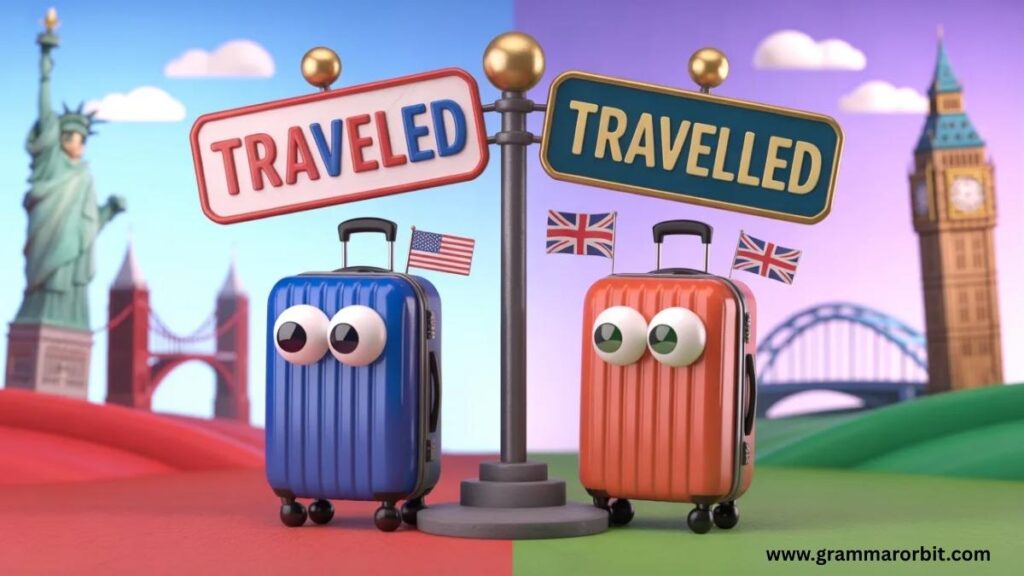
Luckily, there’s a simple rule for when to double the L:
- American English: Use traveled with a single L. Applies to past tense, past participles, and even the -ing form (traveling).
- British English: Use travelled with double L. Applies across all verb forms (travelling, travelled, traveller).
This isn’t just about travel. Other verbs ending in -el follow the same pattern:
| Verb Base | US Spelling | UK Spelling |
|---|---|---|
| Cancel | Canceled | Cancelled |
| Model | Modeled | Modelled |
| Label | Labeled | Labelled |
| Fuel | Fueled | Fuelled |
Quick memory trick: UK loves double letters, US prefers simplicity.
Style Guide Recommendations
Different publications have different rules. Here’s a snapshot for professional writing:
| Style Guide | Preferred Spelling | Notes |
|---|---|---|
| AP Style | Traveled | American English; journalism standard. |
| Chicago Manual of Style | Traveled / Travelled | American English, but British English also accepted. |
| Oxford Style Guide | Travelled | UK English; standard in UK publications. |
| APA Style | Traveled | US-focused academic writing. |
Lesson: Always check the style guide if you’re writing for academic papers, corporate communication, or travel blogs targeting international audiences. Following the guide keeps you credible.
Usage in Real Life: Data & Trends
Let’s see how these spellings actually show up in the real world:
- Books & Publications: Google Books shows “traveled” dominating in US literature, while UK books overwhelmingly use “travelled.”
- Online Trends: Google Trends shows Americans search traveled about 70% more than travelled, whereas UK users favor travelled.
- Travel Blogs: Popular US travel bloggers stick to traveled, while UK-based blogs consistently use travelled.
Case Study: A travel blog once mixed traveled and travelled in the same article. Readers commented on the inconsistency, and engagement dropped. Moral: one rogue L can hurt your credibility more than you realize.
Spicey vs Spicy Correct Spelling and Usage
Common Mistakes & Pitfalls
Even professional writers get tripped up. Here’s what to watch for:
- Mixing traveled and travelled in the same piece.
- Forgetting that verbs ending in -el often follow the same pattern.
- Using British spelling when writing for a US audience (and vice versa).
- Assuming spelling consistency doesn’t matter for online content.
Tip: If in doubt, pick one form and stick with it. Readers notice consistency more than a single correct letter.
Everyday Usage Examples
Here’s what it looks like in sentences:
American English:
- I have traveled to 12 countries this year.
- She traveled alone across Europe.
- Many travelers enjoy traveling light.
British English:
- I have travelled to 12 countries this year.
- She travelled alone across Europe.
- Many travellers enjoy travelling light.
Notice the nouns too: traveler vs traveller. Americans simplify; Brits keep the double L.
Talk to You Then Meaning: A Complete Guide
When to Prioritize Clarity Over Local Spelling
English is full of quirks, and words like afterward vs afterword or afterward vs afterwards highlight why spelling alone doesn’t guarantee understanding. Sometimes, making your meaning crystal clear is far more important than sticking strictly to regional conventions. Here’s when clarity should take priority.
Writing for a Global Audience
If your content reaches readers from different countries North America, the UK, Australia, or beyond following local spelling rules can create confusion.
- Example: Using “afterwards” in a guide for an American audience may cause a slight pause, as most Americans expect afterward.
- Best practice: Choose the form your readers instantly recognize and use it consistently. In international contexts, clarity and consistency beat regional tradition.
When Speed and Comprehension Matter
In emails, instructions, tutorials, or online content, readers often skim. They need to grasp the meaning immediately; regional spelling nuances can slow them down.
- Example:
- Clear: “Save your work afterward.”
- Confusing for US readers: “Save your work afterwards.”
- Rule of thumb: Prioritize the spelling your audience understands without a second thought.
Avoiding Ambiguity With Homophones
Words that sound alike but have different meanings, like afterword vs afterward, can trip up readers. When context is ambiguous, clarity is more important than convention.
- Example:
- Confusing: “We discussed the book’s ending afterward.” (Time or book section?)
- Clear: “We discussed the book’s ending afterward reading the afterword.”
In International or Digital Publishing
Online content crosses borders instantly. A spelling that’s standard in one country may confuse readers elsewhere.
- Example: A British blog using “afterwards” might briefly slow down American readers. The solution:
- Use afterward for wider readability, or
- Include a short note explaining regional variations.
Consistency and universal comprehension outweigh strict local conventions in these cases.
When Style Guides Give You Flexibility
Modern style guides AP, Chicago, Oxford recognize that regional differences exist but emphasize readability and clarity. Editors often advise:
“Choose a style that communicates meaning most effectively to your audience and use it consistently.”
- Takeaway: For a mixed or international audience, pick the spelling that reduces confusion, not the one that simply matches local rules.
Principles for Prioritizing Clarity
- Audience comes first: Local spelling matters less if it confuses readers.
- Consistency is key: Pick one form afterward or afterwards and stick to it.
- Clarity over tradition: Avoid words or spellings that might make readers pause.
- Use context to guide decisions: If a sentence could be misunderstood, adjust wording rather than relying solely on spelling.
At Least vs Atleast What’s Correct and How to Use It
Quick Reference Table: Clarity vs Local Spelling
| Context | Local Spelling | Prioritize Clarity | Notes |
|---|---|---|---|
| US audience | afterwards | afterward | Americans expect “afterward” |
| UK blog | afterward | afterwards | Matches UK norms |
| Global software manual | either | afterward | Widely recognized internationally |
| Academic journal | either | afterword / afterward | Must clearly distinguish noun vs adverb |
Quick Reference Cheat Sheet
| Form | American English | British English | Notes |
|---|---|---|---|
| Past Tense | Traveled | Travelled | Single vs double L |
| Present Participle | Traveling | Travelling | Applies to -ing form |
| Noun (person) | Traveler | Traveller | For people who travel |
| Other -el verbs | Simplified L | Double L | Cancel/cancelled, label/labelled |
Related Spelling Patterns
Many verbs follow the -el/-ell rule. Knowing these prevents embarrassing mistakes:
- Cancel → Canceled / Cancelled
- Model → Modeled / Modelled
- Fuel → Fueled / Fuelled
- Label → Labeled / Labelled
Pro tip: If you remember the UK double L rule, you’ll rarely go wrong.
Reference Cambridge Dictionary Definitions
Here’s a trusted source for clear word meanings:
FAQs
Is travelled or traveled correct?
Both are correct it just depends on which version of English you’re using. Traveled is standard in American English, while travelled is preferred in British English and most Commonwealth countries. Think of it as the same word wearing different regional outfits same meaning, different style.
Can I say “I traveled”?
Absolutely! In American English, “I traveled to Paris last summer” is perfectly fine. If you’re writing in British English, it would be “I travelled to Paris last summer.” Either way, your sentence is grammatically correct you’re just choosing your flavor of English.
Is it Travelled or Traveled in Canada?
Canada mostly follows British English, so travelled with double L is most common. That said, traveled sometimes pops up due to American media and business influence. The key is to pick one spelling and stick with it throughout your text.
What does “traveled” mean?
The verb traveled (or travelled) means to go from one place to another, usually over a distance. For example:
- She has traveled to five countries this year.
- He travelled across the UK by train.
It can also suggest experience gained through journeys, like:
- After traveling the world, she became a seasoned food critic.
How do you write “travelled”?
It depends on your audience:
- British English: Travelled, Travelling, Traveller (double L)
- American English: Traveled, Traveling, Traveler (single L)
Tip: Always follow your audience or style guide, and never mix the two forms in the same piece. Consistency is your best friend.
Conclusion
So, which side of the L fence should you land on: traveled or travelled? The truth is, it doesn’t really matter as long as you’re consistent. Americans love their single L, Brits cling to double Ls like it’s a badge of honor, and your international readers just want your writing to make sense. Remember the golden rule: pick one, stick with it, and follow your style guide. Nail this tiny letter, and you’ll avoid embarrassing spelling fails, impress your readers, and maybe even earn a silent nod of approval from grammar purists everywhere. Safe travels letter included!

JHON AJS is an experienced blogger and the creative voice behind the website grammarorbit.com, namely Grammar Orbit. With a keen eye for language and a passion for wordplay, he creates engaging grammar insights, word meanings, and clever content that make learning English enjoyable and interesting for readers.