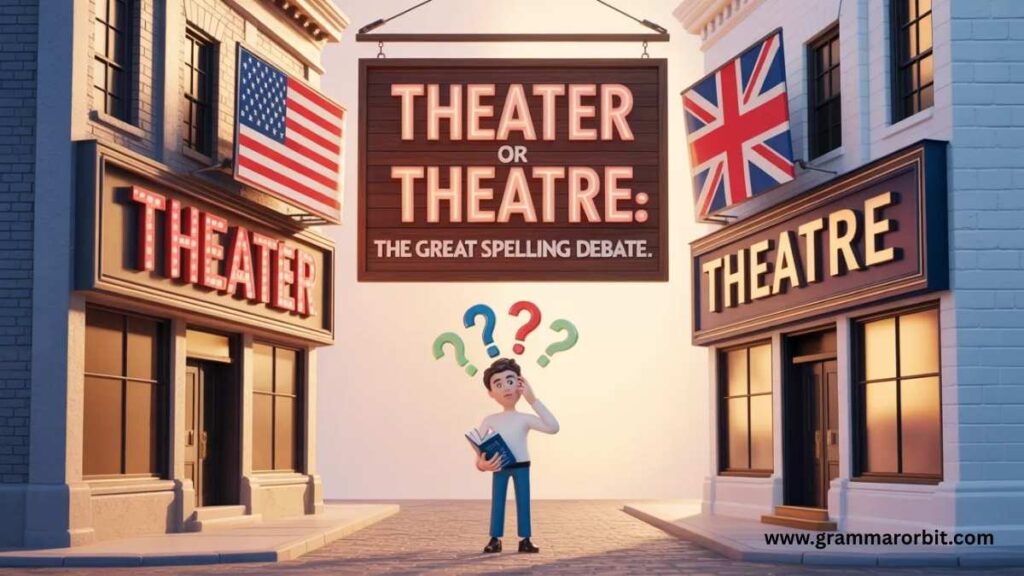
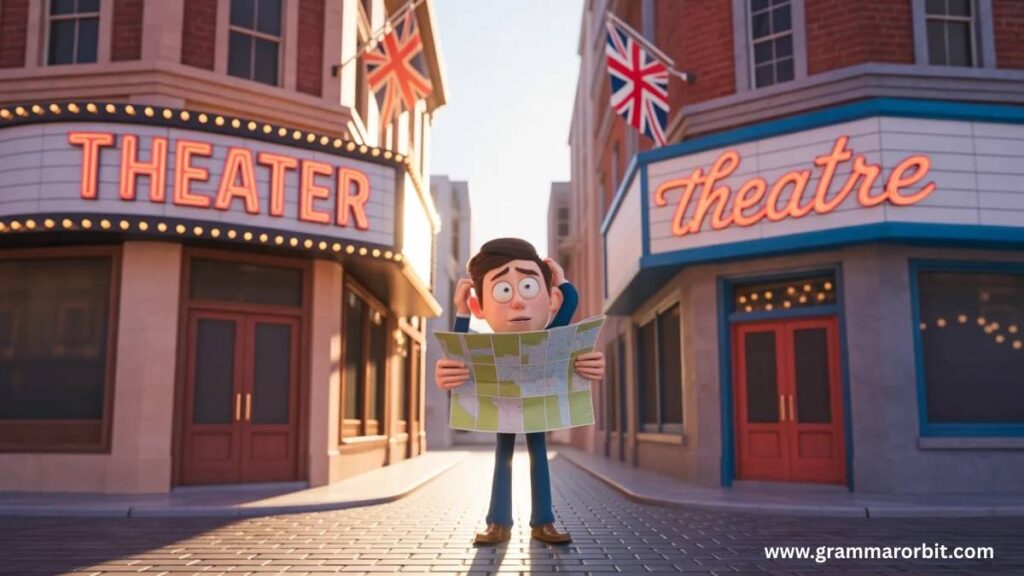
Ever find yourself staring at a sign and wondering, “Wait… is it theater or theatre?” Maybe it’s above a movie cinema, or perhaps a grand old stage with velvet curtains and dramatic lighting. Suddenly, one little difference in letters feels like a trapdoor in your brain. Fear not! You’re not alone millions of writers, students, and curious readers stumble over this exact question. In this article, we’ll unravel the mystery of theater or theatre, explore why it matters, and give you practical guidance so you can confidently spell it right every single time, without losing your mind or your sense of humor.
Quick Answer: Theater vs Theatre
Here’s the simple distinction:
| Spelling | Region | Typical Usage | Example |
|---|---|---|---|
| Theater | American English | Movie cinemas, commercial venues, casual writing | “We went to the local movie theater.” |
| Theatre | British English | Live stage venues, formal writing, drama | “The Globe Theatre in London is hosting Hamlet.” |
Both are correct. In the U.S., “theater” is standard. In the U.K. and most other English speaking countries, “theatre” is preferred. But the choice also depends on the type of venue and cultural expectations.
A Bit of History
The difference between theater and theatre isn’t arbitrary it has centuries of history.
- Ancient Greek origins: The word theatron meant “a place for viewing,” referring to amphitheaters where citizens watched plays.
- Roman adaptation: Latin borrowed it as theatrum, keeping the essence of the word intact.
- Middle English: Passed through Old French as theatre, which survived in Britain.
In America, the spelling shifted to “theater” during the 18th and 19th centuries, largely thanks to Noah Webster, who aimed to simplify English spelling and make it more consistent. Meanwhile, Britain kept the traditional “-re” ending.
Fun fact: Even in the U.S., some historic venues keep “theatre” in their names as a nod to tradition, like the Shakespeare Theatre Company in Washington, D.C.
Is It Gray or Grey The Complete Guide
British vs American English
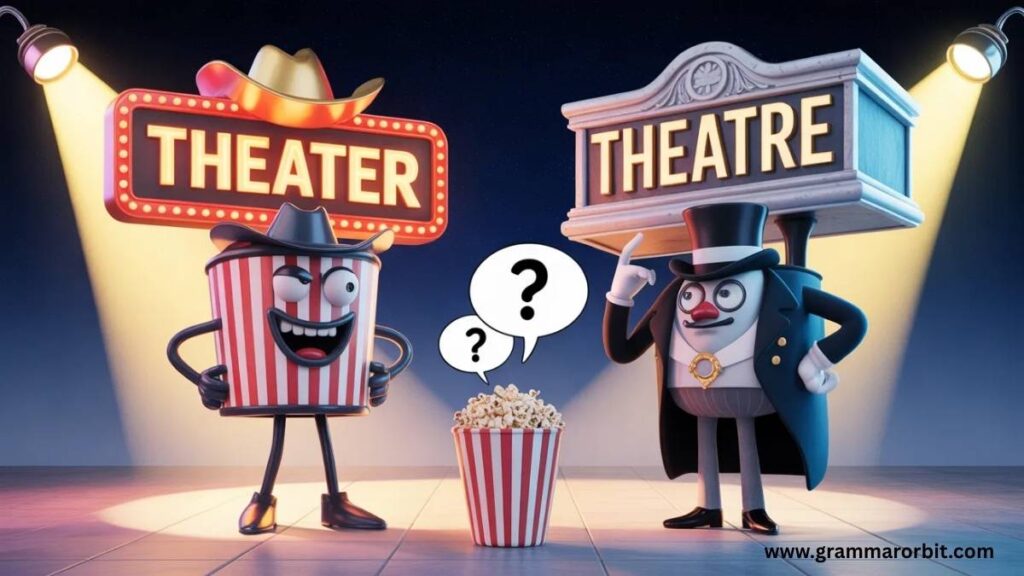
American English – “Theater”
American English consistently uses theater. It’s the standard in newspapers, books, signage, and casual writing.
When to use it:
- Movie cinemas: AMC Theater, Regal Theater
- Community or commercial spaces in the U.S.
- Any writing following AP Style or Chicago Style in American contexts
Example:
“The movie theater downtown is showing the new blockbuster tonight.”
British English – “Theatre”
British English sticks with theatre. It conveys tradition, formality, and is tied closely to live performance venues and stage arts.
When to use it:
- Live performance spaces: Royal National Theatre, Globe Theatre
- Academic or literary writing about drama
- Cultural contexts where historical or classic spelling matters
Example:
“The Globe Theatre continues to attract visitors from all over the world for Shakespeare’s plays.”
Why It Matters
- Audience expectation: Using the wrong spelling can feel off to readers familiar with one version.
- Professional writing: Consistency is crucial in journalism, academic work, and branding.
- Cultural nuance: Theatre with “-re” often signals respect for tradition, while “-er” feels modern and practical.
How to Decide Which to Use
Here’s a practical guide to help you choose:
Use “Theater” If:
- Your audience is primarily American.
- You are referring to movie cinemas or casual venues.
- You are following American style guides.
Use “Theatre” If:
- Your audience is British or international.
- You are referring to live performance venues or stage arts.
- You want to respect historical or formal branding.
Always Respect Venue Names
Some places keep their historic spelling regardless of region:
- Steppenwolf Theatre (Chicago) uses “-re”
- AMC Theaters uses “-er” for commercial consistency
Tip: In marketing or publications, consider what your audience expects rather than strictly following a regional rule.
Common Misconceptions
- “They mean different things” – Wrong. Both spellings describe the same concept.
- “You must switch spellings mid-article” – No. Pick one spelling and be consistent.
- “One is old-fashioned” – Not true. Both are actively used today.
Plural forms:
- American: theaters
- British: theatres
Combatting or Combating Which Spelling Is Correct
Everyday Examples of Theater vs Theatre
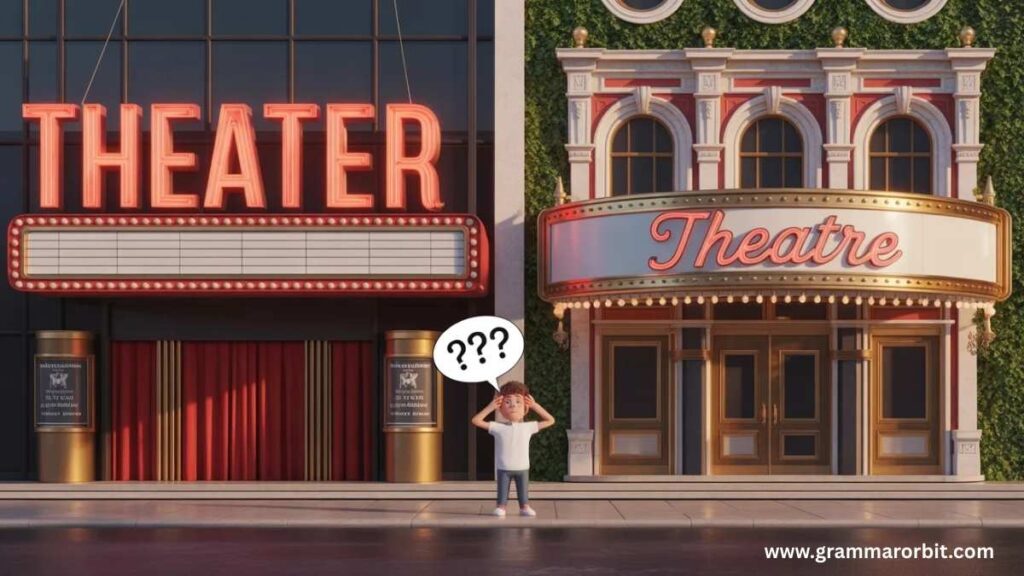
Understanding the difference isn’t just about spelling it’s about how the word is used in real life. Here’s a breakdown with clear examples:
1. Movie Theaters vs Stage Theatres
| Context | American English | British English | Notes |
|---|---|---|---|
| Watching a film | We went to the movie theater to see the latest superhero flick. | We went to the cinema to see the latest superhero flick. | In the U.S., “theater” is synonymous with cinema. In the U.K., “cinema” is more common, though “theatre” can refer to a performance space. |
| Watching a play | The Broadway theater is hosting Hamilton this week. | The Royal Shakespeare Theatre is presenting Macbeth tonight. | “Theater” in the U.S. can refer to live stages, but British English prefers “theatre” for formal stage performances. |
Tip: If you’re writing for an American audience, “theater” works for both movies and plays, but for a British audience, reserve “theatre” for live performances.
2. Community and School Productions
- American Example: “The high school theater club is performing Peter Pan this Friday.”
Here, “theater” is used to describe the school’s performance space or program. - British Example: “The local theatre is hosting a production of Oliver Twist next month.”
Using “theatre” signals a formal stage setting and aligns with British English traditions.
Observation: Whether it’s a small school stage or a local arts center, the spelling often reflects regional conventions more than the size of the venue.
3. Venue Branding and Names
Some places stick with historic or brand-specific spellings, which might not match their country’s standard:
- Steppenwolf Theatre (Chicago, U.S.) – Uses “-re” for a classic, prestigious feel.
- AMC Theaters (U.S.) – Uses “-er” to match commercial, modern American style.
- Globe Theatre (London, U.K.) – Preserves historic British spelling.
- Royal National Theatre (London, U.K.) – Consistent with British English and formal performance venues.
Lesson: When referring to a brand or proper venue name, always use the official spelling, even if it goes against your audience’s typical spelling preference.
4. Home Setups
- American English: We finally built a home theater in the basement with a big screen and surround sound.
- British English: We installed a home theatre with comfy chairs and a projector.
Even in casual, everyday life, the spelling reflects regional preferences. “Home theater” vs “home theatre” can indicate whether the writer is leaning American or British.
5. Pop Culture References
- Movies: “I love going to the theater to catch the new Marvel movie.” (U.S.)
- Stage Plays: “She has tickets for the theatre to see Les Misérables.” (U.K.)
Fun note: Even in pop culture, the spelling choice subtly signals the writer’s background or the intended audience.
6. Tips for Writers and Editors
- Pick one spelling for your article or story and stick with it.
- Use “theatre” for classic drama, Shakespeare, or live stage arts, especially in formal or academic writing.
- Use “theater” for movies, commercial venues, and American contexts.
- Respect brand or venue names, even if they differ from regional norms.
These everyday examples help you see that theater vs theatre isn’t just about letters it’s about context, audience, and clarity. The more examples you read and practice, the easier it becomes to choose the right spelling without hesitation.
Case Study: Shakespeare Theatre Spelling
- U.S.: Shakespeare Theatre Company in Washington, D.C. uses “-re” for historical authenticity.
- U.K.: Globe Theatre preserves traditional spelling for cultural significance.
Consistency here is key in professional writing and helps maintain credibility and clarity.
Dreamed or Dreamt Which One Should You Use?
Current Usage Patterns
Across regions, usage reflects cultural preferences rather than correctness.
| Region | Theater Searches | Theatre Searches |
|---|---|---|
| United States | 75% | 25% |
| United Kingdom | 30% | 70% |
| Canada | 50% | 50% |
| Australia | 35% | 65% |
Observation: While “theater” dominates in American media, “theatre” remains culturally prestigious in live performance contexts.
Fun Facts & Cultural Notes
- Oldest operating theatre: Theatre Royal, Drury Lane (London, 1663).
- Movie theater vs stage theatre: Confusion often arises, but context clears it up. Movie theaters are casual, stage theatres are formal.
- Regional quirks: Canada uses both depending on context; Australia often prefers “theatre” for live performances.
Quote: “Spelling tells a story of history, culture, and identity,” says Dr. Helen Parker, linguist.
Reference Cambridge Dictionary Definitions
Here’s a trusted source for clear word meanings:
FAQs
Which is correct, theater or theatre?
Both spellings are correct. Theater is standard in American English, while theatre is the traditional British spelling. Your choice depends on region, context, and audience. For movies and casual American writing, use theater. For stage plays, live performances, or British audiences, use theatre.
Why do Americans say theatre?
Actually, most Americans say theater, not theatre. The “-er” ending became standard in the U.S. thanks to spelling reforms by Noah Webster in the 18th and 19th centuries, who wanted to simplify English spelling. Some American venues, however, keep theatre in their names to sound classic or prestigious, like the Shakespeare Theatre Company in D.C.
Is it theater kid or theatre kid?
It depends on where you live. In the U.S., students involved in drama programs are usually called theater kids. In the U.K. or international schools using British English, they are often called theatre kids. Either way, it’s the same passionate crew just a different spelling.
Is theater the same as theatre?
Yes! There’s no difference in meaning. Both words refer to spaces where performances or shows happen. The difference lies in regional spelling and sometimes the type of venue: theater often implies cinemas in the U.S., while theatre implies live stage performances, especially in the U.K.
Is it home theatre or theater?
Both are correct, but context matters. In American English, you’ll usually see home theater when referring to a personal cinema setup. In British English, home theatre is preferred. Either way, it describes your comfy movie watching paradise at home.
Conclusion
So, which is it theater or theatre? The answer is simple: both are right, but context is king. Use theater for American screens and popcorn filled movie nights, theatre for British stages, velvet curtains, and Shakespearean drama. Remember, consistency beats cleverness mixing them mid article is like wearing a tux with sneakers: confusing and mildly alarming. Next time you see a sign, a ticket, or a program, you’ll know exactly which spelling to use and maybe even impress a friend with your newfound linguistic prowess. Either way, enjoy the show… and the spelling!

JHON AJS is an experienced blogger and the creative voice behind the website grammarorbit.com, namely Grammar Orbit. With a keen eye for language and a passion for wordplay, he creates engaging grammar insights, word meanings, and clever content that make learning English enjoyable and interesting for readers.