
Ever stared at a message that starts with “TBF” and felt personally attacked for no clear reason? You’re not dramatic. You’re just experiencing the wild world of texting tone. The TBF meaning in text looks innocent, yet it can sound fair, blunt, sarcastic, or accidentally spicy depending on context. One minute it softens criticism, the next it feels like a digital eyebrow raise. This guide exists to save you from awkward replies, silent resentment, and unnecessary overthinking. By the end, you’ll know what TBF really means, when to use it, when to dodge it, and how to respond without starting a tiny text war online.
What Does TBF Mean in Text?
At its simplest, TBF means “to be fair.”
People use it to introduce a balanced opinion, acknowledge another perspective, or soften criticism. In theory, it signals fairness and objectivity. In practice, it often does much more than that.
The core meaning of TBF
- It shows you’re considering multiple sides
- It introduces clarification or contrast
- It frames an opinion as reasonable
Example:
“TBF, I see why you’re upset.”
In this case, TBF text meaning feels supportive and calm.
Why TBF feels stronger in text
When spoken aloud, “to be fair” comes with tone, facial expressions, and pauses. In text messages, those signals disappear. What remains is the phrase itself, which can feel sharper or more final.
That’s why many people ask:
- What does TBF mean in texting?
- Is TBF rude or sarcastic?
The answer almost always depends on context.
What Does TBF Mean in Texting Compared to Speech?

In real conversation, “to be fair” often sounds thoughtful and reflective. In texting, it can sound corrective or dismissive if you’re not careful.
Spoken example:
“To be fair, you did warn me.”
Texted version:
“TBF, you did warn me.”
Same meaning. Different impact.
This gap explains why TBF meaning in messages can feel unpredictable. Text removes emotional cushioning, so wording choices matter more.
The Origin and Evolution of TBF
“To be fair” has been part of everyday English for centuries. It originally helped speakers:
- Balance arguments
- Clarify misunderstandings
- Acknowledge opposing views
How it became internet slang
As digital conversations sped up, people shortened common phrases. Forums, early chat rooms, and SMS messaging rewarded brevity. “To be fair” naturally became TBF.
Unlike many texting acronyms that faded, TBF acronym meaning stuck around because it fills a real conversational role. People still need a quick way to signal fairness or balance.
How TBF Is Used in Real Conversations
Casual Texting
In casual messaging, TBF usage in texting usually aims to reduce tension or show empathy.
Common examples of TBF in texting:
- “TBF, today was rough for everyone.”
- “TBF, I didn’t explain it well.”
In these cases, TBF:
- Softens criticism
- Shares responsibility
- Shows understanding
However, starting a reply with “TBF” can sometimes feel abrupt.
Safer placement: mid-sentence
Riskier placement: opening line
Online Communities and Gaming Chats
In gaming chats, comment sections, and forums, TBF meaning in chat becomes more analytical.
People use it to:
- Justify outcomes
- Balance debates
- Explain mechanics or rules
Example:
“TBF, the matchmaker did pair uneven teams.”
Here, TBF signals logic, not emotion.
Professional and Semi-Professional Communication
This is where caution matters most.
TBF in professional communication often feels informal and slightly confrontational, even if that’s not the intent.
More acceptable settings:
- Internal Slack or Teams chats
- Brainstorming sessions
- Peer-level discussions
Risky settings:
- Client emails
- Performance reviews
- Conflict resolution
In professional contexts, TBF can sound like quiet disagreement or correction.
Tone Matters What TBF Really Implies
The TBF meaning slang shifts based on tone. The same phrase can feel supportive or dismissive depending on context.
Common tone interpretations
| Tone | How It Feels |
|---|---|
| Friendly | Thoughtful, empathetic |
| Neutral | Balanced, logical |
| Blunt | Corrective |
| Passive aggressive | Dismissive |
This range explains why people frequently ask if TBF is rude or sarcastic. It’s not inherently rude, but it can easily sound that way.
Deem Fit Meaning Usage and Real Life Examples
Common Misinterpretations and Clarifications
TBF vs TBH
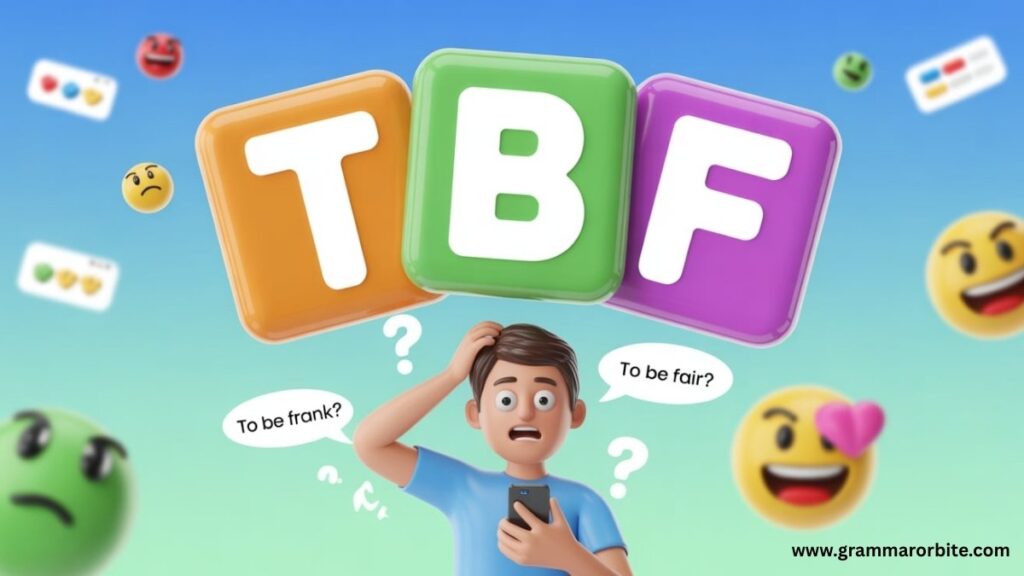
One of the most common mix-ups online is TBF vs TBH.
| Acronym | Meaning | Purpose |
|---|---|---|
| TBF | To be fair | Adds balance |
| TBH | To be honest | Shares personal truth |
Example:
- “TBF, the idea has potential.”
- “TBH, I don’t like it.”
They serve very different roles in conversation.
Mistaking fairness for sarcasm
Because text lacks vocal tone, readers sometimes assume sarcasm where none exists. This is especially true in fast-moving online conversations.
Adding context helps:
- Follow-up explanation
- Polite wording
- Clear intent
TBF vs Similar Acronyms and Alternatives
TBF vs IMO
Another common comparison is TBF vs IMO.
| Acronym | Tone | Best Use |
|---|---|---|
| TBF | Balanced, factual | Clarifying |
| IMO | Subjective, softer | Opinions |
If you want to avoid sounding confrontational, IMO often works better.
Practical alternatives to TBF
When tone matters, consider:
- “From another perspective…”
- “That said…”
- “I see your point, and…”
- “To add context…”
These phrases sound warmer and clearer, especially in professional or sensitive conversations.
BD Meaning in Text 📱 The Complete Guide
How to Respond When Someone Uses TBF
Knowing how to respond to TBF helps prevent misunderstandings.
Neutral response
“That’s fair.”
Respectful disagreement
“I understand. I see it a bit differently.”
Clarifying reply
“What part do you think matters most?”
Avoid mirroring “TBF” unless you’re confident the tone is friendly.
Regional Cultural and Generational Variations
United States
- Common in casual texting and work chats
- Often neutral but can feel blunt
United Kingdom
- Spoken more than written
- Less common as an acronym
Other English-speaking regions
- Usage varies based on exposure to internet culture
Generational differences
TBF meaning Gen Z often feels:
- Faster to interpret
- Less formal
- More context-aware
Older users may read TBF as dismissive or corrective, even when it’s meant to be neutral.
Spoilt vs Spoiled Mastering Their Unique Uses and Meanings
TBF in Dating Apps Forums and Social Media
TBF Meaning in Text dating apps
Dating apps rely on tone and first impressions. TBF can feel judgmental if used too early.
Risky example:
“TBF, your profile is confusing.”
Better alternative:
“I’m curious what you meant by that part.”
TBF on forums
Forums often reward balanced thinking. Here, TBF usually sounds reasonable.
Example:
“TBF, both sides raise valid points.”
TBF meaning on social media
Public platforms amplify tone.
TBF meaning on Twitter (X):
- Often introduces hot takes
- Can spark debate
TBF meaning on Instagram:
- Used in comments or captions
- Easily misread without context
Public replies magnify impact, so caution helps.
Hidden Meanings and Negative Connotations
TBF can unintentionally:
- Undermine someone’s feelings
- Sound corrective
- Trigger defensiveness
This often happens in power dynamics or emotional discussions.
Example:
“TBF, that’s not how it works.”
Even if accurate, it can feel dismissive.
Is TBF Appropriate at Work?
When it’s okay
- Casual internal chats
- Peer discussions
- Collaborative brainstorming
When to avoid it
- Client communication
- Performance feedback
- Sensitive topics
If there’s any doubt, skip it.
Better professional alternatives
| Instead of TBF | Try This |
|---|---|
| TBF, I disagree | “Here’s another perspective” |
| TBF, that’s wrong | “Let’s revisit this” |
| TBF, it won’t work | “There may be challenges” |
These sound constructive rather than corrective.
Real Examples TBF in Action
Casual conversation
“TBF, I forgot too.”
Tone: Friendly, shared responsibility
Group discussion
“TBF, both approaches could work.”
Tone: Neutral, balanced
Workplace chat
“TBF, the timeline was tight.”
Tone: Acceptable internally, risky externally
Social media comment
“TBF, this isn’t new.”
Tone: Can feel dismissive in public
TBF Cheat Sheet
| Aspect | Quick Answer |
|---|---|
| Meaning | To be fair |
| Tone | Context-dependent |
| Formality | Informal |
| Safe at work? | Sometimes |
| Often misread? | Yes |
Reference Cambridge Dictionary Definitions
Here’s a trusted source for clear word meanings:
FAQs About TBF Meaning in Texting
What does TBF mean in texting?
TBF stands for “To Be Fair.” It’s used to introduce a balanced opinion, clarify a point, or soften criticism in casual conversations and online chats.
What does TBF mean in Snap?
On Snapchat, TBF meaning is the same“To Be Fair.” People use it in snaps or chat messages to give context, balance their statement, or acknowledge another perspective without sounding harsh.
What does TBF stand for?
TBF is an acronym for “To Be Fair.” It originated from spoken language and evolved into internet slang used across texting, social media, and online communities.
Is TBF used in text messages?
Yes. TBF usage in texting is common for casual conversations, online discussions, and even semi-professional messaging. It helps signal fairness, honesty, or a balanced view.
How is “TBF” used on social media?
On platforms like Instagram, Twitter, or TikTok,TBF Meaning in Text on social media often appears in captions, comments, or replies. It introduces a fair perspective, balances an opinion, or softens criticism, though tone can be misread without context.FAQs About TBF Meaning in Texting
What does TBF mean in texting?
TBF stands for “To Be Fair.” It’s used to introduce a balanced opinion, clarify a point, or soften criticism in casual conversations and online chats.
What does TBF mean in Snap?
On Snapchat, TBF meaning is the same“To Be Fair.” People use it in snaps or chat messages to give context, balance their statement, or acknowledge another perspective without sounding harsh.
Conclusion
Texting should make life easier, not turn three little letters into an emotional puzzle. By now, the TBF meaning in text should feel a lot less mysterious and a lot more manageable. Used wisely, TBF adds balance, honesty, and a touch of fairness to digital conversations. Used carelessly, it can sound like a quiet mic drop. Context does the heavy lifting here. Tone seals the deal. When in doubt, spell it out or choose a softer phrase. Your message will land better, your chats will stay peaceful, and you’ll spend less time rereading texts like a detective hunting for hidden meaning. To be fair… that’s a win.

JHON AJS is an experienced blogger and the creative voice behind the website grammarorbit.com, namely Grammar Orbit. With a keen eye for language and a passion for wordplay, he creates engaging grammar insights, word meanings, and clever content that make learning English enjoyable and interesting for readers.