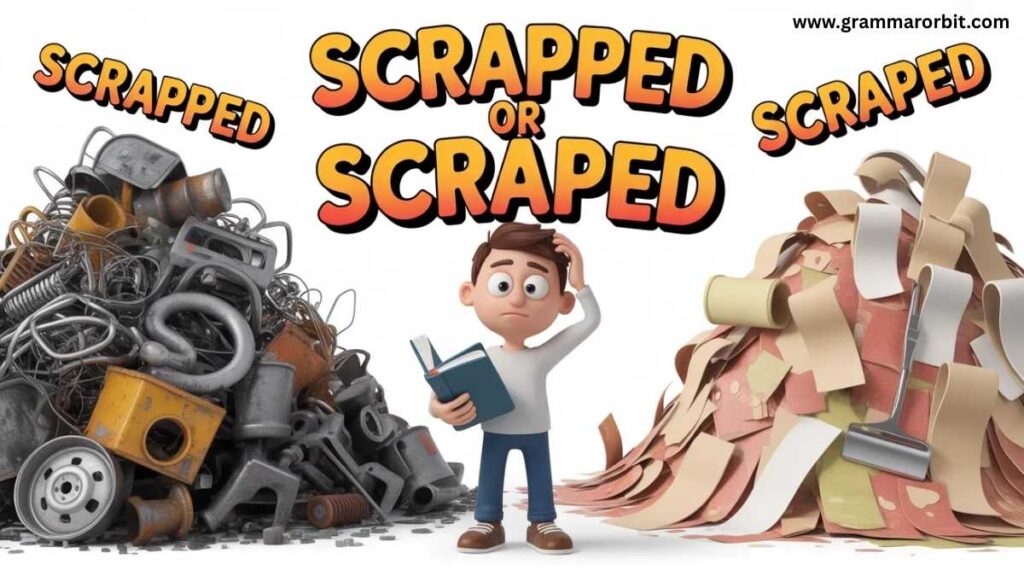
Ever typed scrapped or scraped and stared at the screen like it personally offended you? You’re not alone. One tiny letter. One extra “P.” Suddenly your canceled project sounds like it fell off a bike and skinned its knee. Awkward. This mix up sneaks into emails reports and even headlines then quietly changes the meaning of the whole sentence. The worst part? Spellcheck just watches it happen. In this guide, the confusion finally ends. You’ll learn when something gets scrapped, when it gets scraped, and why mixing them up can make smart writing look sloppy. Let’s fix it once and for all.
The One-Letter Mix-Up That Changes the Meaning
At a glance, scrapped and scraped look almost identical. They sound similar in fast speech. Spellcheck often misses the error. Autocorrect sometimes creates it.
But the meanings couldn’t be more different.
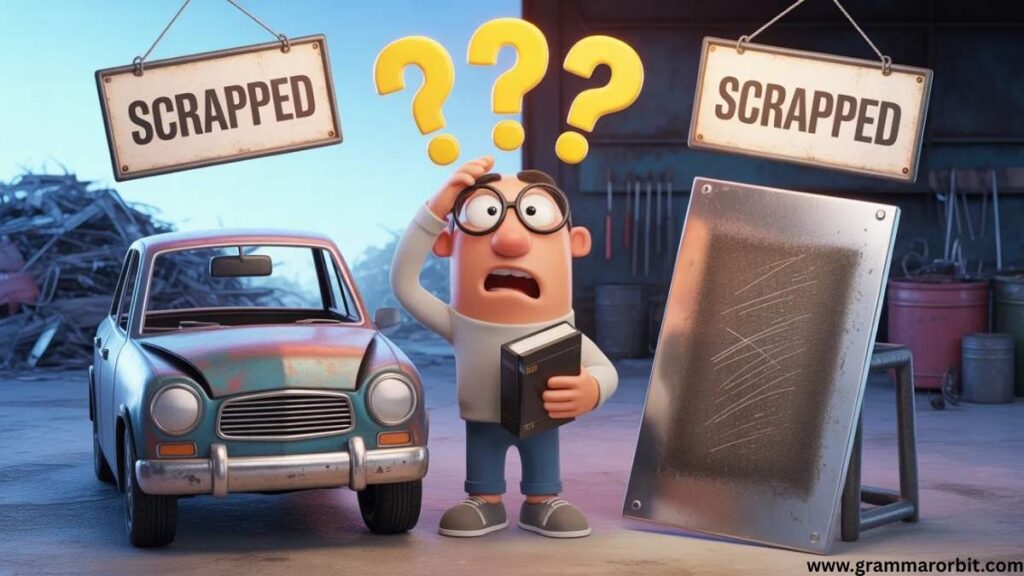
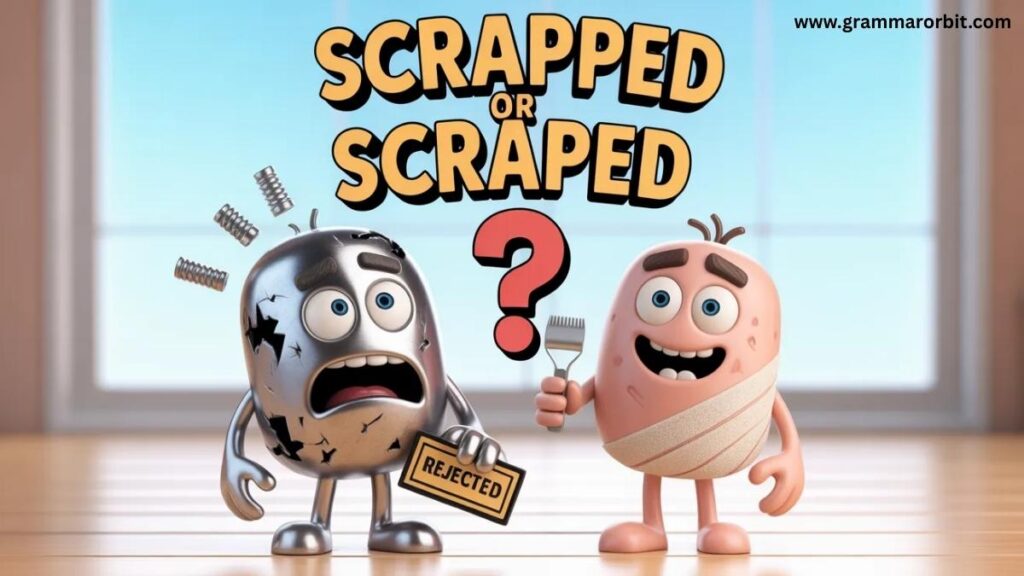
Scrapped means something was canceled or abandoned.
Scraped means something rubbed, got injured, was collected, or barely succeeded.
Scrapped Meaning: When Something Is Abandoned or Canceled
What Does Scrapped Mean?
The scrapped meaning in English is straightforward.
Scrapped means:
- Canceled
- Abandoned
- Discarded
- Thrown away after consideration
In scrapped definition grammar, the verb comes from scrap, which refers to waste or leftover material. When you scrap something, you decide it’s no longer useful.
Common Situations Where “Scrapped” Is Correct
You’ll usually see scrapped used with:
- Plans
- Projects
- Ideas
- Proposals
- Policies
- Vehicles
- Strategies
Scrapped vs Scraped Examples (Correct Usage)
- The company scrapped the project after funding fell through.
- Lawmakers scrapped the proposal following public criticism.
- The startup scrapped its original idea and changed direction.
- The damaged car was scrapped for parts.
Synonyms for Scrapped
Depending on tone and context, you can also use:
- Canceled
- Abandoned
- Dropped
- Discarded
- Shelved
- Axed (informal)
Quick test: If canceled works, scrapped is the correct word.
HY Meaning: What It Stands For How It’s Used
Scraped Meaning Contact Injury Effort or Bare Success
What Does Scraped Mean?
The scraped meaning in English involves physical contact or difficulty.
Scraped means:
- Rubbed against a surface
- Lightly injured
- Collected with effort
- Barely succeeded
In scraped definition grammar, scrape always involves friction, contact, or struggle.
Scraped Knee Meaning (A Common Example)
A scraped knee refers to a minor injury caused by rubbing against something rough.
Correct: He scraped his knee on the pavement.
Incorrect: He scrapped his knee on the pavement.
Everyday Examples of “Scraped”
- She scraped the paint off the wall.
- He scraped his elbow while climbing.
- They scraped together enough money to pay rent.
- She scraped through the final exam.
Scrapped vs Scraped: Key Differences at a Glance
| Feature | Scrapped | Scraped |
|---|---|---|
| Core Meaning | Canceled or abandoned | Rubbed or barely succeeded |
| Physical Action | No | Yes |
| Common Context | Plans, projects, ideas | Injuries, surfaces, effort |
| Business Writing | Very common | Rare |
| Memory Clue | Scrap = trash | Scrape = rub |
This table captures the difference between scrapped and scraped clearly and quickly.
TYSM Meaning in 2026: What It Means in Texting
Scrapped vs Scraped Grammar Rules (Made Simple)
When to Use Scrapped
Use scrapped when:
- A decision ends something
- A plan or project is canceled
- An idea is abandoned on purpose
When to Use Scraped
Use scraped when:
- Something touches or rubs
- An injury occurs
- Success happens by a narrow margin
Scrapped or Scraped Correct Word Check
Ask one question:
Did it get canceled, or did it make contact?
That answer tells you which word to use.
Scrapped vs Scraped in Business Writing
Is It Scrapped or Scraped in Business Writing?
In professional and corporate contexts, scrapped is almost always correct.
Correct business examples:
- The proposal was scrapped after review.
- The company scrapped the project due to budget constraints.
Incorrect:
- The project was scraped.
Projects don’t rub against anything.
Scrapped or Scraped Project: Which Is Correct?
Scrapped project is the correct phrase.
Scraped project is a common mistake.
Literal vs Figurative Usage
Literal Meanings
- Scraped: physical contact or friction
He scraped the door while moving furniture. - Scrapped: a conscious decision
They scrapped the outdated policy.
Figurative Meanings That Cause Confusion
- Scraped by means barely succeeded.
- Scrapped idea means abandoned idea.
Understanding this difference eliminates most errors.
Why Do People Confuse Scrapped and Scraped?
This scrapped and scraped confusion happens because:
- The words look nearly identical
- They sound similar in quick speech
- Spellcheck doesn’t catch context errors
- Writers rush through drafts
- ESL learners rely heavily on pronunciation
Even skilled writers make this mistake from time to time.
Where the Words Come From (Quick History)
Scrap comes from an old term meaning leftover material or waste, which explains why scrapped means discarded.
Scrape comes from an older verb meaning to scratch or rub, which explains its physical meaning today.
The history lines up perfectly with modern usage.
Real World Scenarios: Choose the Right Word
Business email:
Due to budget issues, the company ___ the expansion plan.
✔️ scrapped
Injury description:
She ___ her knee during practice.
✔️ scraped
Exam result:
He ___ through the course with a passing grade.
✔️ scraped
Strategy meeting:
Management ___ the outdated proposal.
✔️ scrapped
Scrapped vs Scraped Sentences Compared
| Incorrect | Correct |
|---|---|
| The plan was scraped. | The plan was scrapped. |
| He scrapped his knee. | He scraped his knee. |
| They scraped the idea. | They scrapped the idea. |
| She scrapped by the exam. | She scraped by the exam. |
Easy Memory Tricks You’ll Actually Remember
The Trash Test
If it belongs in the trash, it’s scrapped.
The Touch Test
If something touched or rubbed, it’s scraped.
The Extra “P” Trick
Extra P = Physical contact.
Occasion or Ocassion: What’s the Correct Spelling?
Why Getting This Right Matters
Using the wrong word can:
- Confuse your reader
- Undermine professionalism
- Weaken business writing
- Make content look careless
Editors notice this mistake instantly. Clear language builds trust.
Reference Cambridge Dictionary Definitions
Here’s a trusted source for clear word meanings:
FAQs
What Is the Difference Between Scraped and Scrapped?
Scraped shows rubbing, scratching, or barely succeeding. For example He scraped his knee while running.
Scrapped shows cancellation or abandonment. For example The company scrapped the old project.
Quick tip: If something touches or rubs, use scraped. If you cancel or throw something away use scrapped.
How Do You Spell Scraped Knee?
Spell it scraped knee with a single “P”. It describes a minor injury caused by friction or rubbing.
❌ Wrong: scrapped knee
✔️ Right: scraped knee
What Is the Difference Between a Scrap and a Scratch?
- Scrap: leftover piece or discarded material.
- Scratch: small cut or mark caused by rubbing or scraping.
Example:
- He used the metal scrap to fix the fence.
- She got a scratch on her arm while gardening.
What Does It Mean to Be Scrapped?
Being scrapped means you cancel, abandon, or throw something away.
Example: The team scrapped the marketing campaign after low engagement.
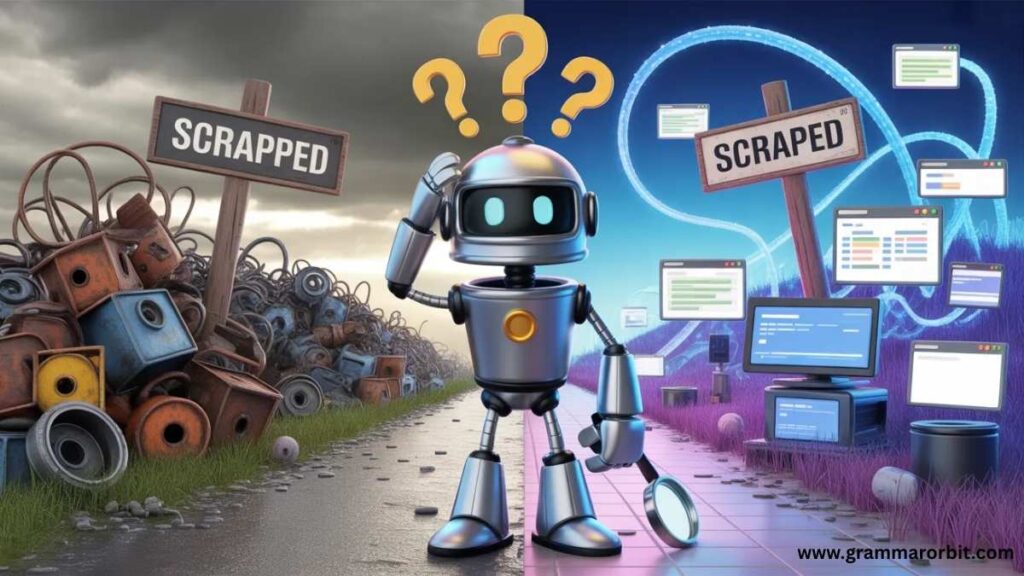
Is It Web Scraped or Web Scrapped?
Use web scraped. It describes gathering data from websites, usually automatically.
❌ Wrong: web scrapped
✔️ Right: web scraped
Remember: you gather data, you don’t cancel it.
Conclusion
Next time you stop and think, “Is it scrapped or scraped?” trust the simple rule. If you cancel something, ditch it, or decide it’s done for good, you scrap it. If something rubs, scratches, or barely survives by the skin of its teeth, it scrapes by. One word heads for the trash. The other ends up on a knee with a bandage. Mix them up, and your sentence stumbles. Choose correctly, and your writing sounds sharp, confident, and intentional. All that power from one extra letter. Grammar may love details, but this one finally works in your favor.

JHON AJS is an experienced blogger and the creative voice behind the website grammarorbit.com, namely Grammar Orbit. With a keen eye for language and a passion for wordplay, he creates engaging grammar insights, word meanings, and clever content that make learning English enjoyable and interesting for readers.