
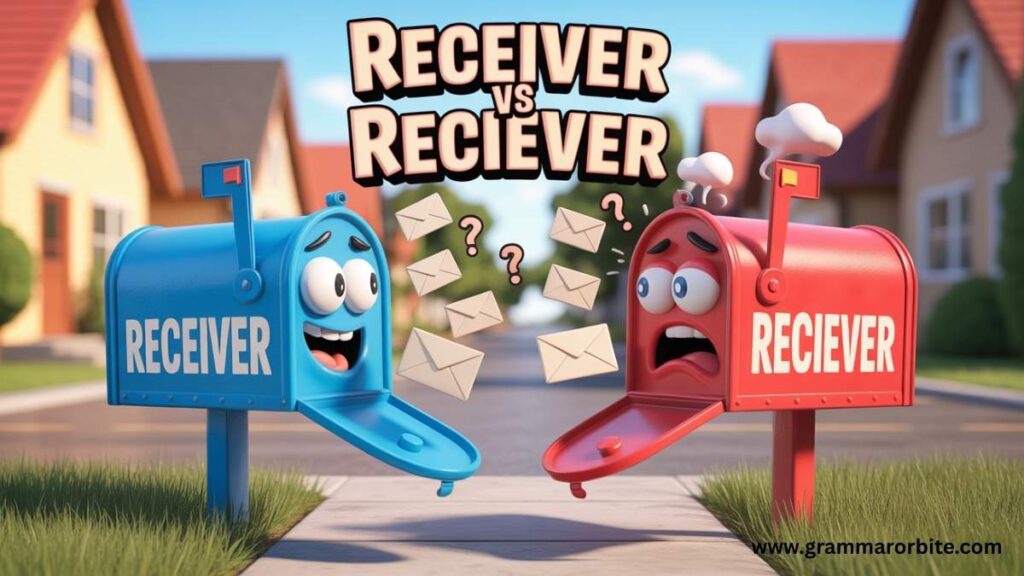
Have you ever typed Receiver vs Reciever and paused wondering which one won the spelling battle? You’re not alone this little “ie” vs “ei” dilemma has tripped up students professionals and even seasoned writers. One wrong letter and suddenly your email report or essay looks like it went through a typo tornado. Don’t worry though by the time you finish reading this guide you’ll never confuse Receiver vs Reciever again. We’ll explore the correct spelling of receiver why reciever is a common mistake clever memory tricks, practical examples and even fun exercises to make spelling stick without putting you to sleep.
The Correct Spelling Receiver or Reciever?
Let’s start with the simplest question which is correct?
The correct spelling is receiver.
On the other hand, reciever is a common misspelling and is considered wrong in every standard English context. Even though it might look and sound correct it violates a fundamental spelling rule in English i before e except after c.
| Incorrect | Correct |
|---|---|
| Reciever | Receiver |
Mistaking receiver for reciever is one of the most frequent misspelled words in English, often showing up in emails, social media posts, reports, and even school essays. Understanding why this mistake happens is the first step in learning how to spell receiver correctly every time.
Origin and Etymology of Receiver

Knowing the origin of a word can make spelling easier and more intuitive. The word receiver comes from the Latin recipere, meaning “to take back” or “to receive.” It entered English around the 14th century and has retained its spelling since then.
The Latin root explains why the “c” comes before “ei,” which aligns with the i before e except after c rule. Words that share the same Latin origin often follow similar spelling patterns.
Understanding etymology also strengthens your grasp of English grammar rules improving overall writing accuracy.
Understanding “Receiver”
The receiver meaning depends heavily on context. At its core, a receiver is someone or something that receives. This can include objects, signals, responsibilities, or messages.
Some of the most common types of receiver include:
- Technology receiver: Devices like radio receivers, satellite receivers, or TV receivers.
- Football receiver: Players in American football who catch passes from the quarterback.
- Legal receiver: A person appointed by a court to manage assets, finances, or property.
- Everyday receiver: Any person who receives something, like a package or letter.
Each of these contexts requires the correct spelling. Using reciever in place of receiver can look careless, especially in professional writing or academic contexts.
Common Uses of Receiver
Let’s examine some practical examples where receiver spelling is critical.
| Context | Example Sentence | Notes |
|---|---|---|
| Technology | “The new satellite receiver supports high definition streaming.” | Refers to electronic devices that receive signals. |
| Sports | “The wide receiver caught the game winning touchdown pass.” | Football specific terminology. |
| Legal/Finance | “The court appointed a receiver to manage the bankrupt company’s assets.” | A formal role in law or finance. |
| Everyday Life | “She was the grateful receiver of the gift.” | General usage in communication. |
Seeing these examples makes it clear how versatile the word is, and why correct spelling matters across different domains.
Why People Spell It Wrong
The reciever spelling mistake is surprisingly common, even among proficient English users. Here’s why:
- Phonetic confusion: The word sounds like “reciever,” which leads people to write it incorrectly.
- Rule misapplication: People forget or misapply the i before e except after c rule.
- Typing habits: Quick typing, autocorrect errors, and casual writing environments often result in typographical errors.
Interesting Fact
A study of online writing in 2023 found that reciever appeared over 40,000 times in digital texts as a misspelled variant of receiver, proving it’s one of the most persistent English spelling mistakes.
Common Errors and Misconceptions
English is notorious for tricky spelling patterns, and reciever is just one example. Here are other incorrect variations you might see:
- recever
- receeiver
- reciever
All of these violate English spelling rules for ei/ie words and can look unprofessional in formal writing.
BD Meaning in Text 📱 The Complete Guide
Example Sentences Correct Use of Receiver
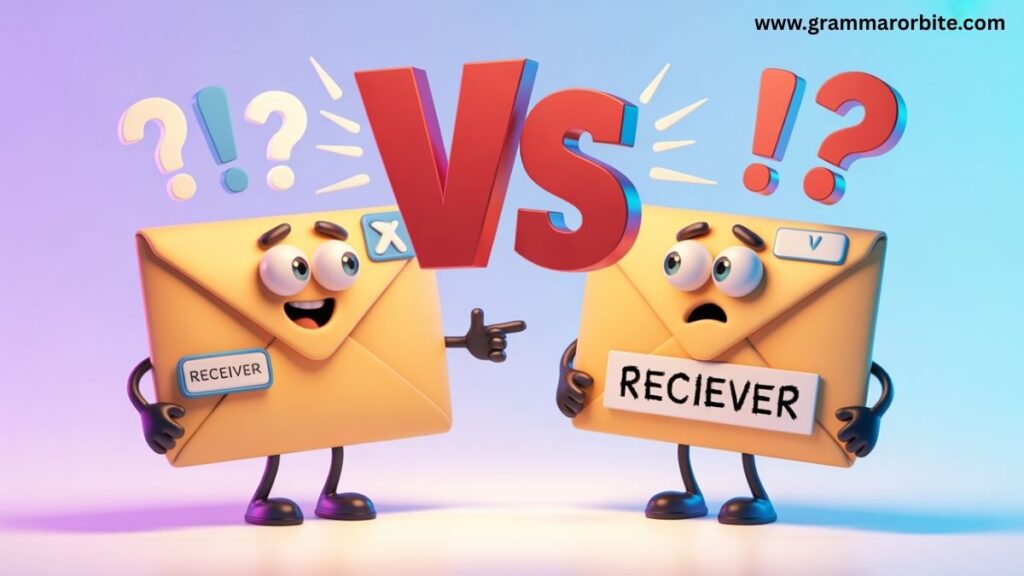
Here are some examples showing how to spell receiver correctly in different contexts:
- Technology: “The radio receiver picks up stations from around the city.”
- Sports: “The star receiver ran 30 yards to catch the pass.”
- Legal: “A receiver was assigned to oversee the company’s finances.”
- Everyday: “He was the happy receiver of the invitation.”
Wrong vs Right Table
| Incorrect | Correct |
|---|---|
| The TV reciever is new. | The TV receiver is new. |
| He is a skilled footbal reciever. | He is a skilled football receiver. |
| A reciever was appointed to manage funds. | A receiver was appointed to manage funds. |
These examples demonstrate the importance of adhering to English vocabulary rules and context proofreading for professional writing accuracy.
Spelling Rules and Patterns
The most important rule for how to spell receiver is:
i before e except after c.
- When “c” precedes “ei,” it’s correct: receiver, receive, deceive.
- Words that break the rule are exceptions, such as weird or leisure, but receiver is not an exception.
Other Examples Following the Rule
| Word | Notes |
|---|---|
| Receive | c + ei pattern, same as receiver |
| Deceive | Follows c + ei pattern |
| Ceiling | c + ei pattern |
| Perceive | Follows c + ei pattern |
Mastering these patterns helps writers avoid misspelling receiver and other tricky English words.
Deem Fit Meaning Usage and Real Life Examples
Memory Aids and Mnemonics
Rules alone may not stick, so here are some mnemonics for spelling receiver:
- “C comes first, then ei so it’s receiver.”
- Visualize a letter being caught: the “c” catches the “ei.”
- Remember: “I before E except after C; when C comes first, E I is best.”
These memory aids for spelling receiver are simple but effective, especially for students or anyone prone to typos.
Self Checking Strategies
Even experienced writers can slip up, so here’s how to check your spelling of receiver:
- Read aloud: Hearing the word can make errors obvious.
- Proofread in context: Look at sentences carefully before finalizing.
- Practice exercises for receiver spelling: Fill-in-the-blank quizzes or short writing exercises reinforce correct usage.
- Use a mental checklist: Remember the i before e except after c rule whenever writing related words.
Practice Exercises
Here are some exercises to help you avoid misspelling receiver:
- Fill in the blank: “The court appointed a to manage the estate.”
- Correct the sentence: “He bought a new reciever for his stereo.”
- Multiple choice: Which is correct?
- a) Reciever
- b) Receiver
- c) Recever
Answers: 1. receiver, 2. receiver, 3. b) Receiver
By practicing regularly, you can strengthen both memory and accuracy.
Exceptions and Special Cases
The English language has countless exceptions, but fortunately:
- Receiver has no alternative correct spelling.
- Unlike “weird” or “leisure,” it strictly follows the i before e except after c rule.
- Understanding this makes spelling receiver in professional writing much easier.
Recap and Key Takeaways
Let’s summarize everything you need to remember about Receiver vs Reciever:
- Correct spelling of receiver: Receiver
- Incorrect: Reciever
- Rule: i before e except after c
- Contexts: Technology, sports, legal/finance, everyday use
- Memory tips: Mnemonics, visualization, and repeated practice
- Self checking: Proofreading, reading aloud, and context review
By internalizing these points, you will never confuse receiver or reciever again.
Spoilt vs Spoiled Mastering Their Unique Uses and Meanings
Additional Tips for Correct Spelling
Here are some practical spelling tips to reinforce your learning:
- Keep a personal spelling notebook for tricky words.
- Do spelling practice for students or adults by creating short quizzes.
- Use English spelling mnemonic devices for other words with similar patterns.
- Regularly review words that break the rule to avoid confusion.
These habits improve language precision and reduce typographical errors in your writing.
Reference Cambridge Dictionary Definitions
Here’s a trusted source for clear word meanings:
FAQs
What is the difference between a receiver and a reciever?
A receiver is the correct spelling of the word, referring to someone or something that receives. Reciever is a common misspelled word in English and should never be used in professional or formal writing. The only difference is that receiver follows standard English spelling rules, while reciever is incorrect.
What is the difference between receiver and recipient?
While both words involve receiving something, there’s a subtle distinction:
- Receiver: A broader term used in technology, sports, legal contexts, and everyday situations.
- Recipient: Usually refers to a person who receives a gift, award, or message.
For example:
- “The football receiver caught the pass.”
- “She was the recipient of the scholarship.”
What is the meaning of receiver or reciever?
- Receiver meaning: Someone or something that receives an object, signal, or responsibility. Examples include a football receiver, satellite receiver, or legal receiver.
- Reciever: This has no official meaning in English because it is a spelling mistake.
What is the plural form of receiver?
The plural form is receivers. You simply add an “s” at the end to indicate more than one.
Example:
- “The quarterbacks threw passes to all the wide receivers.”
- “The company appointed several receivers to handle different assets.”
Which is the correct plural form?
The correct plural form is Receiver vs Reciever. Always remember that the singular must be spelled receiver, and the plural simply adds “s” to follow English rules.
Conclusion
So, let’s settle this once and for all: it’s Receiver vs Reciever. Think of it like a quarterback throwing a perfect pass you want it caught cleanly, not fumbled. Spelling it wrong is like showing up to a business meeting in socks with sandals: technically still clothing, but oh boy it doesn’t inspire confidence.Remember the simple rule. “i before e except after c” it’s your trusty cheat sheet for dodging embarrassing typos. And if you forget? Just picture the “c” catching the “ei” like a superhero snatching a falling cat. Add a dash of mnemonics, sprinkle in a few practice exercises, and soon enough, receiver will stick in your brain like your favorite song on repeat.

JHON AJS is an experienced blogger and the creative voice behind the website grammarorbit.com, namely Grammar Orbit. With a keen eye for language and a passion for wordplay, he creates engaging grammar insights, word meanings, and clever content that make learning English enjoyable and interesting for readers.