
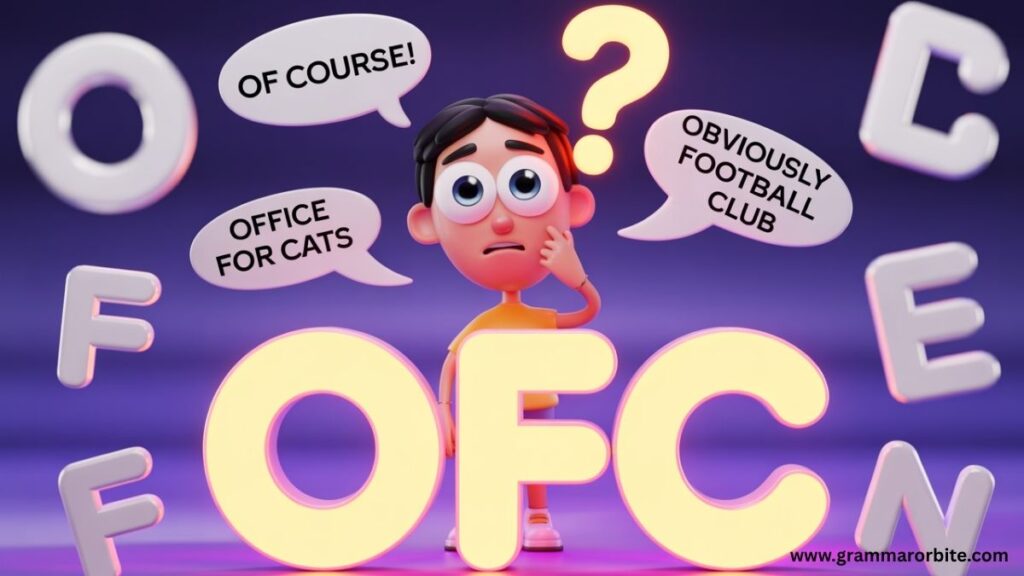
If you’ve ever stared at your phone wondering whether “OFC” was friendly, sarcastic, or low key rude, welcome to the club. One tiny acronym. So much emotional baggage. In modern texting, three letters can carry more attitude than a full paragraph. That’s why understanding the OFC meaning matters more than you might think. It can signal casual agreement, confident confirmation, or a subtle “you should already know this.” Used well, it keeps conversations flowing. Used poorly, it starts drama. This guide breaks down exactly what OFC means, how people really use it, and when typing it might be a terrible idea.
What Does OFC Mean?
At its core, OFC means “of course.”
That’s the standard and most common definition. When someone uses OFC, they’re usually expressing agreement or confirmation without typing the full phrase.
OFC full form
- OFC = Of Course
So when someone asks, “What does OFC mean?”, the answer is straightforward. The complexity comes from how people use it.
OFC Meaning Explained in Plain Terms
In casual online language, OFC works like a verbal nod. It says yes, but with confidence. Sometimes it also suggests the answer should’ve been obvious.
That’s why the OFC slang meaning can feel different depending on the situation.
OFC can signal:
- Friendly confirmation
- Quick affirmation
- Confidence in texting
- Mild impatience
- Subtle sarcasm
Same word. Different tone.
How OFC Is Used in Everyday Conversations
People don’t use OFC randomly. It usually appears when the answer feels obvious to the speaker.
Common real life uses
- Confirming plans
- Agreeing with opinions
- Responding to predictable questions
Examples
- “Are you coming later?” → OFC
- “Did you understand the instructions?” → OFC
- “You like coffee, right?” → OFC 😂
In these cases, OFC sounds relaxed and natural.
OFC Meaning in Texting
The OFC meaning in texting is tied directly to speed. Text messages favor short replies. OFC fits perfectly into that rhythm.In texting, OFC is shorthand for “of course,” but its meaning goes beyond just a simple yes. It’s a tool for quick affirmation, showing agreement, or giving a friendly confirmation without typing a full sentence. Texting is all about speed, convenience, and tone, and that’s exactly where OFC shines.
Why OFC is popular in texting
- Faster than typing “of course”
- Feels conversational
- Matches modern digital communication habits
You’ll see it often in:
- SMS
- iMessage
- WhatsApp conversations
- Snapchat replies
- Discord chat
- Instagram DMs
Tone changes everything
| Message | How it feels |
|---|---|
| OFC | Neutral agreement |
| OFC! | Enthusiastic |
| OFC 😊 | Friendly |
| OFC… | Annoyed or sarcastic |
This is why OFC usage in texting requires awareness. One emoji can soften it. One ellipsis can make it tense.
OFC Meaning in Chat and Group Conversations
In group chats, OFC often reinforces shared understanding.
OFC meaning in chat
- Supporting what someone just said
- Agreeing with group consensus
- Confirming something already assumed
Example
“This deadline is tight.”
“OFC. It always is.”
Here, OFC signals agreement without slowing the conversation down.
OFC Meaning on Social Media
On public platforms, OFC tends to sound stronger.
You’ll see it in:
- Instagram comments
- TikTok slang
- X replies
- Reddit threads
OFC meaning on social media
- “That’s obvious”
- “Everyone knows this”
- “No argument needed”
Because social media lacks tone cues, OFC can feel blunt even when it isn’t meant to be.
BDE Meaning in Text 🌟 The Ultimate Guide to This Viral Slang
Why Tone Makes or Breaks OFC
Tone is everything with OFC.
When OFC sounds friendly
- Used with emojis
- Paired with explanation
- Used between people who know each other
When OFC sounds rude
- Used alone
- Used in response to sincere questions
- Used repeatedly
Compare these
- “OFC, happy to help!” → Warm
- “OFC.” → Neutral
- “OFC 🙄” → Dismissive
That’s why confidence in texting must be balanced with clarity.
OFC in Professional and Workplace Chats
While OFC is widely recognized as casual slang, it has started creeping into workplace chats, especially on platforms like Slack, Microsoft Teams, or internal messaging apps. However, using it at work requires nuance because digital communication lacks vocal tone, making misunderstandings more likely.
When OFC Works in the Workplace
- Internal Team Chats: Among colleagues who know each other well, OFC can be a fast, friendly way to confirm tasks.
- Example: “Can you review the draft before the meeting?”
“OFC, I’ll handle it.”
- Example: “Can you review the draft before the meeting?”
- Quick Acknowledgment: It works well for simple, informal confirmations where a long response isn’t necessary.
- Casual Project Coordination: When multiple people are coordinating schedules or tasks, OFC can prevent message clutter.
OFC meaning in professional chat
- Acceptable in Slack messages
- Sometimes used in Microsoft Teams
- Best between coworkers with established rapport
Acceptable
“Can you join the 2 PM call?”
“OFC, I’ll be there.”
Risky
“Did you finish the report?”
“OFC.”
That reply may feel dismissive.
Safer professional alternatives
- “Absolutely”
- “Yes, I’ve completed it”
- “Of course, I can handle that”
Understanding professional vs informal language helps avoid tension.
Receiver vs Reciever Which is Correct?
Does OFC Have Other Meanings? Yes
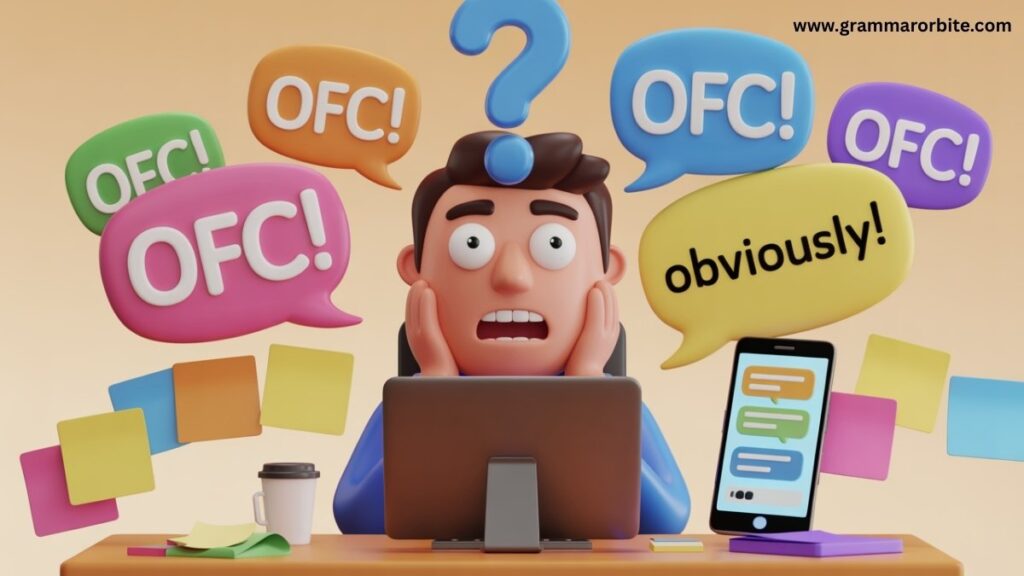
Outside slang, OFC can mean something very different.
Common alternative meanings
| OFC stands for | Context |
|---|---|
| Optical Fiber Cable | Technology |
| Ocular Fundus Changes | Medical abbreviation |
| Office of Federal Contract Compliance | Government |
| Officer Commanding | Military |
| Official Fan Club | Entertainment |
This matters when discussing OFC acronym meaning in professional or technical contexts.
OFC vs Similar Slang Terms
OFC isn’t alone among internet slang abbreviations.
Comparison table
| Term | Meaning | Tone |
|---|---|---|
| OFC | Of course | Confident |
| obv | Obviously | Blunt |
| def | Definitely | Casual |
| sure | Agreement | Neutral |
| yup | Yes | Friendly |
Each option carries a slightly different emotional weight.
Synonyms and Alternatives to OFC
Sometimes spelling it out avoids confusion.While OFC is widely recognized in texting and online chats, sometimes it’s better to use alternatives especially if you want to avoid misunderstandings, sound more polite, or fit a professional context. Choosing the right synonym also helps keep conversations fresh and prevents repetitive phrasing.
Casual alternatives
- “For sure”
- “Definitely”
- “Sure thing”
More neutral options
- “Yes”
- “I agree”
- “That works”
Variety improves clarity and keeps conversations natural.
Pros and Cons of Using OFC
Pros
- Fast
- Widely understood
- Fits casual online language
- Keeps conversations moving
Cons
- Easy to misinterpret
- Can sound dismissive
- Not suitable for formal writing
Knowing your audience solves most problems.
Real Examples of OFC in Use
Text message
“Can you send the photo?”
“OFC, one sec.”
Group chat
“This app update is overdue.”
“OFC. Everyone’s been waiting.”
Workplace chat
“Can you review this?”
“OFC, I’ll take a look.”
Each example shows how context shapes meaning.
Thus Far vs So Far Meaning Usage and Examples
Why OFC Gets Misunderstood

Even though OFC is short and simple, it’s surprisingly easy to misinterpret. The main reason is tone ambiguity. Unlike spoken language, texting and online chats don’t convey voice inflection, facial expressions, or body language. A message like “OFC.” could be read as confident, sarcastic, impatient, or even dismissive depending on the reader’s perspective.
Key reasons for misunderstandings
- Lack of vocal cues: Without tone of voice, a casual “OFC” can feel cold or abrupt.
- Generational differences: Younger users often see OFC as efficient shorthand, while older users may interpret it as rude or abrupt.
- Cultural context: Some cultures value politeness and formality in digital communication, so OFC may feel too blunt.
- Punctuation and emojis: Adding “!” or “😊” can make OFC sound enthusiastic or friendly, while ellipses “OFC…” may convey annoyance.
- Context of the conversation: In professional settings or serious discussions, OFC can be misread as dismissive or sarcastic.
Common reasons
- No vocal tone
- Cultural differences
- Generational texting habits
Younger users often see OFC as efficient. Older users may see it as abrupt. That’s the reality of modern digital communication.
Reference Cambridge Dictionary Definitions
Here’s a trusted source for clear word meanings:
FAQs About OFC
q1: What does OFC mean in texting?
OFC stands for “of course.” In texting, it’s a quick, casual way to confirm something, show agreement, or give a friendly nod without typing the full phrase. Tone, punctuation, and emojis can change how it’s interpreted.
q2: Is OFC formal or informal?
OFC is informal. It works well in casual conversations, group chats, and social media, but it’s not recommended for formal emails, professional reports, or official correspondence.
q3: Can OFC be rude?
Yes. Depending on context and tone, OFC can sound dismissive or sarcastic. A simple “OFC” might be fine among friends but could feel blunt or rude in sensitive conversations.
q4: Can OFC be used at work?
It can, but only in informal workplace chats with colleagues you know well. Tools like Slack or Microsoft Teams often see OFC in casual replies, but avoid it in client emails or formal communication.
q5: Are there different meanings of OFC?
Yes. Outside slang, OFC can mean:
- Optical Fiber Cable (technology)
- Ocular Fundus Changes (medical)
- Office of Federal Contract Compliance (government)
- Officer Commanding (military/law enforcement)
- Official Fan Club (entertainment/sports)
Context determines which meaning is intended.
Conclusion
So there you have it. Three little letters, a surprising amount of power. The OFC meaning may look simple on the surface, but in real conversations, it can behave like a mood ring. Used with the right tone, it’s a friendly nod that says, “Yes, absolutely.” Used at the wrong moment, it can sound like an eye roll you didn’t intend to send. The secret isn’t memorizing rules. It’s reading the room, even when the room is a group chat. When in doubt, spell it out. And remember OFC is just shorthand. Your tone does the real talking.

JHON AJS is an experienced blogger and the creative voice behind the website grammarorbit.com, namely Grammar Orbit. With a keen eye for language and a passion for wordplay, he creates engaging grammar insights, word meanings, and clever content that make learning English enjoyable and interesting for readers.