Have you ever typed “Occasion or Ocassion” in an email and instantly felt a small pang of shame? You know that moment when autocorrect gives you a smug look and you wonder if your keyboard is silently judging you? Don’t worry you’re not alone. The struggle with the correct spelling of occasion is real, and it sneaks into casual messages birthday wishes and even professional emails. One tiny misplaced “s” or “c” can turn a polished note into a minor embarrassment. Lucky for you this guide will turn your spelling woes into triumphs so every occasion from weddings to work promotions gets the respect it deserves.
Understanding the Correct Spelling
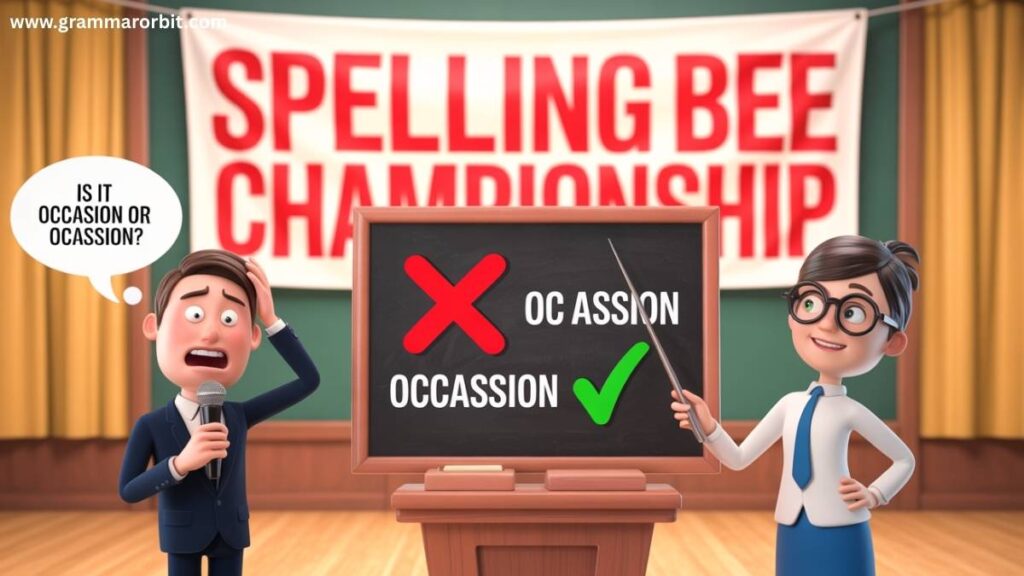
The word is spelled occasion. That means double “c” followed by a single “s”. Any other variation like ocassion, ocation or occassion is incorrect. This rule applies whether you’re drafting a birthday invitation a corporate email, or a casual message.
Occasion meaning:
- As a noun, it refers to an event, milestone, or special moment:
- “Mark’s graduation was a joyful occasion.”
- “This wedding is a formal occasion that requires elegant attire.”
- As a verb (less common), it can mean to cause or bring about:
- “Her speech occasioned laughter among the guests.”
Origin of the word: It comes from the Latin word occasio, which means “opportunity” or “event.” Understanding this origin can help reinforce the correct spelling in your memory.
Common Misspellings of Occasion
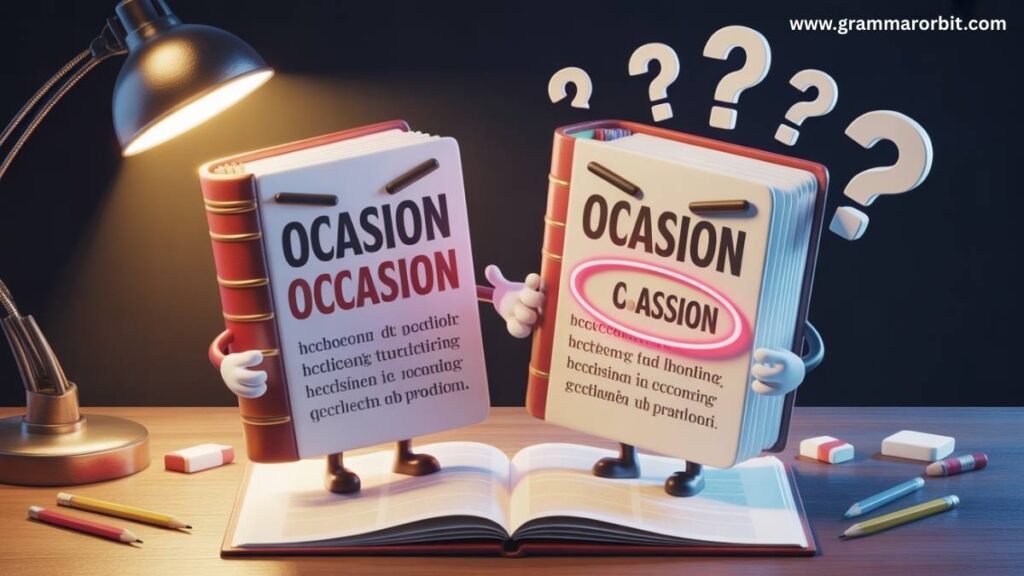
Even experienced writers sometimes make mistakes. Some common misspellings of occasion include:
| Incorrect Spelling | Correct Spelling | Notes |
|---|---|---|
| ocassion | occasion | Most frequent typo; single “s” replaced by double “s” |
| occassion | occasion | Extra “s” inserted; breaks the “double c first single s after” rule |
| ocation | occasion | Letters dropped, often during quick typing |
| ocasian | occasion | Phonetic spelling; confusing “s” and “c” sounds |
Why these mistakes happen:
- Quick typing can lead to typographical errors.
- Overreliance on autocorrect may insert incorrect forms.
- The word has a double-letter pattern that is easy to forget.
- Phonetics mislead people; “ocassion” sounds correct when spoken, especially in informal messages.
Arised or Arose: What’s the Correct Past Tense of Arise? (2026)
How to Remember the Spelling Occasion Memory Tricks
Spelling occasion correctly is simpler if you use memory techniques. Here are some effective occasion spelling tips:
Break it into syllables:
- oc-ca-sion → this separates the double “c” from the single “s.”
Use a mnemonic:
- “One Cat, One Sun” → double “c” first, single “s” after.
Visualization technique:
- Picture a momentous event, like a wedding or graduation. Imagine the letters floating above it. Linking the word to a real-life context reinforces memory.
Writing practice:
- Write the word ten times in sentences:
- “Sarah’s promotion was a proud occasion.”
- “This corporate gala is a formal occasion.”
Tip: Always proofread especially in occasions in emails or invitations. Small mistakes like “ocassion” can reduce credibility in formal occasions or professional writing contexts.
Using Occasion in Personal and Professional Contexts
The word occasion fits smoothly into both everyday conversations and formal writing. The key is how you frame it. Tone, setting, and intent all matter. Let’s break it down so you can use it naturally and correctly every time.
Personal Writing Accuracy
In informal messages, birthday greetings, casual notes, or social media:
- Example: “Happy Birthday, Emma! Hope your day is a special occasion filled with joy.”
- Common mistake: “Happy Birthday! Hope this ocassion brings you joy.”
Tips for personal writing:
- Even in casual messages, using the correct spelling shows care and attention.
- Pair the word with real life events like celebrations, milestones, or personal achievements.
Professional Writing Tips
In professional settings emails reports, presentations:
- Example: “The upcoming corporate gala is a prestigious occasion that requires business attire.”
- Example: “Please RSVP promptly to ensure we can accommodate all attendees for this special occasion.”
Why precision matters:
- Professional context demands precision.
- Spelling mistakes in writing can undermine credibility.
- Using the correct form consistently reflects competence.
Tools to help:
- Microsoft Word, Google Docs, and Grammarly offer spellcheck suggestions.
- Always double check; these tools can introduce autocorrect mistakes.
Lumon Definition and Meaning: a complite giude
Occasional Confusion: Why People Misspell Occasion
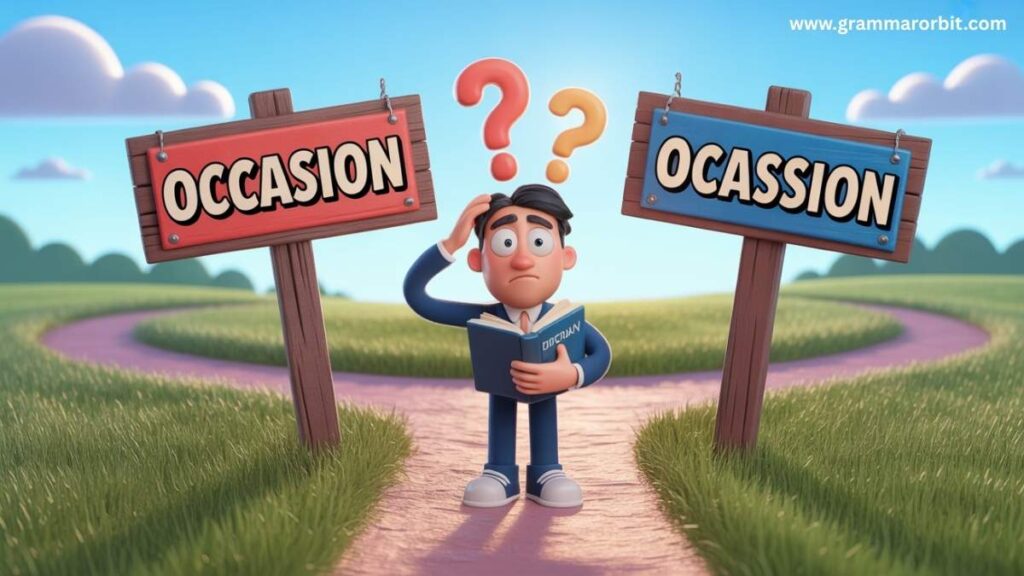
Several factors contribute to occasional misspellings:
- Phonetic similarity: The double “c” and single “s” sound almost identical when spoken.
- Quick typing habits: People often drop or add letters unconsciously.
- Autocorrect reliance: Sometimes it substitutes incorrect words.
- Regional pronunciation differences: Some accents lead to phonetic confusion.
Case Study:
- Lisa, a junior associate, often typed “ocassion” in corporate emails. After using Grammarly and practicing syllable visualization, her spelling errors dropped by 90% in just one month.
Fun Scenarios for Practice
Practicing spelling in real life situations helps retention.
Scenario 1: Invitation Email
- Incorrect: “We invite you to celebrate this ocassion with us.”
- Correct: “We invite you to celebrate this occasion with us.”
cenario 2: Personal Message
- Incorrect: “Happy ocassion, Mark! Hope you enjoy your day.”
- Correct: “Happy occasion, Mark! Hope you enjoy your day.”
Scenario 3: Professional Report
- Incorrect: “The conference marks an important occassion for our team.”
- Correct: “The conference marks an important occasion for our team.”
Contextual practice reinforces memory and helps avoid spelling mistakes in writing.
Role of Context in Using Occasion
Context matters more than you might think when using the word occasion. The meaning, tone, and even the form of the word can change depending on how and where you use it. Let’s break it down in a clear, real-world way.
Occasion as a Specific Event
Use occasion when you’re talking about a particular event or celebration.
Common contexts
- Weddings
- Birthdays
- Graduations
- Anniversaries
Examples
- Her wedding was a joyful occasion.
- This calls for a special occasion dinner.
Here, occasion highlights importance or significance. It signals that the moment matters.
Occasion as a Reason or Cause
Sometimes, occasion doesn’t mean an event at all. Instead, it refers to a reason, cause, or trigger.
Examples
- His comment gave occasion for concern.
- There was no occasion to argue.
In this context, occasion works more like justification or cause, not a celebration.
Tools to Help Spell Occasion Correctly
Several tools make how to spell occasion easier:
| Tool | Purpose | Notes |
|---|---|---|
| Microsoft Word | Spellcheck | Best for formal writing |
| Google Docs | Real-time corrections | Useful for collaborative work |
| Grammarly | Contextual suggestions | Alerts for autocorrect mistakes |
| Mobile keyboards | Predictive text | Can introduce typographical errors if unchecked |
Tip: Don’t rely solely on technology. Reading your text aloud ensures proper spelling and pronunciation.
Occasion Pronunciation
Pronouncing the word correctly also reinforces spelling:
- Syllables: uh KAY zhun
- IPA: /əˈkeɪʒən/
Correct pronunciation helps avoid occasion vs ocassion confusion and keeps the double letter pattern clear in your mind.
hm Mean in a Text from a Girl? Decode Every Hidden Message
Quick Recap: Correct vs Incorrect
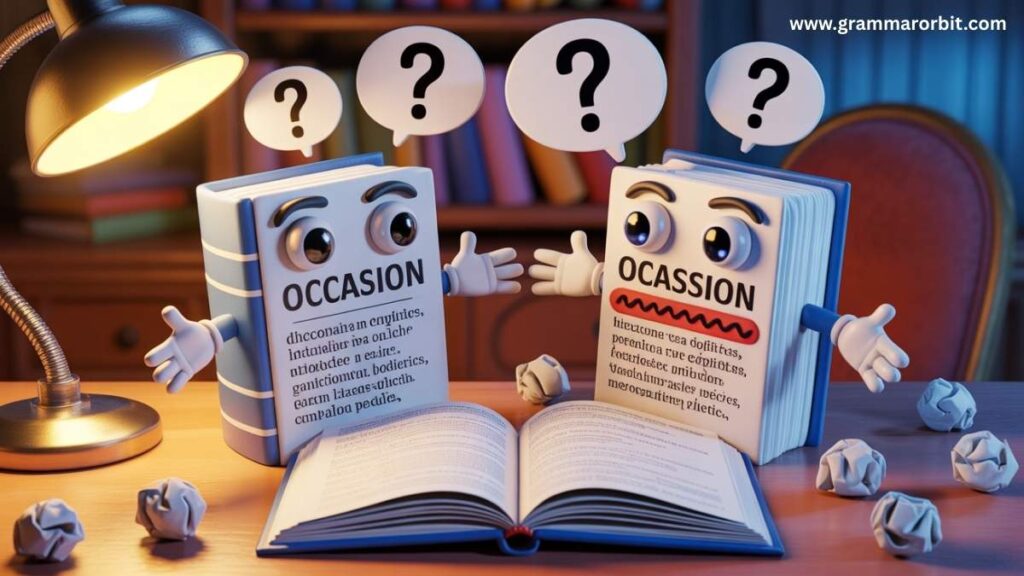
Correct:
- occasion
Incorrect:
- ocassion
- occassion
- ocation
- ocasian
Memory tip:
- Double “c” first, single “s” after.
- Link the word to real events like celebrations, milestones, and invitations.
- Always proofread, especially in occasions in emails or invitations.
Final Writing Tips
To master how to spell occasion, follow these strategies:
- Read your writing aloud.
- Apply occasion memory tricks, like syllables and mnemonics.
- Use professional writing tips to ensure accuracy in reports or emails.
- Practice in real contexts: messages, invitations, and formal announcements.
- Keep a small spelling notebook for tricky words.
Quote for inspiration:
“Attention to detail is the difference between good and great writing”. Jonathan professional editor
Reference Cambridge Dictionary Definitions
Here’s a trusted source for clear word meanings:
FAQs
Which one is correct: Occasion or Ocassion?
Occasion is the correct spelling.
Occassion (with double “s”) is incorrect and considered a common spelling mistake. The word occasion has two C’s and one S.
Does occasion have one “S” or two?
Occasion has one “S.”
A simple memory trick helps here:
- Occasion → cc + s
- Not ss
If you see two S’s, it’s wrong.
How do you spell occasion in American English?
In American English, the spelling is Occasion or Ocassion.
Good news British English uses the same spelling, too. There’s no regional difference here.
Is occasional spelled the same way as occasion?
Yes, they follow the same spelling pattern.
- Occasion → noun
- Occasional → adjective
Both use:
- double “C”
- single “S”
Examples:
- This is a special occasion.
- We meet on an occasional basis.
Is occasion a real word?
Yes, occasion is a real and standard English word.
It’s widely used in everyday writing, formal documents, invitations, and professional communication.
It typically means:
- A special event
- A particular time
- A reason or cause
Example:
- Her graduation was a proud occasion for the family.
Quick Spelling Recap
- ✅ Occasion (correct)
- ❌ Occassion (incorrect)
- ✔️ One S
- ✔️ Two C’s
- ✔️ Same in American and British English
Conclusion
So, next time you’re typing Occasion or Ocassion in a rush take a deep breath and remember: it’s occasion with a double “c” and a single “s.” Think of it as a tiny party for your keyboard every letter in the right place makes your writing look sharp, polished, and guilt free. Whether it’s a birthday, wedding, or corporate gala, spelling it correctly shows you care about the details (and your readers). With these tips mnemonics and a little practice you’ll never let a rogue “s” crash the party again. Cheers to flawless Occasion or Ocassion in writing and in life!

JHON AJS is an experienced blogger and the creative voice behind the website grammarorbit.com, namely Grammar Orbit. With a keen eye for language and a passion for wordplay, he creates engaging grammar insights, word meanings, and clever content that make learning English enjoyable and interesting for readers.