
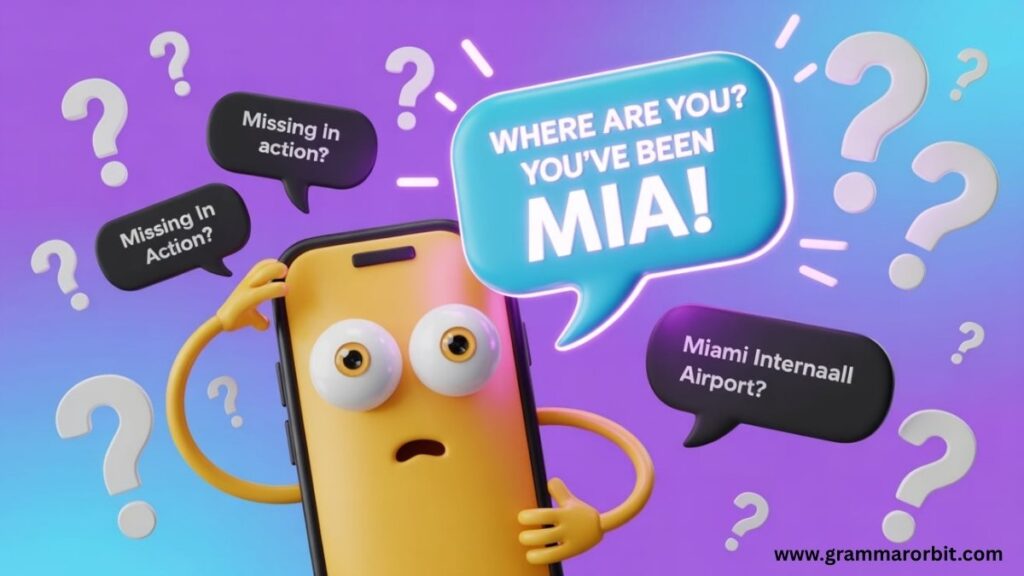
Ever opened your phone, stared at a message from three days ago, and whispered, “Ah… so this is what people mean when they say I went MIA”? Don’t worry. You’re not alone. In fact, the MIA meaning in text reveals more about modern life than any personality quiz ever could. One minute you’re replying instantly, and the next you’ve vanished like a sock in a dryer. When someone asks, “What does MIA mean?”, they’re not just talking slang they’re calling out the friendly digital disappearance we’re all guilty of. So let’s unpack this mysterious habit before you disappear again.
🔥 The Real Reason “MIA” Feels So Personal
Plenty of acronyms live in our phones. We toss around “BRB,” “LOL,” “IDK,” and “IMO” without a second thought. But MIA hits differently because it points to behavior, not just an action or reaction.
It’s one of the few chat slang terms that:
- carries emotional weight
- reveals relationship expectations
- comments on someone’s online presence
- indirectly addresses care, effort, or attention
When someone says you’re MIA, they’re not simply noting that you didn’t respond. They’re expressing how your silence feels to them.
It becomes a mirror reflecting expectations:
- “I’m used to hearing from you more.”
- “I noticed your digital absence.”
- “Something feels off.”
- “I miss your presence.”
Whether the tone is playful, worried, or frustrated, the meaning always speaks to connection—and the temporary loss of it.
💬 What MIA Means in Texting Today
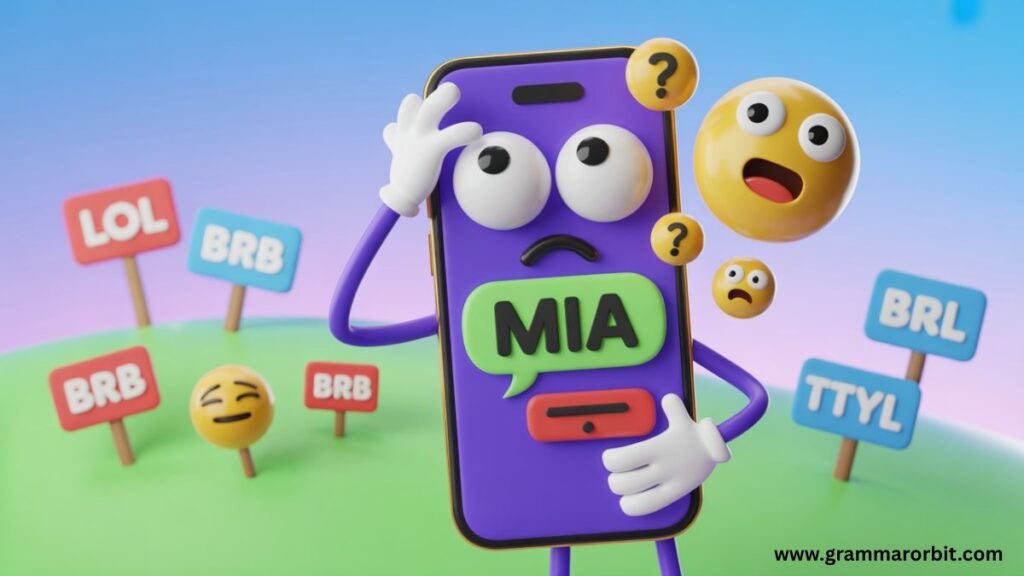
The MIA meaning in text traces back to the phrase Missing in Action meaning from the military. But in texting, it becomes shorthand for:
You disappeared from communication without explanation.
That’s the simplest form. But modern messaging adds nuance, and meaning shifts depending on tone, relationship, and context.
Common interpretations of “MIA” in texting
- You haven’t responded in a while
- You’re offline or inactive on social platforms
- You haven’t been present in the chat
- You’re avoiding communication
- You’re overwhelmed or busy
- You needed a break and didn’t tell anyone
Because texting is so quick and constant, silence stands out. So the word carries more emotion than its three letters suggest.
How tone changes the meaning
- Playful: teasing someone for disappearing
- Concerned: checking in on someone’s wellbeing
- Passive aggressive: hinting at frustration
- Neutral: stating a fact
The real meaning emerges from punctuation, emojis, and the relationship behind the message.
Compare these:
- “You’re MIA 😂” → playful
- “You’re MIA…” → disappointed
- “Hey, you’re MIA. Everything okay?” → caring
The acronym stays the same, but the emotional context of silence changes the message dramatically.
🪖 The Military Roots How MIA Became Everyday Slang
You can’t discuss the MIA acronym definition without its historical roots.
Originally, MIA meant:
A soldier is Missing in Action unaccounted for during combat.
This was a serious designation, recorded in official military reports with deep emotional significance.
So, how did such a heavy term turn into texting slang?
Language evolves wherever people communicate. And once digital culture took off, military phrases softened and drifted into casual usage.
The transition happened gradually.
A Quick Evolution Timeline
1940s – MIA appears in WWII military reports.
1970s – The term becomes widely known through news coverage.
1990s – Early internet users adopt it ironically in forums.
2000s – Gaming chats and instant messaging spread it casually.
2010s – Social media turns “going MIA” into a lifestyle phrase.
2020s – MIA becomes core online slang describing digital absence.
2025 – Used across texting, dating, work chats, and social media.
By the time Gen Z and young millennials began shaping digital language, MIA in social media meant stepping away from visibility not missing on a battlefield. It became shorthand for everyday online disappearance.
📲 When People Say “MIA” Real Situational Examples
The MIA texting meaning changes depending on where and why it appears. People use it for everything from lighthearted jokes to serious check-ins.
Below are real life contexts where MIA shows up.
Dating Situations
In romantic or dating scenarios, “MIA” often carries emotional weight.
People might say it when:
- someone disappears after a great date
- replies slow down dramatically
- one partner becomes distant
- there’s a fear of rejection or confusion
Dating culture interprets MIA as:
- losing interest
- emotional withdrawal
- feeling overwhelmed
- awkwardness or uncertainty
- juggling multiple conversations
It’s rarely neutral here.
Friendships
In social relationships, it’s more flexible.
People call friends MIA when:
- they take a break from group chats
- they disappear from social life
- they’re overwhelmed with work or life changes
- they’re quiet on social media
Friends often use it playfully but occasionally use it to express hurt feelings.
Work and Professional Settings
Using MIA at work gets tricky.
While still informal, it sometimes shows up in:
- Slack or Teams messages
- remote work conversations
- project updates
- group collaboration chats
In professional spaces, MIA can suggest:
- unreliability
- poor time management
- burnout
- unspoken communication boundaries
If someone has gone unexpectedly MIA at work, it usually means productivity or timely replies have taken a hit.
Social Media
Someone is usually labeled MIA when:
- they haven’t posted in a while
- they vanish from stories or feeds
- their online presence drops
- they stop interacting with content
This is where the phrase becomes most common. Social platforms equate silence with withdrawal, so commentators label people as “MIA” quickly.
📨 Real Text Examples (With Tone & Intent Explained)
To fully understand chat slang like MIA, you need real context. Below is a table showing how phrasing and emojis shift meaning.
MIA Usage Table: How Tone Changes the Message
| Example Text | Emotion Behind It | What It Suggests |
|---|---|---|
| “You’ve been MIA 😂” | Lighthearted | “You vanished, but I’m teasing you.” |
| “Hey, you’ve been MIA… everything okay?” | Concern | Worried about wellbeing. |
| “Wow. You’re MIA again.” | Passive aggressive | Frustration and expectations. |
| “My bad, I was MIA yesterday.” | Honest | Taking responsibility. |
| “You’ve been MIA fr.” | Direct | Noticing absence seriously. |
| “Sorry, disappeared. I went MIA for a bit.” | Neutral | Busy or distracted. |
Short Examples with Context
Romantic Text:
“You’re MIA today. Did I upset you?”
Implies concern about emotional context.
Friend Group:
“Bro went MIA again 💀”
Teasing someone who disappears often.
Work Chat:
“We needed your input, but you were MIA this afternoon.”
Neutral, focused on productivity.
Family Text:
“You’ve been MIA all week. Call me.”
A classic reminder that you haven’t checked in.
Ight Meaning in Text: The Ultimate Guide to Understanding
🆚 MIA vs Ghosting vs AFK vs Offline The Differences That Matter
People often confuse MIA vs ghosting, but the two aren’t the same. The emotional implications shift drastically.
Here’s a breakdown:
The Key Differences
- AFK (Away From Keyboard): momentarily gone, usually gaming or computer-related
- Offline: simply not active
- MIA: unexpectedly gone, unclear reasons
- Ghosting: intentional, long-term, no closure
The important distinction is intent and duration.
Comparison Table: MIA vs Other Slang
| Term | Meaning | Intent | Length of Absence |
|---|---|---|---|
| AFK | Away temporarily | Neutral | Short-term |
| Offline | Not using device | Neutral | Short to medium |
| MIA | Unexpected silence | Unknown intent | Hours to weeks |
| Ghosting | Total cutoff | Intentional | Long-term or permanent |
So if someone says you’re MIA, they expect you to return. If they say you’re ghosting, they assume you won’t.
🫣 What Being “MIA” Says About You: A Psychology Breakdown
Your messaging habits say a lot about your personality and emotional patterns. When you go MIA, people often form assumptions accurate or not.
Let’s explore what going MIA can mean psychologically.
1. You’re Overwhelmed
Life piles up. Work, relationships, responsibilities and suddenly replying becomes exhausting.
Signs:
- unread messages stack up
- social energy drains
- digital burnout kicks in
2. You’re Introverted or Need Space
Some people recharge by disconnecting.
Signs:
- retreating during stressful times
- preferring solitude
- needing mental resets
3. You’re Anxious About Replying
Reply pressure is real.
Anxiety can delay responses for hours or even days.
Signs:
- opening messages but not replying
- drafting and deleting responses
- guilt around late replies
4. You’re Intentionally Setting Digital Boundaries
Modern communication often expects constant availability.
Going MIA can be a statement of independence.
Signs:
- reduced screen time
- intentional digital detoxing
- reclaiming personal time
5. You’re Emotionally Distancing
Sometimes MIA means pulling away from a situation or a person.
Signs:
- sudden silence
- emotional numbness
- avoidance behavior
BFFR Meaning in Text: The Complete Guide
💬 How to Respond When Someone Calls You MIA
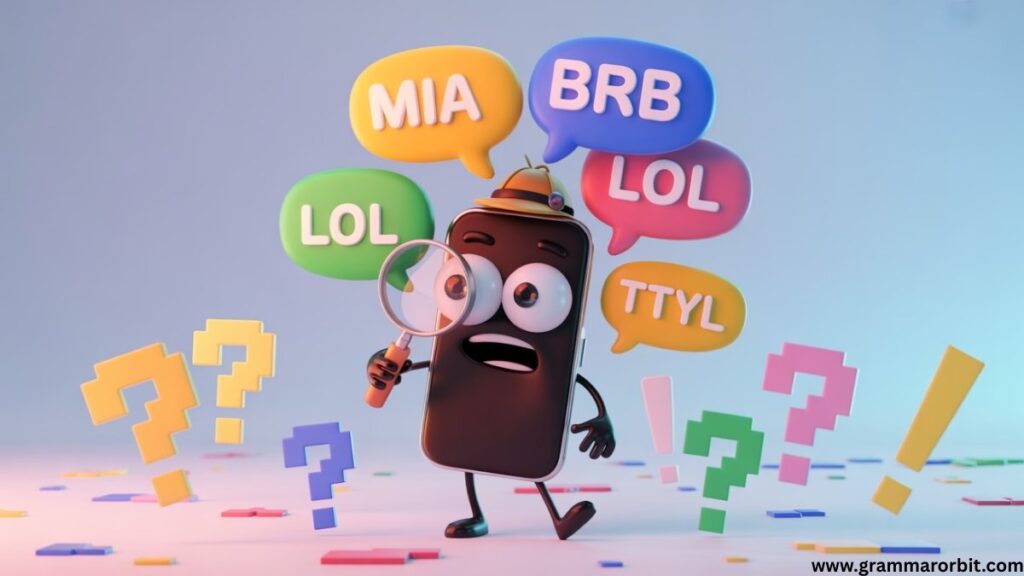
Your reply shapes the tone of the relationship moving forward. Here are categories of responses you can use depending on the situation.
Playful Replies
Use these when you’re close and want to keep things light.
- “I swear I didn’t fall off the planet 😅”
- “MIA Meaning in Text? Nah, just hiding from adulthood.”
- “Plot twist: I’m alive.”
Honest Replies
If you’re overwhelmed, transparency helps.
- “I needed a break from everything.”
- “Sorry, my mind’s been full lately.”
- “I wasn’t avoiding you I was avoiding everyone.”
Professional Replies
Stay polite and direct.
- “Apologies for the delay, I was tied up earlier.”
- “Thanks for your patience. I’m catching up now.”
- “I had to step away unexpectedly.”
Boundary Setting Replies
Healthy communication starts with honesty.
- “I’m limiting my screen time for now.”
- “I might take longer to reply these days.”
- “I’m practicing boundaries, but I’ll get back to you when I can.”
🌍 Cultural Generational & Regional Differences in MIA Usage
How people perceive digital silence varies widely.
Generational Differences
- Gen Z: Uses MIA casually and accepts digital detoxing as normal.
- Millennials: Associate MIA with burnout and overwhelm.
- Older generations: Sometimes see MIA as rude or irresponsible.
Regional Differences
- Some cultures expect immediate replies.
- Others value personal space and don’t take silence personally.
- Urban regions tend to use MIA more frequently than rural areas due to heavier digital habits.
Different communication norms reshape what MIA actually means.
📈 Why MIA Is Trending Even More
Digital life is louder, faster, and more demanding than ever. People are seeking more silence, making MIA Meaning in Text a mainstream behavior pattern not a rare occurrence.
Here’s what’s driving the trend:
1. Digital Burnout Peaks
Constant pings and unread messages create mental fatigue.
Going MIA becomes a coping mechanism.
2. Digital Detox Culture
More people embrace temporary digital absence through:
- social media breaks
- offline weekends
- device free hours
3. Messaging Expectations Are Shifting
Always on culture is fading.
Younger generations are normalizing:
- slower replies
- delayed responses
- non-apology silence
4. Online Relationship Dynamics Are Changing
People set boundaries earlier to prevent emotional overload.
Diagram: What Drives the Rise of MIA
    ┌──────────────────────────────┐
    |     Digital Noise Surge      |
    └───────┬──────────────────────┘
            ↓
    ┌──────────────────────────────┐
    |     Emotional Exhaustion      |
    └───────┬──────────────────────┘
            ↓
    ┌──────────────────────────────┐
    |      Going MIA More Often     |
    └──────────────────────────────┘
🚫 When NOT to Use “MIA”
Even slang has boundaries. Some contexts call for more sensitivity.
Avoid using MIA when:
- discussing emergencies
- dealing with serious personal matters
- communicating with someone struggling mentally
- speaking in formal workplaces
- handling conflict-sensitive situations
It can sound dismissive or minimizing if the situation is serious.
Time Slot vs Timeslot What’s the Right Form?
💡 Better Alternatives to “MIA Meaning in Text”
Depending on the tone you need, here are helpful substitutes.
Friendly Alternatives
- “Haven’t heard from you in a bit!”
- “Everything okay on your end?”
Neutral Alternatives
- “You’ve been quiet lately.”
- “You weren’t active for a while.”
Professional Alternatives
- “I tried reaching you earlier.”
- “Are you available now?”
Direct Alternatives
- “I felt disconnected when you didn’t respond.”
Alternative Phrases Table
| Tone | Phrase |
|---|---|
| Friendly | “Missed your messages!” |
| Concerned | “Just checking on you are you okay?” |
| Professional | “Following up on my earlier message.” |
| Clear & Direct | “Can we reconnect? Haven’t heard from you.” |
🧠 Digital Etiquette The Unspoken Rules Behind MIA
Modern communication comes with invisible rules. Understanding them helps avoid misunderstandings.
Important Etiquette Principles
- Not everyone can reply instantly
- Late responses aren’t disrespect
- Silence isn’t always avoidance
- People need personal space
- Emotional context matters
Healthy Communication Practices
- Ask about expectations early
- Avoid guilt-tripping people for slow replies
- Respect personal boundaries
- Give people time to respond
- Communicate openly about availability
Digital life becomes healthier when silence isn’t automatically judged.
Reference: Cambridge Dictionary Definitions
Here’s a trusted source for clear word meanings:
🔍 FAQs About MIA
What does MIA mean in texting?
It means Missing in Action someone who goes quiet or disappears without explanation.
Is saying MIA rude?
Depends on tone. It can be playful, neutral, or slightly passive-aggressive.
Is MIA the same as ghosting?
No. MIA is temporary. Ghosting is intentional and long term.
Can I use MIA at work?
Only in casual chats. For formal communication, use clearer language.
Why do people go MIA?
Burnout, anxiety, overwhelm, boundaries, or simply being busy.
Conclusion
So, next time someone calls you MIA, don’t panic or start drafting an apology longer than a novel. Being Missing in Action in texting isn’t a crime; it’s basically a modern survival skill. Whether you’re juggling work, life, or just watching shows in peace, going MIA says more about setting boundaries than ghosting anyone. Just remember: a little honesty, a sprinkle of humor, and a well timed message can turn your digital absence from suspicious to legendary. So embrace your inner MIA Meaning in Text, laugh at the chaos, and let your unread messages wait patiently they’ll survive.

JHON AJS is an experienced blogger and the creative voice behind the website grammarorbit.com, namely Grammar Orbit. With a keen eye for language and a passion for wordplay, he creates engaging grammar insights, word meanings, and clever content that make learning English enjoyable and interesting for readers.