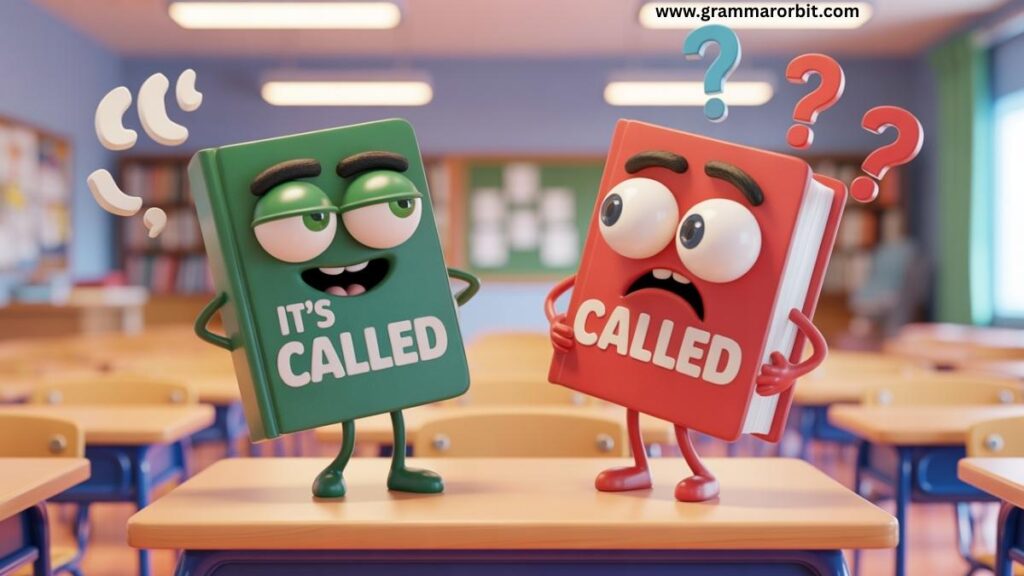
Ever typed a sentence, leaned back proudly, then felt something twitch in your brain? That uneasy feeling usually shows up with its called vs it called. One tiny apostrophe disappears and suddenly your sentence sounds like it forgot its shoes. Readers pause. Editors sigh. Grammar lovers quietly cry. The problem isn’t intelligence; it’s habit. Spoken English lets things slide, but writing keeps score. When you’re naming something, defining an idea, or explaining a concept, this mistake jumps out like a typo in bold letters. This guide breaks the confusion gently, clearly, and with a little humor, so your writing sounds confident, complete, and unmistakably correct.
Why This Distinction Actually Matters in Writing
Grammar isn’t about showing off. It’s about clarity.
When readers stumble over a sentence, they stop trusting it. Even small mistakes can make writing feel rushed or careless. That’s why the difference between Its Called vs It Called matters more than people think.
Here’s what’s really at stake:
- Clarity of meaning
- Professional credibility
- Smooth reading flow
- Accurate naming and defining
When you write to introduce a concept, define a term, or label something, precision matters. Grammar mistakes in these moments stand out immediately.
The Grammar Foundation You Must Understand First
Before breaking down it’s called grammar, one thing needs to be clear.
English sentences require a verb. Not sometimes. Always.
Many grammar errors happen because writers drop a verb without realizing it. Spoken English hides this problem because conversation relies on tone, pauses, and shared context. Writing doesn’t get that luxury.
That’s exactly where it called grammar goes wrong.
Breaking Down “It’s” (The Real Meaning)
The word “it’s” is not a standalone word. It’s a contraction, which means it combines two words into one.
There are only two possible meanings.
It’s = It Is
This is the most common use.
When you expand “it’s” into “it is,” the sentence should still make sense.
Example logic (no examples written, just structure):
- Subject: it
- Verb: is
- Complement: called something
This structure is what makes it’s called meaning grammatically complete.
It’s = It Has
This version exists, but it does not work with “called.”
Why?
Because “has called” implies an action, not a definition. That creates a completely different sentence type.
This is why contraction it is vs it has matters in grammar clarity.
Why “It’s Called” Is Grammatically Correct
Let’s slow this down and look at what’s actually happening.
When you write “it’s called”, you’re using:
- Subject pronoun: it
- Linking verb: is
- Past participle: called
This creates a present tense construction that names or labels something.
What “Called” Is Doing Here
The word called does not act alone. It needs a helper verb. In this case, that helper verb is “is.”
Remove the verb, and the sentence collapses.
That’s why it’s called or it called is not a style choice. It’s a grammatical one.
Sentence Structure Explained in Plain English
Good grammar doesn’t require memorizing complex rules. It requires understanding structure.
Here’s the real structure behind it’s called grammar:
- It → subject
- Is → verb
- Called → descriptive complement
This structure supports:
- Naming something in English
- Referring to a term
- Introducing a concept
- Defining a word or phrase
Without the verb, the sentence feels unfinished. Readers sense that immediately.
Unorganized vs Disorganized – Understanding the Key Differences
Why “It Called” Sounds Wrong (And Is Usually Wrong)
Now let’s address the other side.
It called feels wrong because something is missing.
There’s no verb agreement that supports a definition. The sentence lacks a present tense construction. Readers expect more, but nothing comes.
That’s why people ask:
- Is it it’s called or it called?
- Why is it’s called correct?
- Is it wrong to say it called?
In almost every case, yes. It’s wrong.
When “It Called” Could Technically Exist
Grammar always has edge cases.
It called can exist in rare storytelling contexts where:
- The sentence refers to a past action
- The subject “it” performs the action of calling
- The meaning has nothing to do with naming
Even then, readers often misinterpret it.
That’s why using it called meaning for definitions is a bad idea. It creates confusion and forces readers to reread.
Side by Side Comparison It’s Called vs It Called
| Phrase | Grammatically Complete | Suitable for Naming | Common Usage |
|---|---|---|---|
| It’s called | Yes | Yes | Very common |
| It called | Usually no | No | Rare |
This table alone explains the difference between it’s called and it called better than most grammar lessons.
Common Grammar Mistakes Writers Make
These mistakes happen for predictable reasons.
Dropping the Verb Accidentally
Writers think the sentence sounds fine because speech hides missing words.
Confusing Contractions with Possession
The apostrophe in it’s does not show ownership. Ever.
Overcorrecting for Formal Writing
Some writers avoid contractions entirely and end up removing necessary verbs.
These are among the most common grammar mistakes in English writing.
It’s vs Its: The Apostrophe Trap
This confusion deserves special attention.
Its (No Apostrophe)
- Possessive pronoun
- Shows ownership
- Never replaces “it is”
It’s (With Apostrophe)
- Contraction
- Always expands to “it is” or “it has”
This distinction sits at the heart of correct use of apostrophes.
A simple rule helps:
If you can replace the word with “it is”, the apostrophe belongs there.
Extensible vs Extendible – Clear Difference and complite Guide
Real Life Writing Scenarios Where This Shows Up
This grammar issue appears everywhere.
- Blog articles defining terms
- Academic explanations
- Professional reports
- Marketing copy
- Social media captions
In all these cases, grammar clarity in writing matters. Readers expect clean structure, especially when you’re introducing a concept.
Formal vs Informal Writing Should You Use “It’s”?
This question pops up a lot in formal vs informal grammar talks. People worry that “it’s” sounds lazy or casual. Truth is, that fear belongs in a dusty grammar museum.
Here’s the clearer picture.
Contractions are widely accepted today.
Modern writing has changed. Blogs, business emails, reports, and even many journal articles allow contractions. Using “it’s” often makes sentences sound natural and readable rather than stiff and robotic.
Formal academic writing still leans conservative.
Universities, research papers, and legal documents often prefer “it is” instead of “it’s.” The goal isn’t grammar purity. It’s consistency and a neutral tone that leaves no room for misinterpretation.
Professional writing cares more about clarity than formality.
In marketing, UX writing, corporate communication, and journalism, clarity wins every time. If “it’s easier to read”, use it. Readers shouldn’t trip over long, overly formal phrasing.
Tone matters more than the contraction itself.
One contraction won’t turn a formal article informal. Slang, vague wording, and loose structure will. A clear sentence with “it’s” often sounds more confident than an awkward sentence trying too hard to sound serious.
Avoiding contractions doesn’t equal better writing.
Cutting out contractions doesn’t make text smarter. It just makes it longer. Strong writing comes from clear structure, logical flow, and precise word choice not from forcing “it is” everywhere.
Quick rule of thumb:
- Academic papers and legal text → use “it is”
- Business, digital, and general professional writing → “it’s” is fine
- If clarity improves, use the contraction
Quick Memory Rules That Actually Work
Forget long grammar lists. These rules stick.
The Expansion Test
If “it is called” works, then it’s called works.
The Verb Check
If removing “is” breaks the sentence, you need it.
The Definition Rule
When naming or labeling something, it’s called is the correct choice.
These rules prevent grammar mistakes writers make before they happen.
Why Apostrophes Matter More Than You Think
Apostrophes guide meaning.
Misusing them leads to:
- Confusion
- Misinterpretation
- Reduced writing credibility
That’s why why apostrophes matter in English isn’t just a grammar question. It’s a communication one.
Professional Writing Accuracy and Credibility
In professional settings, grammar errors don’t go unnoticed.
Clear grammar signals:
- Attention to detail
- Respect for the reader
- Language precision
Using correct sentence structure builds trust fast.
Dieing vs Dying: What’s the Difference?
Fixing Grammar Mistakes Before They Reach the Reader
Strong writing habits prevent errors.
- Read sentences aloud
- Expand contractions mentally
- Check for missing verbs
- Proofread definitions carefully
These steps support proofreading for grammar and fixing grammar mistakes before they cost you credibility.
Reference: Cambridge Dictionary Definitions
Here’s a trusted source for clear word meanings:
FAQs
What does it called mean?
It uses called as a past-tense verb and works only when it performs an action.
Is it’s called correct grammar?
Yes. It’s correct in informal and conversational writing.
Why does it’s called work in most cases?
Naming requires a linking verb. It’s supplies that verb.
Can small grammar mistakes change meaning?
Yes. Even tiny errors reduce clarity and authority.
Conclusion
Grammar doesn’t ask for much. It just wants a complete sentence and a little respect. Once you understand why It’s Called vs It Called usually face plants, the confusion disappears for good. No more second guessing. No more rereading your sentence like it betrayed you. You know the rule, you know the structure, and you know how to check it in seconds. That tiny apostrophe isn’t trying to trick you; it’s doing an important job. Use it correctly, and your writing sounds clear, confident, and intentional. Get it wrong, and English quietly judges you. Now you’re on the right side of that judgment.

JHON AJS is an experienced blogger and the creative voice behind the website grammarorbit.com, namely Grammar Orbit. With a keen eye for language and a passion for wordplay, he creates engaging grammar insights, word meanings, and clever content that make learning English enjoyable and interesting for readers.