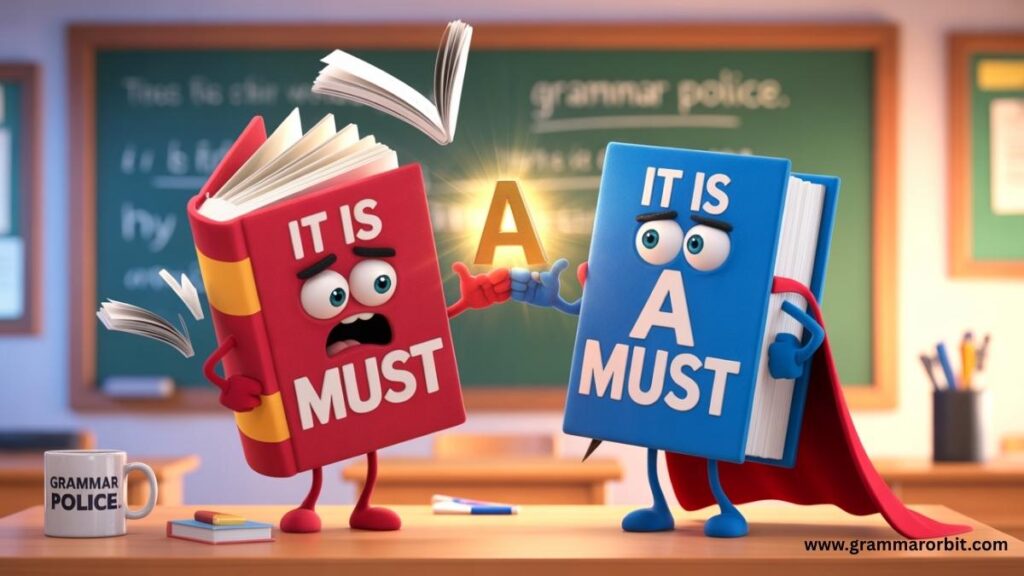
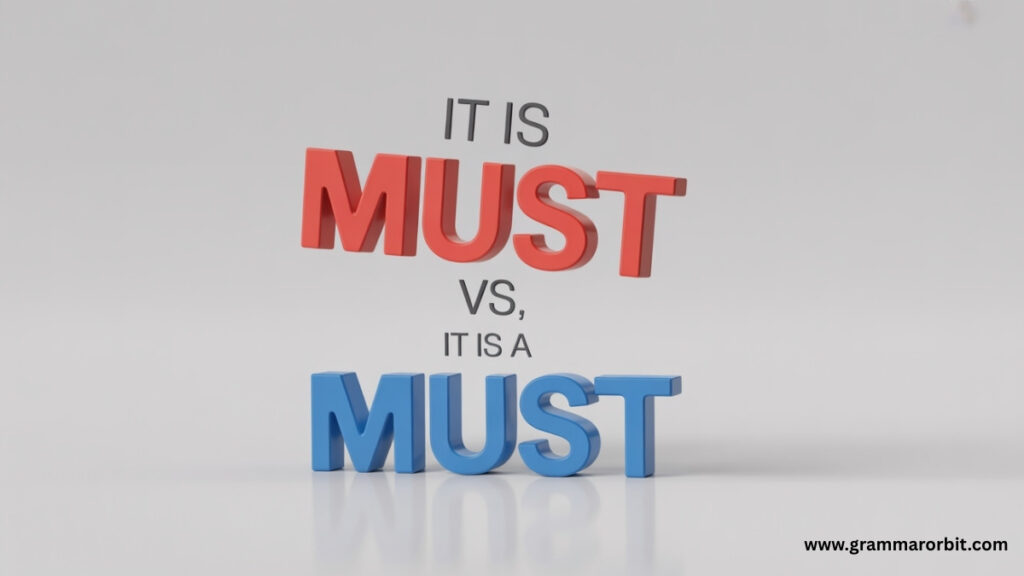
Grammar mistakes have a special talent for sneaking into sentences when you least expect them. One minute you’re confident, the next you’re staring at the screen debating it is must vs it is a must like it’s a life decision. Relax. You’re not alone. This tiny phrase trips up students, professionals, and fast typists everywhere. One missing letter turns a perfectly good sentence into something that sounds unfinished, like a joke without a punchline. In this guide, you’ll finally see why one version works, the other doesn’t, and how mastering this small detail instantly sharpens your writing, boosts credibility, and saves you from grammar face-palms.
Why This Tiny Grammar Mistake Feels Bigger Than It Looks
Some grammar mistakes jump off the page. Others quietly sit there, making your writing feel… off.
“It is must” falls into the second category.
Readers usually understand what you mean. But fluent speakers sense something missing. The sentence feels unfinished, like someone stopped talking halfway through a thought. That feeling matters more than people realize, especially in professional communication and academic writing.
By contrast, it is a must sounds natural. Clean. Complete. That single letter “a” signals strong writing accuracy and respect for editorial standards.
This distinction shows up everywhere:
- Professional English usage
- Academic writing grammar tips
- Emails, reports, and proposals
- Blog posts and SEO content
- Formal vs informal English
Small details shape how seriously readers take you.
What “Must” Actually Is (And Why That Matters)
To understand the difference between it is must and it is a must, you need to look at how English treats the word must. This word changes roles depending on how you use it.
That role switch is where the confusion begins.
Must as a Modal Verb
Most of the time, must is a modal verb.
Modal verbs help express necessity, obligation, or certainty. Common modal verbs include:
- must
- should
- can
- may
- might
They follow special grammar rules for must and other modal verbs.
How modal verbs behave
- They don’t stand alone
- They always come before another verb
- They don’t use articles
- They don’t change form
Examples that sound natural
- You must finish the report today.
- Employees must follow company policy.
- This explanation must stay clear.
Here, must pushes action. It tells someone what needs to happen. It does not name a thing.
Must as a Noun
Now comes the twist.
In some sentences, must stops acting like a verb and becomes a noun. When that happens, it means something essential or something required.
And nouns follow a completely different set of rules.
Why Nouns Need Articles
In English sentence construction, singular countable nouns almost always need an article. Articles include:
- a
- an
- the
When must becomes a noun, it can’t stand alone. It needs an article to sound complete.
That’s why a must works and must by itself does not.
Unorganized vs Disorganized – Understanding the Key Differences
Necessity vs Labeling: Two Different Ideas
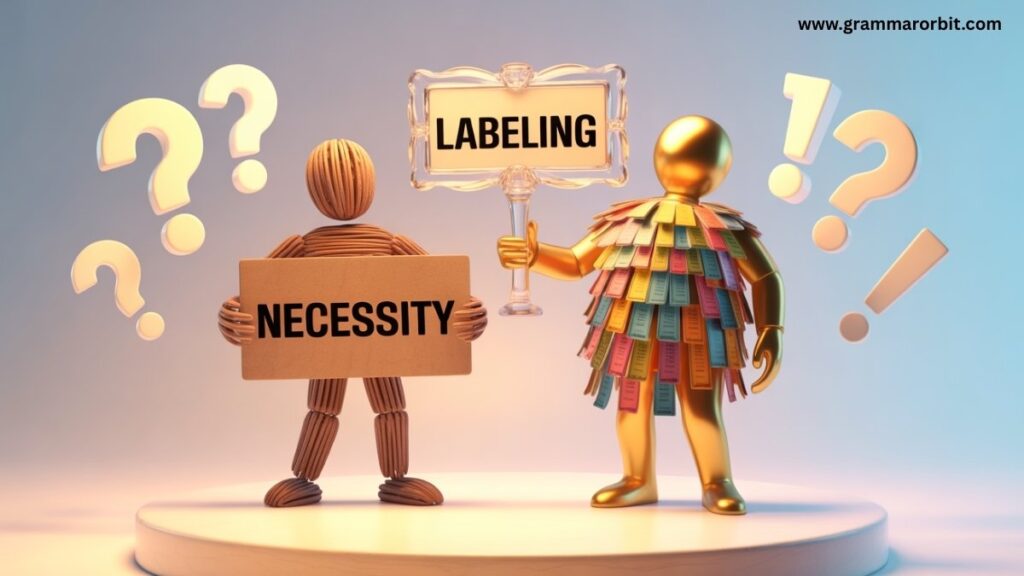
Understanding it is a must correct usage becomes much easier when you separate meaning from grammar.
When “must” expresses obligation
This is the verb form.
- You must attend the meeting.
- Students must submit assignments on time.
Here, must tells someone what they are required to do.
When “a must” labels something as essential
This is the noun form.
- Clear communication is a must.
- Preparation is a must for success.
In this case, you’re not giving instructions. You’re labeling importance.
Same word. Different job.
The Correct Phrase: “It Is a Must”
Let’s clear this up plainly.
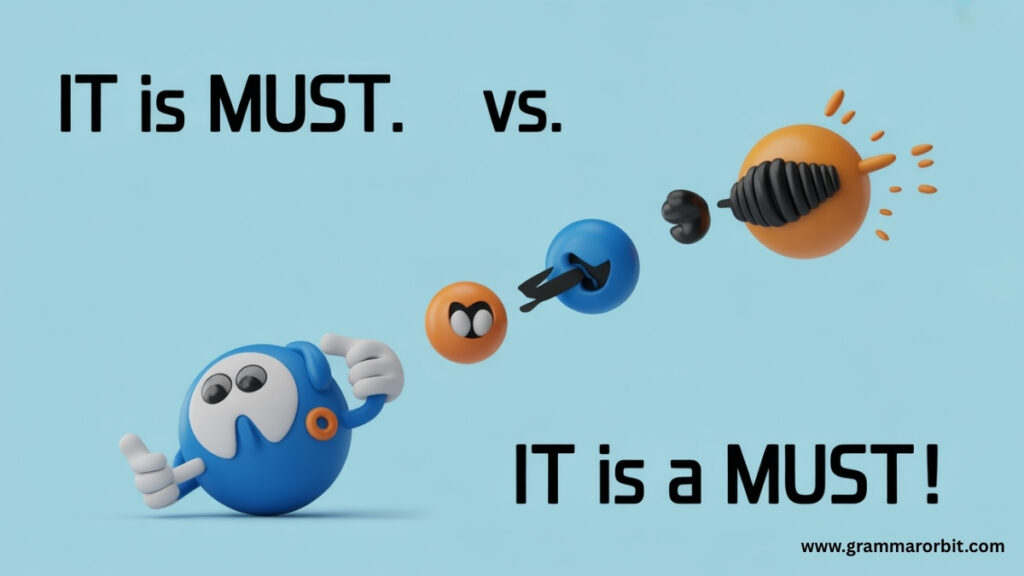
“It is a must” is grammatically correct.
It follows standard English grammar, respects article usage, and fits naturally into professional and academic writing.
Why “It Is a Must” Works
The sentence follows a basic and solid structure:
Subject + linking verb + noun phrase
| Sentence Part | Example |
|---|---|
| Subject | It |
| Linking verb | is |
| Noun phrase | a must |
Because must functions as a noun, it requires the article “a.”
Take the article away, and the sentence loses balance.
It Is a Must Meaning (Plain and Simple)
The it is a must meaning is easy to understand.
It means:
- Something is essential
- Something is required
- Something should not be skipped
Writers like this phrase because it emphasizes importance without sounding bossy or aggressive.
Extensible vs Extendible – Clear Difference and complite Guide
Real Life Examples of “It Is a Must”
Professional English usage
- Clear documentation is a must for compliance.
- Time management is a must in leadership roles.
Academic writing grammar tips
- Proper citations are a must in research papers.
- Data accuracy is a must for valid results.
Everyday communication
- A charger is a must on long trips.
- Coffee is a must before early meetings.
In every case, a must acts as a noun phrase describing importance.
The Incorrect Phrase: “It Is Must”
Now for the part many people get wrong.
“It is must” is not grammatically correct.
It breaks basic language rules related to article usage and sentence structure.
Why “It Is Must” Sounds Wrong
When writers use it is must, they treat must like a noun but forget the article it needs. That leaves the sentence incomplete.
Think about these examples:
- It is book
- It is rule
- It is requirement
They all sound broken for the same reason.
“It is must” follows that same pattern.
Dieing vs Dying: What’s the Difference?
Why This Mistake Is So Common
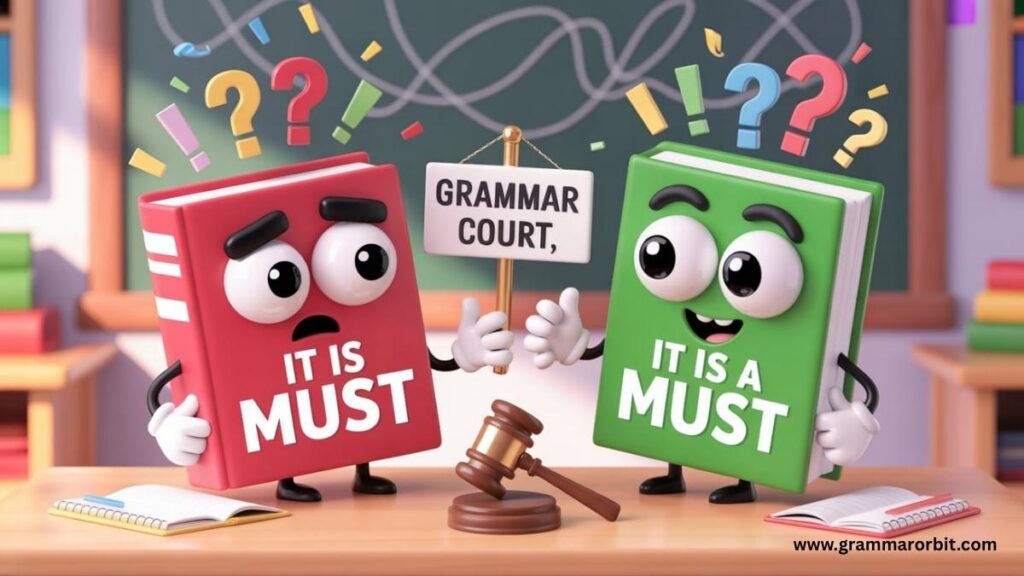
This error shows up frequently, especially among non-native English speakers. That’s not surprising.
Common grammar mistakes with must come from
- Translating directly from languages without articles
- Mixing up noun vs verb usage of must
- Applying modal verb rules everywhere
- Writing quickly without revising
Once people see the phrase online, they repeat it. The mistake spreads.
Correct vs Incorrect Usage at a Glance
| Sentence | Correct? | Why |
|---|---|---|
| It is a must | Yes | “Must” acts as a noun with an article |
| It is must | No | Missing article makes it incomplete |
| You must attend | Yes | “Must” works as a modal verb |
| Attendance is must | No | Same article problem |
This comparison alone clears up most confusion.
American vs British English: Any Difference?
Some writers wonder if it is must grammar changes by region.
It doesn’t.
Both American and British English follow the same rule.
- It is a must appears in edited writing everywhere
- It is must does not appear in professional or academic standards
This rule stays consistent across dialects.
What Real Usage Patterns Show
When you look at published English books, articles, academic papers you see a clear pattern.
- It is a must appears frequently
- It is must almost never appears in edited content
Usage supports what grammar rules already say.
Good Alternatives to “A Must”
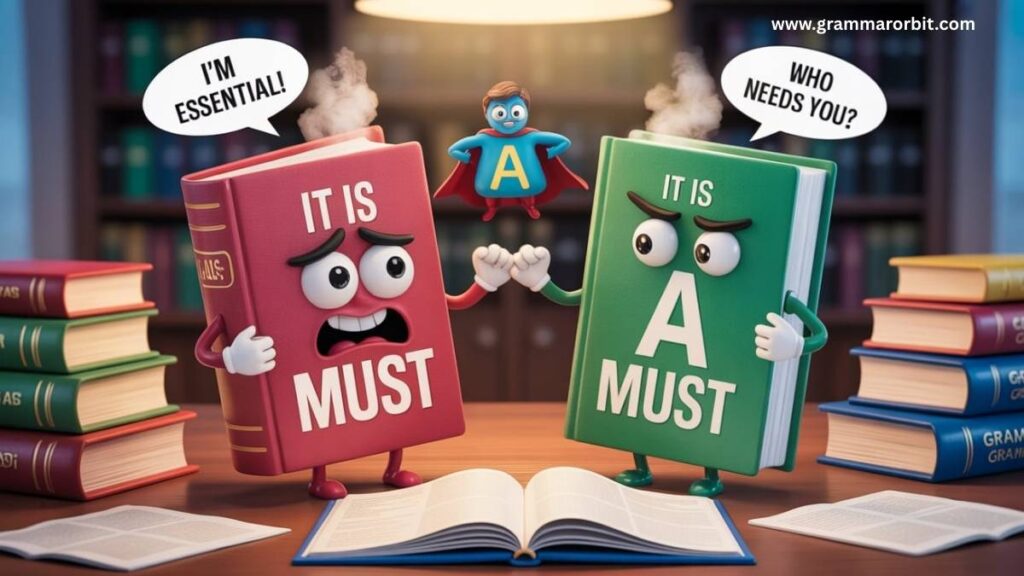
If you want variety while keeping grammatical correctness, these options work well.
Clear alternatives
- Essential
- Required
- Necessary
- Non negotiable
Similar noun phrases
- A requirement
- A necessity
- A priority
Related expression
- A must have
Each option fits naturally in professional and academic writing.
A Simple Decision Trick That Always Works
Still unsure which form to use? Ask yourself one question.
Is “must” giving an order or naming importance?
- Giving an order → use must as a verb
- Naming importance → use a must as a noun
That one check prevents the mistake every time.
Practical Tips to Avoid This Error
Good writing habits beat memorizing rules.
Read sentences out loud
Broken grammar usually sounds broken when spoken.
Use a substitution test
Replace must with requirement.
- If it works, you need an article
- If it doesn’t, you’re using a verb
Slow down short sentences
Many grammar mistakes happen when writing fast.
Quick Checklist Before You Publish
- Is must acting as a noun or a verb?
- Does the sentence include “a” if needed?
- Does it sound natural when spoken?
- Would it hold up in professional communication?
If yes, you’re good to go.
Why This Small Detail Really Matters
Grammar isn’t about showing off. It’s about communication clarity.
Using it is a must correct usage signals:
- Strong grammar fundamentals
- Clear sentence structure
- Professional communication skills
- Attention to detail
Using it is must quietly sends the opposite message, even if your ideas are solid.
Reference: Cambridge Dictionary Definitions
Here’s a trusted source for clear word meanings:
FAQs
What is the meaning of “It Is Must vs It Is a Must”?
“It is a must” means something is essential, necessary, or cannot be skipped. People use this phrase to strongly emphasize importance without sounding forceful. For example, saying “Clear communication is a must” tells the reader that clear communication is absolutely necessary.
Is “a must” correct in a sentence?
Yes, “a must” is grammatically correct when must is used as a noun. In this form, it describes something important or required.
Example: Wearing a helmet is a must when riding a bike.
How do you say something is a must?
You can say something is a must by using simple, natural sentence structures like:
- This step is a must.
- Planning ahead is a must for success.
- Good grammar is a must in professional writing.
All of these clearly label something as essential.
What do you mean by “It Is Must vs It Is a Must”?
When someone says “is a must,” they mean that something is non-negotiable or extremely important. It’s a concise way to highlight priority without giving a direct command.
Think of it as saying, “You really shouldn’t skip this.”
How to use “must” correctly in English?
“Must” can be used in two different ways, depending on its role in the sentence.
Using “must” as a verb
Use must to show obligation or necessity.
- You must submit the form today.
- Employees must follow the rules.
Using “a must” as a noun
Use a must to name something essential.
- Time management is a must.
- Proper research is a must for accuracy.
Quick tip:
If must gives an order, it’s a verb.
If a must names importance, it’s a noun.
Conclusion
Grammar doesn’t need a drumroll, but this one deserves a neat bow. Once you understand it is must vs it is a must, the confusion fades fast. One version follows English grammar rules and sounds complete. The other leaves readers mentally waiting for the rest of the sentence. That tiny article “a” does a lot of heavy lifting. Drop it, and the sentence limps. Keep it, and your writing walks confidently into professional territory. Remember, clear grammar isn’t about sounding fancy. It’s about sounding finished. Master small details like this, and your writing stops tripping over itself and starts sounding sharp, natural, and trustworthy.

JHON AJS is an experienced blogger and the creative voice behind the website grammarorbit.com, namely Grammar Orbit. With a keen eye for language and a passion for wordplay, he creates engaging grammar insights, word meanings, and clever content that make learning English enjoyable and interesting for readers.