
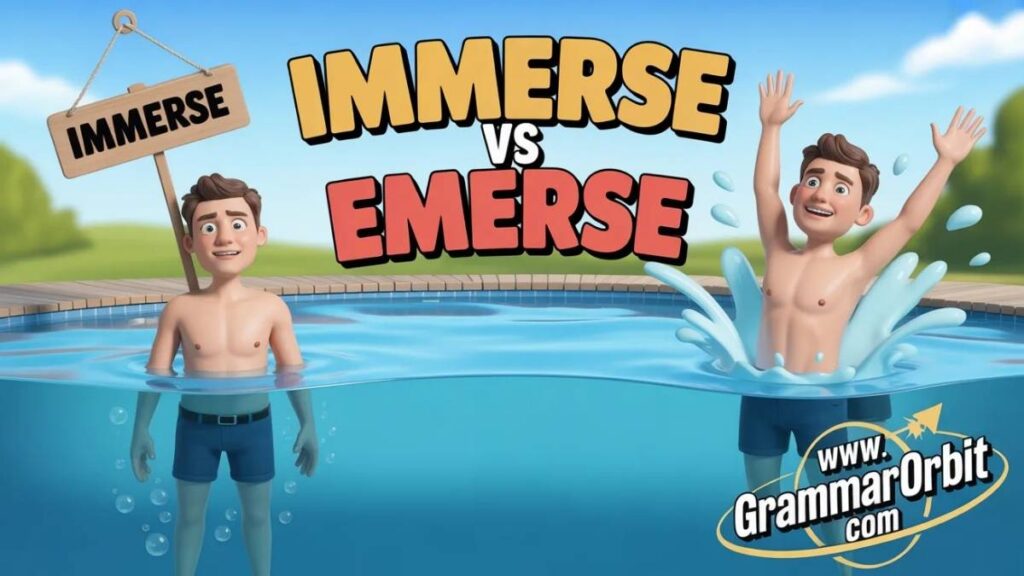
Ever stared at your screen, wondering whether to immerse vs emerse in a sentence and felt your brain do a somersault? You’re not alone. The struggle with immerse vs emerse is real these two words look like long-lost cousins at a family reunion, similar, a little confusing, and likely to make you pause mid-typing. One invites you to dive headfirst into action, ideas, or water; the other gently floats you back to the surface, often leaving readers scratching their heads. In this guide, we’ll untangle the immerse vs emerse debate, show you when to use each like a pro, and sprinkle in examples that actually make sense.
What Immerse Really Means
The word immerse is all about diving in completely. It describes situations where something or someone is fully submerged, whether literally or figuratively.
You can think of immerse in two ways:
- Literal submersion: Placing something entirely under a liquid. For example, putting vegetables into boiling water or a sponge into a bowl of paint.
- Figurative engagement: Being fully absorbed in an activity, experience, or learning process. For instance, reading a novel and forgetting the world around you, or concentrating intensely on a project at work.
Immerse conveys the sense of total engagement. When you immerse yourself in something, there’s a sense of leaving the outside world behind for a moment. Writers, educators, and speakers often use immerse to describe experiences that are rich and enveloping.
For example, if you are learning a new language, immersing yourself could mean spending hours speaking, reading, and listening entirely in that language. You are not just learning; you are living it.
The Origin and History of Immerse
Immerse has deep roots in language history. It comes from the Latin verb immergere, which literally meant “to plunge into” or “dip in.” English borrowed it around the 15th century, mostly in literal contexts at first.
Over time, writers expanded its use to describe mental and emotional engagement. By the 17th and 18th centuries, immerse appeared in literature to describe not just physical submersion but total absorption in a task or passion.
| Aspect | Details |
|---|---|
| Latin Root | immergere = to plunge into |
| First Use in English | 15th century |
| Early Meaning | Literal submersion in water or liquid |
| Modern Meaning | Total engagement, deep involvement in activities or experiences |
The beauty of immerse lies in its flexibility. You can use it to describe both the physical act of submerging an object and the figurative act of plunging your mind into an experience.
Understanding Emerse
Emerse is less common but equally interesting. While immerse is about diving in, emerse is about rising out or coming into view.
Literally, emerse can describe something coming out of a liquid or emerging from beneath the surface. Figuratively, it can describe ideas or feelings becoming clear or coming into awareness.
For instance, a submarine rises from the depths of the ocean. It doesn’t immerse it emerses. Or, in a meeting, an idea might slowly emerse from the discussion, meaning it comes gradually into focus.
Emerse is tied closely to the noun emersion, which is the process of rising or coming out. While it isn’t used frequently in everyday writing, it is precise when describing certain technical, scientific, or literary contexts.
Finaly or Finally The Simple Answer Fully Explained
The Link Between Emerse and Emersion
Emerse and emersion are two sides of the same coin. Emerse is the action, emersion is the process.
For example:
- Emerse (verb): The diver emersed after exploring the coral reef.
- Emersion (noun): The emersion of new ideas during the brainstorming session helped shape the final plan.
In scientific writing, you’ll find both words describing natural or mechanical processes:
- In biology, certain aquatic plants emerse as water levels fall.
- In geology, rocks may emerse over time as erosion exposes them.
In each case, the mental picture is of something gradually rising, becoming visible, or emerging from a hidden state.
| Word | Part of Speech | Meaning | Example |
|---|---|---|---|
| Emerse | Verb | To rise out of something | “The swimmer emersed slowly from the lake.” |
| Emersion | Noun | The process of rising or emerging | “The emersion of ideas transformed the discussion.” |
Origin and History of Emerse
Emerse comes from the Latin root emergere, which means “to rise up” or “come forth.” It entered English in the 17th century and has always been less common than immerse.
Where immerse became popular for figurative use, emerse remained technical. Writers often prefer emerge in modern English because it feels more natural, even though emerse is the more precise term for rising from a liquid.
| Aspect | Details |
|---|---|
| Latin Root | emergere = to rise up, come forth |
| First Use in English | 17th century |
| Usage Today | Rare in general writing, mainly technical or scientific contexts |
| Common Confusion | Often mistaken for emerge |
Immersion vs Emersion A Clear Comparison
To understand the difference between immerse and emerse, it helps to see them side by side.
| Aspect | Immerse | Emerse |
|---|---|---|
| Meaning | To plunge into or fully engage | To rise out of or become visible |
| Verb/Noun Forms | Immerse / Immersion | Emerse / Emersion |
| Frequency | Very common in writing | Rare, technical or literary contexts |
| Figurative Use | Deep involvement, focus, experiences | Rare, often literal or technical |
| Opposite | Emerse | Immerse |
| Example | “She immersed herself in painting.” | “The submarine emersed slowly.” |
A simple way to remember it: immerse is going in, emerse is coming out.
Realist vs Realest How Are These Different? When To Use
How People Actually Use Immersion and Emersion
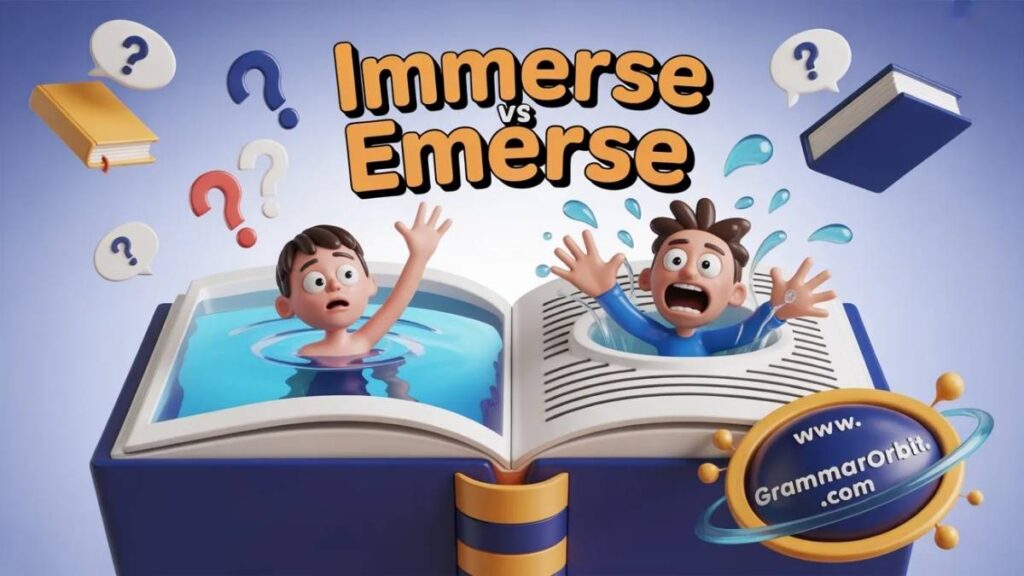
Immersion is everywhere: education, gaming, literature, and personal growth.
- Learning immersion example: Students in a language program experience immersion when every lesson is conducted entirely in the target language. This allows their minds to adapt naturally, almost like living in the language.
- Virtual reality: VR creates full immersion, making users feel they are inside the game world.
- Emotional engagement: Reading a compelling novel can immerse you so deeply that hours pass unnoticed.
Emersion, in contrast, appears mostly in technical or specialized writing:
- Scientific example: Mudflats emerse at low tide, exposing feeding grounds for migratory birds.
- Botanical example: Certain aquatic plants emerse during the dry season as water levels recede.
- Literary example: The emersion of truth in a story signals a moment of revelation for the character.
Everyday Examples of Immerse
Here are practical examples showing how to use immerse in sentences:
- She immersed herself in the novel, forgetting the outside world.
- He immersed the cloth in the dye for several minutes to get the perfect color.
- By attending the workshop, you can immerse in hands-on learning experiences.
- Gamers often immerse themselves in a fantasy world for hours at a time.
Notice how it works for physical immersion and figurative absorption.
Everyday Examples of Emerse
The use of emerse in sentences is rarer but can be precise:
- The diver emersed slowly, gasping for air after the long swim.
- Archaeologists watched as the ancient ruins emersed from the excavation site.
- During brainstorming, several important ideas emersed gradually from the discussion.
Even though these sentences are correct, in everyday writing, most people would use emerge instead of emerse because it sounds more natural.
Common Mistakes and How to Avoid Them
Writers often mix up immerse and emerse. Here’s how to avoid the pitfalls:
- Using emerse when you mean immerse:
- Wrong: She emersed in her studies.
- Right: She immersed herself in her studies.
- Confusing emersion with immersion: Remember, immersion is diving in, emersion is rising out.
- Default to immerse if you’re unsure. Most writing contexts involve engagement, focus, or involvement, which calls for immerse.
Indulgent vs Sober Deciding Between Similar Terms
Practical Tips for Writers
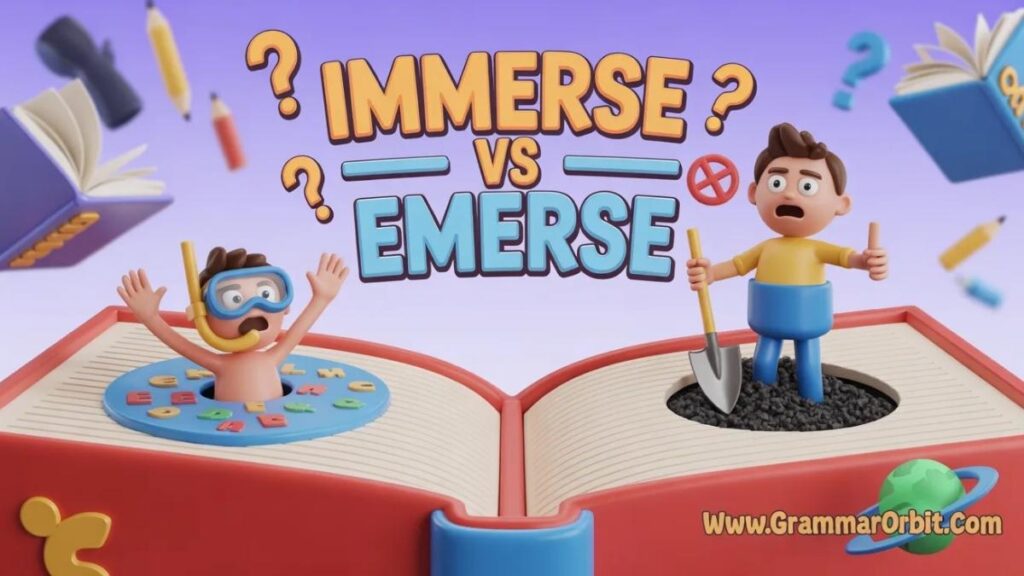
Here are some helpful tricks to make these words stick:
- Mnemonic trick:
- Immerse → Into. You are going in.
- Emerse → Exit. You are coming out.
- Use context clues: Ask yourself: Is the subject diving in, or rising out? This will guide your choice.
- Associate nouns with verbs:
- Immerse → Immersion (experience of diving in)
- Emerse → Emersion (process of coming out)
- Keep a mental picture: Imagine a swimmer plunging under (immerse) versus resurfacing (emerse). The mental imagery helps cement the meaning.
Reference Cambridge Dictionary Definitions
Here’s a trusted source for clear word meanings:
FAQs
What is the difference between immerse vs emerse?
Immerse means to plunge into or fully engage in something, whether literally or figuratively. Think diving into a pool, a book, or a project.
Emerse means to rise out of or come into view, usually from a liquid or hidden state. It’s rare in modern writing but precise when describing things surfacing or emerging.
Quick tip: Immerse = going in; emerse = coming out.
Example sentences:
- Immerse: She immersed herself in learning French for three months.
- Emerse: The submarine emersed after hours underwater.
What is the difference between emersion and immersion?
Immersion is the experience or state of being fully engaged or submerged in something.
Emersion is the process of rising out or becoming visible.
| Term | Meaning | Example |
|---|---|---|
| Immersion | Total involvement or submersion | “His immersion in painting made him lose track of time.” |
| Emersion | Rising out or emerging | “The emersion of the ancient ruins revealed hidden carvings.” |
What does immerse in mean?
To immerse in means to actively involve yourself or something completely in a task, activity, or substance. It can be literal or figurative.
- Literal: She immersed the cloth in dye to change its color.
- Figurative: He immersed himself in the history of medieval castles.
It conveys full engagement, often suggesting focus, attention, and absorption.
What is the difference between immerse and emerge?
Immerse is about going into something, while emerge is about coming out of something.
- Immerse: Dive into the action, knowledge, or liquid.
- Emerge: Appear or become visible after being hidden.
Example:
- Immerse: She immersed herself in the world of classical music.
- Emerge: After hours of studying, she finally emerged with a clear understanding of the topic.
Think of it like a swimmer: Immerse = dive under; Emerge = break the surface.
What does emerse mean?
Emerse is a rare word meaning to rise out of a liquid or hidden state, closely related to emersion.
- Literal: The diver emersed after exploring the reef.
- Figurative (rare): Ideas slowly emersed during the meeting discussion.
It is precise but uncommon. Writers often use emerge instead in everyday contexts.
Is immersion a feeling?
Yes and no. Immersion itself isn’t an emotion, but it describes a state of total engagement that can produce strong feelings.
- Example: When immersed in a great novel, you may feel joy, suspense, or awe.
- It reflects how absorbed or involved someone is, not a specific emotion like happiness or sadness.
Think of immersion as being lost in an experience, where emotions naturally follow because of your full focus and involvement.
conclusion
So, next time you find yourself debating immerse vs emerse, remember this simple rule: if you’re diving in, fully involved, go with immerse; if you’re rising out or coming into view, emerse is your friend. Mastering immerse vs emerse isn’t just about avoiding embarrassing typos it’s about giving your writing clarity, precision, and a touch of sophistication. Whether you’re writing a story, a scientific report, or just texting a friend about your latest adventure, knowing when to immerse or emerse makes your words swim, float, or shine exactly as you intend. Dive wisely, and emerge victorious!

JHON AJS is an experienced blogger and the creative voice behind the website grammarorbit.com, namely Grammar Orbit. With a keen eye for language and a passion for wordplay, he creates engaging grammar insights, word meanings, and clever content that make learning English enjoyable and interesting for readers.