If you’ve ever typed “grately” in a text and immediately wondered if the grammar police were about to knock on your door, you’re not alone. The Grately vs Greatly debate has tripped up writers, students, and casual texters alike, leaving brains in a mild state of chaos. One tiny letter an L can turn perfectly professional writing into a cringe-worthy typo. But fear not! By the end of this guide, you’ll master the Grately vs Greatly difference, know exactly when to use greatly like a pro, and understand why grately belongs in the “oops” folder of spelling mistakes. Say goodbye to embarrassing emails and hello to polished writing bliss!
Understanding the Words
Even small words can cause big headaches. Knowing what each word actually means is step one in never making this mistake again.
Grately Meaning
Grately is a word you shouldn’t use in formal writing. Most people type it when they mean “greatly,” making it one of those classic typos that spread like wildfire. It’s a non-recognized English word and doesn’t appear in standard dictionaries.
You might see it in casual messages or historical texts, but in modern writing, it’s almost always wrong. If you’re emailing a boss, submitting a paper, or posting on social media for a professional audience, using grately will make your writing look careless.
Think of it like trying to use “supposably” instead of “supposedly.” It sounds okay, but it’s not actually correct.
Greatly Meaning
Greatly, on the other hand, is a perfectly legitimate English adverb. It’s used to describe the extent or degree of something, often in a positive or impactful way.
Examples:
- “I greatly appreciate your help.”
- “Her research has greatly improved our understanding of climate change.”
- “You’ve greatly exceeded expectations with this project.”
The key here is that greatly measures intensity or importance. It’s not just a fancy word it’s a tool that helps your writing feel precise and professional.
How to Use Grately and Greatly Correctly
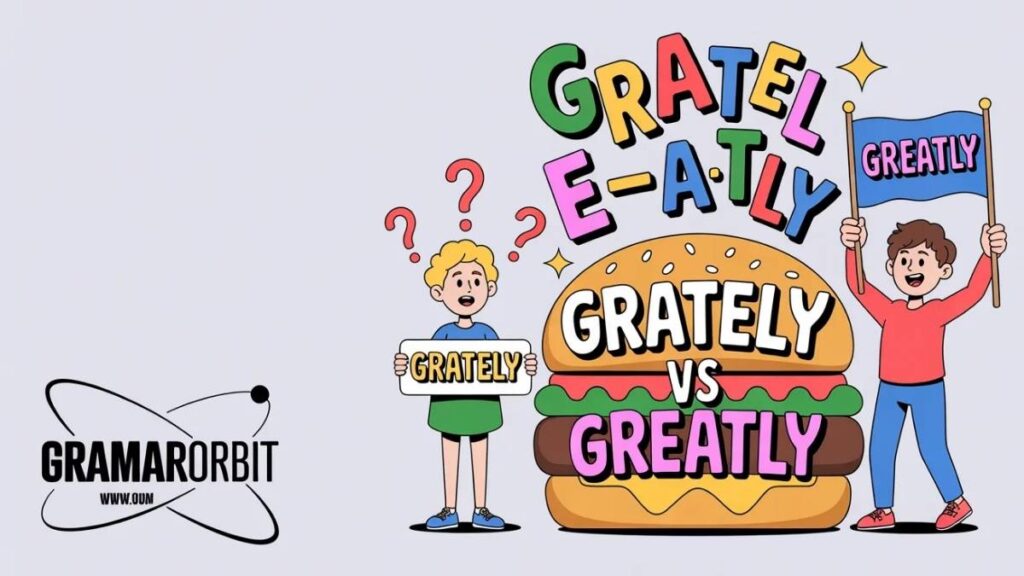
Here’s the simple rule: never use grately in any professional or formal setting. If you mean to show extent, intensity, or importance, always use greatly.
Here’s a quick comparison:
| Word | Correct Usage | Notes |
|---|---|---|
| Grately | ❌ Not recommended | Non-recognized English word; almost always a typo |
| Greatly | ✅ Standard English adverb | Shows degree, intensity, or impact |
Using Grately in a Sentence
Technically, it’s only used incorrectly:
- “I grately appreciate your support.” ❌
It should be:
- “I greatly appreciate your support.” ✅
Even if it pops up in casual texting, think of it as a gentle reminder that spellcheck exists for a reason.
Using Greatly in a Sentence
Greatly fits naturally in many scenarios. Here’s how you can use it:
Formal Writing Examples:
- “The new policy will greatly affect company operations.”
- “Her leadership greatly contributed to the team’s success.”
Casual or Informal Examples:
- “I greatly enjoyed our lunch today.”
- “You’ve greatly improved since last year.”
Notice how in all these sentences, greatly adds weight. Without it, the sentences feel flat.
Sentence or Sentance Which Spelling Is Correct?
More Practical Examples
Seeing multiple examples helps lock the difference into your brain.
Incorrect Use of Grately:
- “He grately influenced the project.” ❌
- “We are grately thankful.” ❌
- “She grately improved her writing.” ❌
Correct Use of Greatly:
- “He greatly influenced the project.” ✅
- “We are greatly thankful.” ✅
- “She greatly improved her writing.” ✅
It’s simple, but it makes a huge difference in writing clarity.
Common Mistakes and How to Avoid Them
Even people who love words slip up. Here are the common traps:
- Using grately in professional writing.
- Confusing greatly with the verb “grate” or other root word distinctions.
- Forgetting that adverbs often end in -ly.
How to Avoid These Mistakes
- Proofread your work slowly and carefully. Reading aloud often helps spot awkward words.
- Remember the -ly rule for adverbs: if it’s showing degree or extent, it probably ends in ly.
- Keep a list of synonyms for “greatly,” so you can avoid repetition: significantly, considerably, substantially, highly, much.
Quick Tip: Whenever you’re unsure, type “greatly” first it’s almost always the right choice.
Third Wheel Meaning, Usage, and Professional Alternatives
Context Matters

Language is more than just spelling it’s about how, where, and why words are used. Choosing between grately and greatly isn’t just a typing error; it’s a matter of context, audience, and tone. Even though the difference seems tiny, getting it wrong can change how your writing is perceived.
Formal vs Informal Writing
- Formal Writing:
In essays, reports, academic papers, or professional emails, always use greatly. It conveys precision, credibility, and professionalism.- Example: “Your contributions to the project are greatly valued by the management team.”
Using grately here would instantly make the sentence look like a careless typo.
- Example: “Your contributions to the project are greatly valued by the management team.”
- Informal Writing:
In casual texts or personal messages, people sometimes type grately by accident, but even then, it’s better to stick with greatly for clarity.- Example: “I greatly enjoyed hanging out today!”
A typo like “grately” might make your friend pause, wondering if you meant something else.
- Example: “I greatly enjoyed hanging out today!”
Tone and Audience
- Professional Audience: CEOs, professors, clients, or colleagues expect correct spelling and grammar. Grately will stand out as a glaring mistake.
- Casual Audience: Friends or family might overlook it, but if you’re trying to sound polished or witty, always choose greatly.
Rule of Thumb: When in doubt, think about how the sentence will land with your reader. Context is the secret weapon for clear writing.
Situational Usage
Even with the correct spelling, context can affect placement and style. For instance:
- Expressing gratitude formally:
“I greatly appreciate your support during the project.” ✅ - Describing impact academically:
“This study greatly contributes to our understanding of climate change.” ✅ - Casual conversation or email:
“I greatly enjoyed your story it made me laugh!” ✅
Notice how the meaning stays the same, but the tone and placement of greatly changes based on the context.
Exceptions and Rare Cases
- Historically, you might find grately in older texts or archaic writing. In modern English, it’s considered a non-recognized English word, so even in creative or historical contexts, it’s better to stick with greatly unless quoting directly.
- Avoid overusing greatly: Repeating it too often in the same paragraph can feel awkward. Swap in synonyms like significantly, substantially, or considerably for variety.
Quick Tips to Use Context Wisely
- Ask yourself the audience: Who is reading this?
- Ask yourself the tone: Formal, casual, humorous, or academic?
- Check the placement: Does greatly emphasize what you intend?
- Use synonyms when necessary: Keeps your writing lively and prevents repetition.
Synonyms to Keep Handy
| Synonym | Example |
|---|---|
| Significantly | “The new plan significantly improved results.” |
| Considerably | “She is considerably more confident than before.” |
| Substantially | “The company’s revenue grew substantially.” |
| Highly | “He is highly skilled in professional writing.” |
| Much | “I much appreciate your help.” |
These give your writing variety and keep it from sounding repetitive.
Practice Exercises
The best way to remember the difference is to practice.
Exercise 1: Fill in the Blank
- I ______ appreciate your advice.
- This will ______ affect the outcome.
- We are ______ grateful for your support.
Answers: greatly, greatly, greatly
Exercise 2: Identify the Correct Word
- “He grately admired her persistence.” ❌
- “Her work greatly improved team performance.” ✅
- “We are grately obliged to your assistance.” ❌
Reading these aloud helps cement proper usage.
Whiny vs Whiney Why Everyone Gets Confused
Reference Cambridge Dictionary Definitions
Here’s a trusted source for clear word meanings:
FAQs
What is the meaning of grately?
Grately is not a recognized word in standard English. It is usually a misspelling of “greatly” and should be avoided in formal writing. Using grately in emails, essays, or professional documents may make your writing look careless.
Is it grately or greatly appreciated?
The correct phrase is “greatly appreciated.”
- ✅ Correct: “Your help is greatly appreciated.”
- ❌ Incorrect: “Your help is grately appreciated.”
Remember, the “L” in greatly is essential it’s what turns the adjective “great” into an adverb showing extent or importance.
What is the difference between grately and greatly?
The difference is simple:
- Grately: ❌ Non-standard, misspelling, almost always incorrect.
- Greatly: ✅ Standard English adverb meaning “to a large extent” or “significantly.”
Use greatly to show intensity, importance, or degree. Grately should never appear in professional writing.
What is grately?
Grately is basically a typo or an incorrect form of greatly. It doesn’t have a proper definition in English dictionaries and is considered a common language mistake.
Conclusion
And there you have it Grately vs Greatly finally untangled! No more sweating over emails, essays, or texts wondering if you accidentally typed grately instead of greatly. Remember, Grately vs Greatly isn’t just about one little letter; it’s about clarity, professionalism, and keeping your readers from rolling their eyes. When in doubt, ask yourself: “Am I showing degree or impact?” If yes, greatly is your friend. Avoid grately, embrace greatly, and watch your writing shine. Mastering Grately vs Greatly is easier than it looks, and soon, you’ll correct others without even blinking. Write boldly, write greatly!

JHON AJS is an experienced blogger and the creative voice behind the website grammarorbit.com, namely Grammar Orbit. With a keen eye for language and a passion for wordplay, he creates engaging grammar insights, word meanings, and clever content that make learning English enjoyable and interesting for readers.