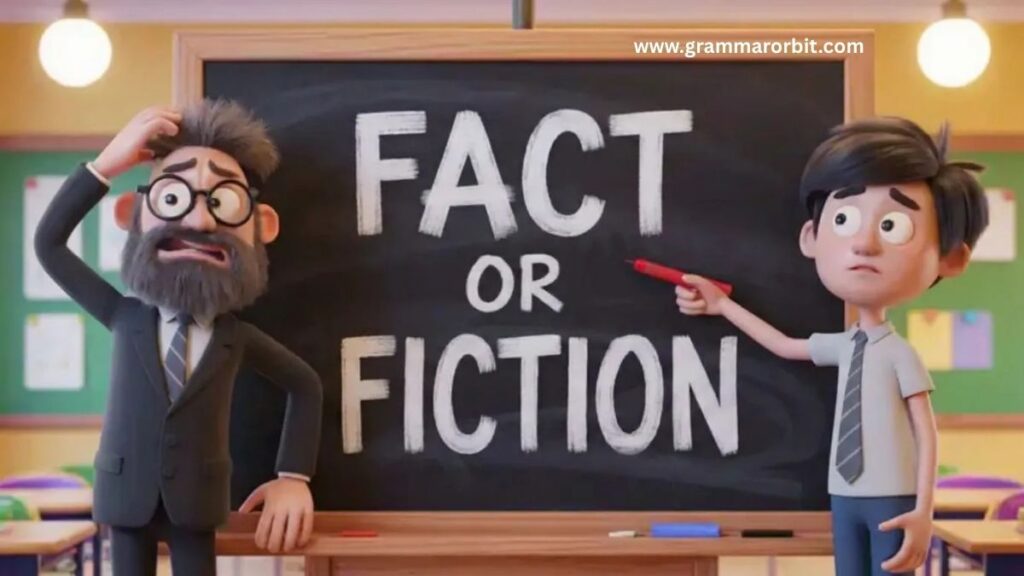
Ever caught yourself scrolling through social media, wondering if that “miracle cure” or viral headline is actually true or just a wild ride of nonsense? Welcome to the world of fact or fiction, where reality and imagination play a tricky game of hide and-seek. For learners, knowing how to identify fact vs fiction isn’t just a school skill it’s a survival skill for everyday life. From viral memes to news articles that scream for attention, separating truth from exaggeration can save you from embarrassing mistakes, wasted time, and the occasional facepalm. Let’s dive in and master the art of spotting reality in a sea of fiction.
Quick Overview: What Fact or Fiction Really Means
Fact or fiction simply asks whether a statement can be trusted.
- A fact is something that can be proven with evidence, research, or credible sources.
- Fiction is information that is made up, exaggerated, or unverified.
Learning to identify fact vs fiction means going beyond your gut feelings. It requires asking: “Where does this claim come from?” and “Can I verify it with credible sources?”
For example:
Fact: The Amazon Rainforest produces about 20% of the world’s oxygen.
Fiction: The Amazon Rainforest is shrinking so fast it will disappear in five years.
Without checking evidence, it’s easy to accept the second statement as true. Fact-checking skills are essential to prevent these errors.
Everyday Examples You Encounter
Even without realizing it, learners encounter fact vs fiction every day. Here are some examples:
- Social Media Posts: Viral videos or memes can look convincing but often lack any verifiable facts.
- News Headlines: Some headlines are designed to grab attention rather than provide accurate information.
- Health Advice: Posts promising miracle cures are often misleading. Always check for scientific proof before believing them.
- Urban Myths: Claims like “you only use 10% of your brain” are widely circulated but false.
Case Study: A viral video claimed drinking a particular herbal tea could cure migraines. A student using news verification techniques compared the claim with medical studies and discovered no scientific support. This simple step prevented them from wasting money and time.
Unphased or Unfazed Explained Avoid Common Mistakes
The Origin and History of Fact or Fiction
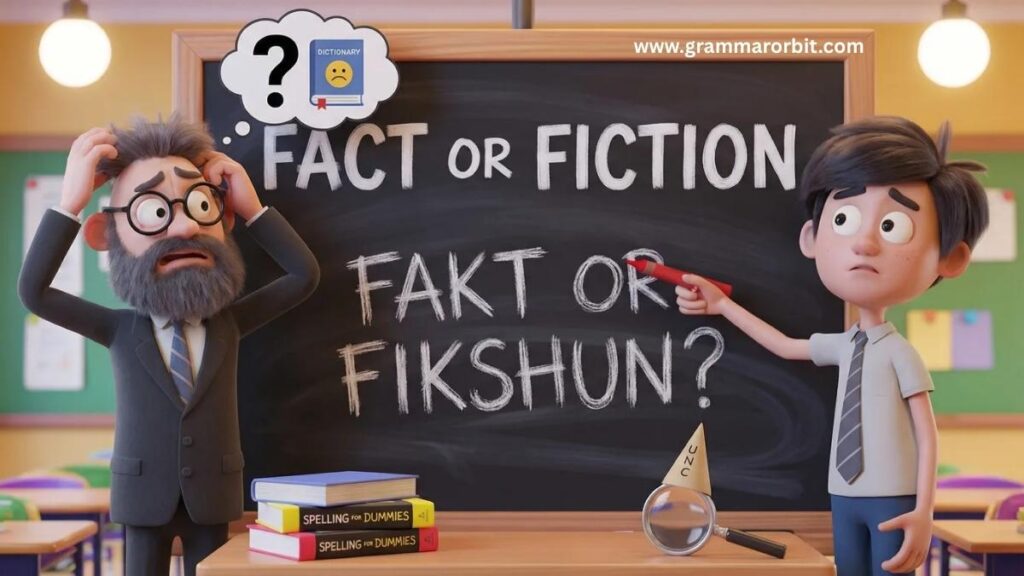
Understanding the history of the phrase helps explain why it is so important today.
Classical Roots
Philosophers like Aristotle debated truth vs myth, emphasizing observation and logical reasoning. Scholars distinguished between stories based on imagination and knowledge based on evidence-supported claims.
Middle Ages to Enlightenment
During the Middle Ages, texts often blended fact with mythology. By the Enlightenment, thinkers pushed for rational analysis and source credibility assessment. They argued that knowledge should be backed by evidence, not just belief.
Modern Usage
Today, “fact or fiction” is not just a phrase; it’s a framework. It guides learners in academic accuracy, daily decision making, and even casual conversations. The phrase reminds us to always question what we read, hear, and see.
How to Use Fact or Fiction Correctly
Using the phrase incorrectly can create confusion. Here’s how to approach it:
- When to Use
- Discussing truth vs myth in lessons or research
- Evaluating social media claims
- Teaching media literacy skills for learners
- When Not to Use
- Sharing personal opinions as if they were facts
- Casual or humorous conversation without context
- Formal vs Informal Contexts
- Formal: Essays, reports, research papers
- Informal: Blogs, discussions, online forums
Example:
Correct: “Students should learn to identify fact vs fiction when reading online news.”
Incorrect: “Chocolate is fact or fiction.”
Moment vs Momment Spelling, Definition, and Usage
Common Learner Mistakes and How to Avoid Them
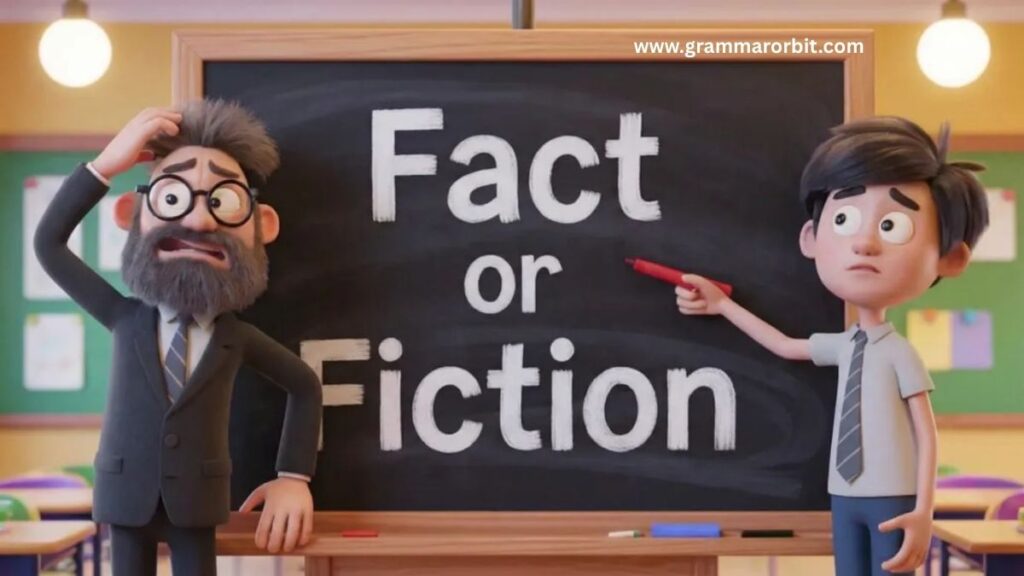
Even experienced learners make mistakes when distinguishing fact from fiction. Here are some of the most common:
Mistake 1: Calling Anything Unusual Fiction
Just because a claim sounds strange doesn’t make it false. Always look for credible sources before deciding.
Mistake 2: Calling Facts Without Evidence
A statement can feel true but may lack verifiable information. Fact-checking is essential.
Mistake 3: Confusing Related Words
Terms like truth, myth, reality, and fiction have different meanings. Using them interchangeably can lead to confusion.
Quick Reference Table
| Term | Correct Usage | Common Mistake |
|---|---|---|
| Fact | Supported by evidence | Personal opinion |
| Fiction | Made-up or unverified | Anything unusual |
| Truth | Reality supported by proof | Personal belief |
| Myth | Widely believed but false | Synonym for fact |
Fact or Fiction in Real Life
Knowing theory is helpful, but real-life application is key.
News and Media
- Headlines often exaggerate facts to attract attention.
- Bias detection and information verification help readers separate facts from opinions.
Advertising and Marketing
- Claims like “Lose 10 pounds in one week” often lack evidence.
- Learners can apply fake news detection techniques to spot misleading information.
School and Academic Work
- Research assignments require evidence-supported claims and credible sources.
- Practicing fact-checking skills ensures academic accuracy and improves grades.
Tools and Strategies to Verify Facts
Here are practical ways learners can confirm the truth:
Trusted Fact-Checking Websites
- Snopes – Investigates rumors and viral stories
- FactCheck.org – Focuses on political and social claims
- PolitiFact – Provides ratings for statements and claims
Critical Reading Checklist
- Check the author’s credentials
- Look for credible sources
- Verify evidence-supported claims
- Compare multiple sources to confirm accuracy
Practical Tips
- Distinguish misinformation from disinformation
- Apply analytical thinking before believing a claim
- Always cross-check statements with verifiable information
Drier vs Dryer What’s the Real Difference?
Exercises to Spot Fake News
Practice is the key to mastering fact vs fiction. Try these exercises:
1: Spot the Fake News
- Pick a news article and highlight claims that need verification.
- Cross-check these claims with reliable fact-checking websites.
2: Identify Fact vs Fiction
- Take a list of viral statements and categorize them as fact, fiction, or uncertain.
3: Compare Sources
- Read two reports on the same event and note differences. Check which claims are backed by verifiable facts.
Quick Reference Table for Learners
| Task | Strategy | Example |
|---|---|---|
| Verify a claim | Check multiple credible sources | Health tips from official medical websites |
| Evaluate a source | Analyze author and credentials | University websites vs random blogs |
| Spot misinformation | Look for inconsistencies or exaggerations | Viral miracle cure claims |
| Fact-check academic work | Use evidence-supported references | Peer-reviewed journals |
How Fact vs Fiction Shapes Everyday Life
Critical thinking and media literacy go beyond school. They help you:
- Decide what to believe on social media
- Evaluate health or financial advice
- Avoid scams or misleading products
- Understand politics and public debates better
Learning to debunk myths and verify claims improves your confidence in making decisions and helps others by sharing credible information.
Reference Cambridge Dictionary Definitions
Here’s a trusted source for clear word meanings:
FAQs
What is a fact or fiction?
A fact or fiction refers to distinguishing between statements or stories that are true and verifiable (facts) and those that are imagined, exaggerated, or unproven (fiction). It’s the skill of knowing what is real versus what is made up, especially in learning, news, and everyday information.
Who hosted Fact or Fiction?
“Fact or Fiction” was a popular television series that explored various claims, mysteries, and urban legends, helping viewers decide whether they were true or false. The show was designed to teach critical thinking and fact-checking skills while entertaining audiences.
What is the difference between fact and non-fiction?
- Fact: A statement that can be proven true with verifiable evidence.
- Non-fiction: A genre of writing based on real events, people, or information, but not every non-fiction statement is automatically a verified fact. Non-fiction can include interpretations or opinions.
Does fiction mean facts?
No. Fiction is created from imagination and storytelling. While it can feel realistic or be inspired by real events, it does not rely on evidence and should not be treated as a factual statement.
What is an example of fact and fiction?
- Fact Example: Water boils at 100°C at sea level.
- Fiction Example: Drinking water from a magical spring can make you live forever.
Conclusio
So, there you have it fact or fiction isn’t just a catchy phrase; it’s your secret superpower against misinformation, misleading headlines, and that one cousin who insists the moon landing was filmed in a Hollywood basement. By sharpening your critical thinking, flexing your fact-checking skills, and trusting verifiable facts, you can spot a fib faster than a cat spotting a laser pointer. Remember, separating truth from fiction isn’t just for school assignments it’s for life. So go forth, question boldly, laugh at the myths, and always, always double-check before sharing that next “unbelievable” headline.

JHON AJS is an experienced blogger and the creative voice behind the website grammarorbit.com, namely Grammar Orbit. With a keen eye for language and a passion for wordplay, he creates engaging grammar insights, word meanings, and clever content that make learning English enjoyable and interesting for readers.