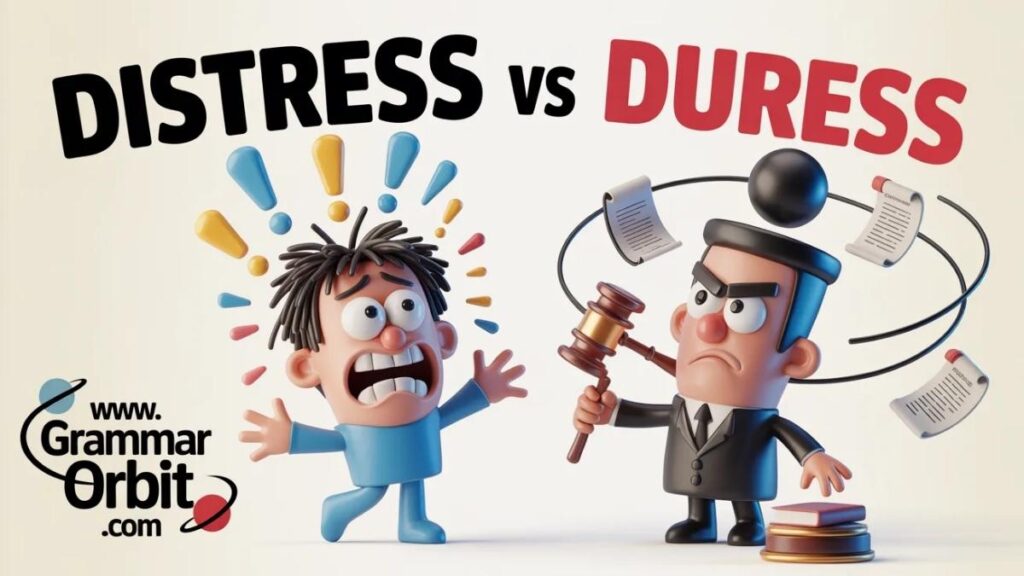
Ever typed a sentence, paused, and wondered whether the right word was distress or duress? You’re not alone. The classic distress vs duress confusion trips up students, writers, and even professionals who deal with serious topics every day. After all, the words look like twins that swapped one letter and ran off in different directions. One talks about emotional suffering, while the other involves pressure that forces someone to act. Mix them up, and suddenly a sad situation might sound like a legal drama. So before your next sentence signs a contract under the wrong word, let’s unpack the real difference between distress and duress in plain, friendly language.
Distress vs Duress Quick Difference
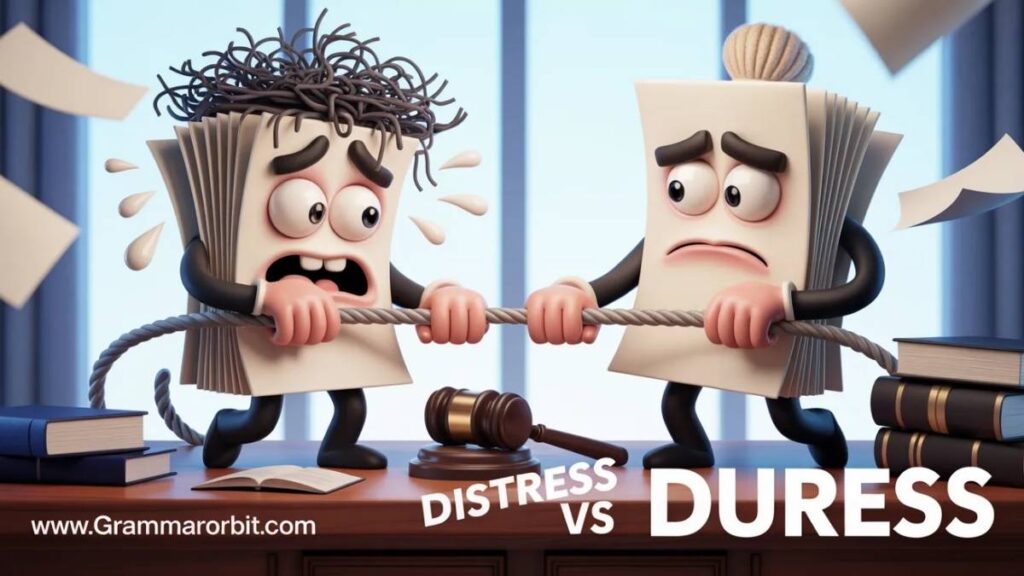
Before digging deeper, a quick overview makes the contrast easier to see.
| Feature | Distress | Duress |
|---|---|---|
| Core meaning | Emotional, physical, or financial suffering | Pressure or threats forcing someone to act |
| Type of situation | Internal hardship or pain | External pressure from another person |
| Common use | Emotional distress, financial distress | Acting under duress |
| Example | She felt distress after hearing the bad news. | He signed the agreement under duress. |
The simplest way to think about it is this:
Distress describes suffering.
Duress describes pressure.
What Distress Means
Distress refers to a state of intense suffering or hardship. It usually describes emotional pain, anxiety, grief, or physical trouble. When someone experiences distress, something has overwhelmed their ability to cope.
The word appears in many everyday situations. Someone may feel distress after losing a job, after hearing bad news, or during a crisis. In these cases the word captures the feeling of deep emotional strain.
Emotional distress
Emotional distress is one of the most common uses of the word. It refers to serious mental suffering caused by events such as trauma, loss, fear, or humiliation.
Examples include:
- A person feeling overwhelming grief after losing a loved one
- Anxiety after a frightening accident
- Emotional pain caused by betrayal or conflict
Psychologists often describe distress as the negative side of stress. Stress can sometimes motivate people to work harder or solve problems. Distress, however, pushes the mind into a harmful state of worry, fear, or exhaustion.
Financial distress
Distress can also describe economic hardship. Financial distress happens when a person or business struggles to meet financial obligations.
For example:
- A company unable to pay its debts
- A family facing unemployment and rising bills
- A small business losing customers and revenue
During economic downturns many businesses experience financial distress before recovering or closing permanently.
Physical distress
Medical professionals sometimes use the word to describe severe physical strain. A patient experiencing physical distress may show symptoms such as difficulty breathing, extreme fatigue, or severe pain.
In emergency situations, the word distress signals that a person or system is under serious strain and requires immediate attention.
Suit vs Suite The Truth Schools Don’t Explain
What Duress Means
Duress describes a completely different situation. Instead of internal suffering, duress involves external pressure. A person acts under duress when they are forced to do something because of threats, intimidation, or fear of harm.
This word often appears in legal contexts, but people also use it in everyday speech.
When someone says they did something under duress, they mean they had little or no choice. Another person applied pressure that made refusing dangerous or impossible.
Duress in everyday language
In daily conversation, duress describes situations where someone feels forced into an action.
For example:
- A worker agrees to unfair conditions after being threatened with job loss
- A person confesses to something because someone intimidates them
- Someone signs a document because they fear consequences if they refuse
In each case the action does not come from free choice. Instead, pressure pushes the person into compliance.
Duress in law
The concept of duress plays an important role in legal systems. Courts recognize that threats or intimidation can remove genuine consent.
When someone signs a contract or performs an action because of serious threats, the law may consider that action invalid.
Several elements usually appear in legal cases involving duress:
- A threat of harm or punishment
- Immediate pressure or intimidation
- No safe or reasonable way to escape the situation
If these conditions exist, a court may decide the person acted against their will.
For instance, if someone signs a contract because another person threatens violence, that agreement may not be legally valid. The law recognizes that the signature came from fear rather than voluntary agreement.
Attornies or Attorneys The Spelling and Correct Usage
The Key Difference Between Distress and Duress
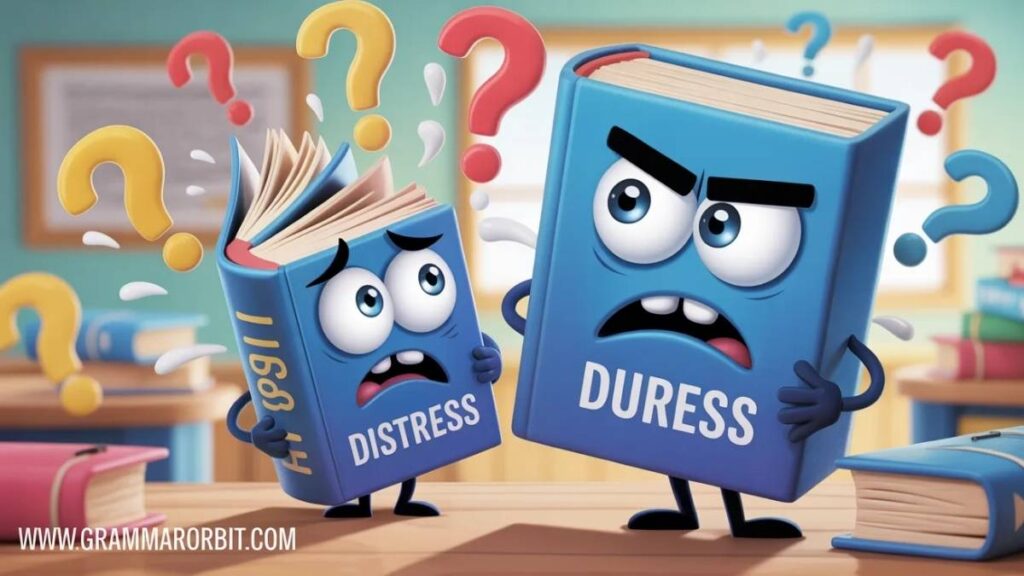
The difference between distress and duress becomes clear once the cause of the problem is identified.
Distress describes suffering that happens within a person. Emotional pain, financial trouble, or physical hardship create the condition.
Duress, on the other hand, comes from outside pressure. Another person or force pushes someone into an action they would not normally choose.
The contrast can be summarized like this:
| Situation | Correct Word |
|---|---|
| Emotional suffering | Distress |
| Financial hardship | Distress |
| Mental anguish | Distress |
| Threats forcing action | Duress |
| Intimidation or coercion | Duress |
When the issue is suffering, use distress.
When the issue is pressure or threats, use duress.
Using Distress in Sentences
Seeing the word in real sentences helps reinforce its meaning.
Examples of distress include:
- The family showed visible distress after the tragic news.
- Losing the business caused him severe financial distress.
- The injured hiker sent a distress signal for help.
- The child’s crying clearly showed emotional distress.
- Witnessing the accident caused several bystanders distress.
In each sentence the word focuses on suffering or hardship rather than force.
Using Duress in Sentences
Duress usually appears in situations involving threats or pressure.
Examples include:
- He claimed he signed the contract under duress.
- The witness said the confession was forced through intimidation and duress.
- She made the decision under extreme duress.
- The employee argued the resignation letter was written under duress.
- The suspect said he acted under duress after being threatened.
Notice how every example involves pressure from another person.
What Does JSP Mean on Snapchat? A Simple Guide
Why People Confuse Distress and Duress
Several factors make these words easy to mix up.
Similar sound
Both words end with the same sound. When spoken quickly, distress and duress can sound almost identical.
Similar spelling
Only one letter separates the two words. This visual similarity makes typing errors common.
Both appear in serious situations
Both words often appear in discussions involving crisis, conflict, or legal problems. Because the contexts overlap, writers sometimes assume the meanings overlap too.
Common Mistakes to Avoid
Understanding the most frequent mistakes helps prevent them.
Using distress when duress is intended
Incorrect example:
He signed the agreement in distress.
Correct version:
He signed the agreement under duress.
The situation involves pressure and coercion, not emotional suffering.
Using duress for emotional pain
Incorrect example:
She felt deep duress after hearing the news.
Correct version:
She felt deep distress after hearing the news.
The sentence describes emotional pain, so distress is the correct choice.
Misusing the phrase under duress
The phrase under duress specifically refers to actions forced by threats or intimidation.
It should not describe ordinary stress or pressure.
Incorrect example:
I finished the project under duress because the deadline was tight.
Correct example:
The suspect said he confessed under duress after police threats.
How to Remember the Difference
A simple trick makes the distinction easier to remember.
Distress contains the word stress. Both relate to emotional strain or suffering.
Duress suggests pressure from another person.
Another helpful approach is to ask a quick question:
Is the problem suffering or hardship? Use distress.
Is someone forcing another person to act? Use duress.
This small mental check can prevent most mistakes.
Situations Where Both Words Appear
Sometimes a single event involves both distress and duress.
Imagine a person threatened into signing a business contract. The threat represents duress because it forces the action. The fear and anxiety caused by that threat may create emotional distress.
In that situation both words apply, but they describe different parts of the experience.
Duress explains the pressure forcing the action.
Distress explains the emotional suffering caused by the situation.
Bearer vs Barer The Complete Guide
Reference Cambridge Dictionary Definitions
Here’s a trusted source for clear word meanings:
FAQs
Are duress and distress the same thing?
No. Distress refers to emotional, physical, or financial suffering, while duress involves pressure, threats, or coercion that forces someone to act against their will. Confusing them can change the meaning of a sentence completely.
What qualifies as duress?
Duress occurs when someone is compelled to act due to threats, intimidation, or unlawful pressure. Examples include:
- Signing a contract under threats
- Confessing to a crime because of fear of harm
- Making decisions due to coercion or external pressure
What is an example of distress in psychology?
In psychology, distress describes negative stress or emotional suffering. Examples include:
- Feeling overwhelmed after a traumatic event
- Anxiety or panic attacks
- Grief after losing a loved one
- Chronic stress leading to burnout
What is emotional distress?
Emotional distress is a state of mental suffering caused by events that overwhelm a person’s ability to cope. It can result from trauma, grief, fear, anxiety, or other significant emotional challenges.
What are the five signs of emotional distress?
Common signs include:
- Persistent sadness or tearfulness
- Anxiety or excessive worry
- Sleep disturbances or insomnia
- Irritability or anger
- Withdrawal from social interactions
What’s the opposite of emotional distress?
The opposite is emotional well-being or emotional stability, which includes feeling calm, secure, and able to manage stress effectively.
Conclusion
Confusing distress vs duress happens more often than people like to admit. After all, the words look like linguistic cousins who borrowed each other’s jackets. Still, once the difference clicks, understanding distress vs duress is hard to forget. Distress describes suffering, trouble, or emotional strain, while duress shows up when pressure or threats force someone to act against their will.
A quick rule helps keep things straight. If someone feels overwhelmed, anxious, or miserable, the situation involves distress. If someone signs a paper, makes a decision, or confesses because of intimidation, that action happens under duress.
Remember it this way: distress is about pain, duress is about pressure. One hurts your feelings, the other twists your arm. Keep that simple contrast in mind, and your writing will stay clear, precise, and completely free of grammar-induced mistakes when dealing with distress vs duress.

JHON AJS is an experienced blogger and the creative voice behind the website grammarorbit.com, namely Grammar Orbit. With a keen eye for language and a passion for wordplay, he creates engaging grammar insights, word meanings, and clever content that make learning English enjoyable and interesting for readers.